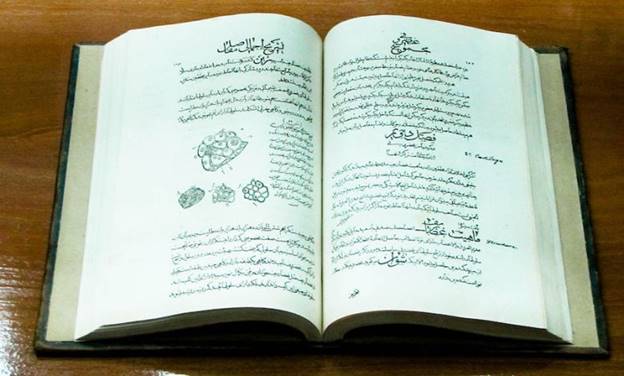
The Qur’anic revelations played an immense role in influencing the start of medical studies. Various oft-repeated passages explaining the evolution of biological, physical and even metaphysical life processes in this universe – all the way from humans, plants and animals to planets, stars and galaxies, can be found across the Scripture. One reason that the science of medicine was pursued so much by early Muslims could be due to the quest to understand and correlate the meaning and purpose of some of these events, described in the Book in detail - Islamic Insights
The Islamic Contributions to Medicine - Part I: Origin of Modern Healthcare Industry
By Abdul-Majeed Azad
Technologist (formerly at NASA-Jet Propulsion Laboratory)
Pasadena, CA

Over the past several hundred years, the field of medicine has radically evolved. Each year new antibiotics and vaccines are produced, new procedures and techniques to the medical practice are added. Medical equipment has become far more advanced that allows the diagnosis of diseases and illnesses much more quickly.
The origin of medicine is quite complex; many in the Western hemisphere would usually turn to European scientists and scholars to understand the foundations of modern-day medical practices. What is lesser recognized, however, is the great influence the Islamic world has had on medical sciences and the practice of medicine.
Physicians during the height of Islamic era were often involved in important roles in such diverse disciplines as, philosophy, chemistry and biology. As much of an effect they had in these areas, their discoveries, theories, and experiments in the field of medicine have immensely revolutionized how physicians treat their patients today.
As early as the 9 th century, Muslims have made epoch-making contributions in the field of medicine and medical sciences. These include subjects of anatomy , microbiology , pharmacology , pharmacy , physiology , surgery and many more. Medicine has played a key role and was a central part of Islamic society. Responding to circumstances of their time and location, Islamic scholars-turned-physicians developed a comprehensive understanding of complex and intricate field of medicine by first studying the origin of diseases and then applying those theories and practices, in the light of knowledge derived from Qur’an.
Ibn Rushd (Averroes), Al-Razi (Rhazes) and Ibn Sina (Avicenna) were three most prominent scholars/physicians during the height of Islamic golden era. They made astounding discoveries in the field of health, hygiene and medicine that have greatly affected and enhanced our understanding of human physiology and related medical practices today. These scholars of Islamic medicine laid the foundation of many advances that were realized later. One common denominator of their early advances lies in the fact that they derived the cause-and-effect correlation on physiology, in the light of physical phenomena described in Qur’an. That intimate knowledge about the interdependence of hygiene, disease and cure, laid down the roots of medicine that we know today. The truth is that the developments made during the golden Islamic era truly constituted the basis of our modern-day healthcare community.
It would not be an exaggeration to state that Qur’anic inspirations were the source of advancement of modern healthcare industry. The Qur’anic revelations played an immense role in influencing the start of medical studies. Various oft-repeated passages explaining the evolution of biological, physical and even metaphysical life processes in this universe – all the way from humans, plants and animals to planets, stars and galaxies, can be found across the Scripture. One reason that the science of medicine was pursued so much by early Muslims could be due to the quest to understand and correlate the meaning and purpose of some of these events, described in the Book in detail. For example, the biological description of the human creation and gradual development, is given in precise detail and great depth. Verse 5 of surah Al-Hajj reads: O mankind, if you are in doubt about Resurrection, then (recall that), We created you out of dust, then from a drop of semen, then from a leech-like clot, then from a lump of flesh – either shaped or unshaped – so that We manifest (Our power) to you. We retain in the wombs whatever We will, to a specified term. Then We bring you out as babies, then (We nourish you) that so that you reach your maturity. It is amazing that in no other text or manuscript - religious or otherwise - can be found such clear and minute details of systematic human development. The physical knowledge about sperm and how the embryo forms a leech-like clot, became known only in the past ~one hundred years; yet it was already revealed in Qur’an more than 14 centuries ago, with such precision!
A later part of the same verse sheds light on another mind-boggling aspect of human life, that we didn’t know until very recently: And among you is the one who perishes (young) and the one who is carried to the worst part of age, where he knows nothing even after having knowledge. In modern terminology of medical science, we recognize ‘the worst part’ as the symptom of the onset of progressive brain damages leading to Parkinson's and Alzheimer's diseases. As we know today, Parkinson's primarily affects movement (manifested as tremors, stiffness, slow motion) due to a loss of dopamine cells, while Alzheimer's primarily targets memory and thinking due to amyloid plaques and tau tangles. The tau ( neurofibrillary) tangles are abnormal, twisted accumulations of a protein called tau that collect inside neurons in the brain. This affects the memory retention and thinking power of the brain. Dr Alois Alzheimer noticed abnormal clumps (plaques) and tangled fiber bundles in the brain of his patient Auguste Deter, only over a century ago (1906).
Qur’an also describes the sequential process of membrane development in the womb (Surah Az-Zumar, verse 6): He creates you in the wombs of your mother in stages, one after another, in three veils of darkness. Today, these membranes that envelop the embryo have been recognized as the amnion membrane, the chorion membrane, and the decidua membrane - the three primary anatomical layers that enclose and protect a developing fetus during pregnancy. The amnion and chorion membranes originate from the fertilized egg (fetal origin) and the decidua develops from the lining of the mother's uterus (maternal origin). It is fascinating that a Scripture revealed more than 1,400 years ago – long before any of the medical advances we see today – described the creation of delicate anatomical parts in such details and with great clarity that became known only in the mid-to-late 18 th century. Similarly, the formation of muscle and flesh is described in verse 14 of Surah Al-Mu’minun: Then we made of that mudghah (lump of chewed-like flesh), bones and clothed the bones with flesh.
The process of making honey by honeybees and its practical uses (medicinal and other) too have been described in Qur’an (Surah An-Nahl, verses 68-69): Your Lord revealed to the bees, ‘Build dwellings in the mountains and the trees, and in the structures which men raise. Then eat from every kind of fruit and travel the pathways of your Lord made easy for you’. From their bellies comes a drink of varying colors in which there is cure (healing) for the people. Surely, in that there is a sign for the people who ponder. It is well known that honey is the purest product of bees and is perceived to have healing effects on the human body. Experts believe that honey mixed with milk soothes the body in times of ailment. It is a natural treatment for cold, flu, and even for alcoholic poisoning because it protects the liver from the latter. Honey derivatives such as wax, propolis, nectar, and bee toxicants have all been shown to have medical benefits because of the essential sugar vitamins it contains.
A profound reference to good health in terms of dietary restriction in Islam is the prohibition of the consumption of dead meat, blood, and pork, (Surah Al-Baqarah, verse 173): He has forbidden you dead meat, blood, and the flesh of swine. This is because blood can carry harmful body substances that are disposed in urine, sweat or stool. If the animal is diseased, microbes multiplied in the blood can infect and create severe symptoms. This gives guidance to the legal way of slaughtering the animal in Islam: knife must cut through the jugular vein of the animal, and all blood must be flushed out completely prior to meat consumption. Among all animals, pig is known to live, grow, and thrive in the dirtiest and the filthiest physical environment!
These are a few illustrative examples. In fact, Qur’an is replete with numerous references. Modern medical science is discovering them to be true. They pertain to how the human body functions and are illuminating in the light of the biological and medical knowledge that we possess today. It is these direct and clear references that prompted many early Muslims to pursue the secret of human development, hidden in Qur’anic verses. Through Qur’anic influence, medical profession therefore, became very advanced during the height of Islam’s golden era - much advanced than anywhere else in the world at that time.
It is a pity that today Muslims send (read shove) their children to medical schools, without even exposing them to the rich history of Islamic innovation in this field. Most of them end up memorizing often difficult and tongue-twisting medical jargons in Latin and Greek but cannot read one verse of Qur’an! What a travesty!

