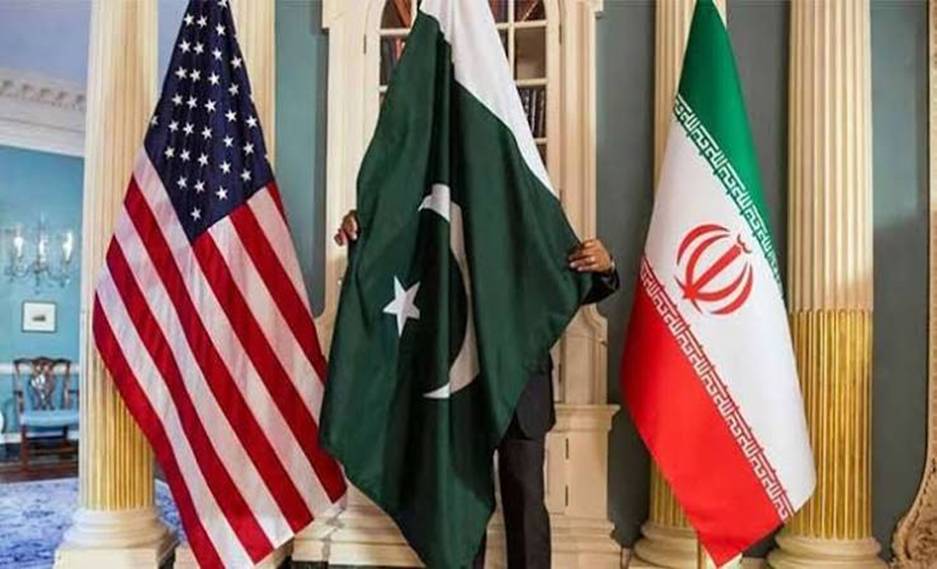
 For the West, the question may be how to control Iran. For the region, the question is far bigger: how to build a more stable, connected and less militarized regional order
Did Pakistan’s Mediation Just Open a New Regional Order?
By Nasim Zehra
Pakistan

The 14-point US-Iran MoU must not be read only through the Western lens. For many Western capitals, the key questions are familiar: will the arrangement restrict Iran’s nuclear program, place controls on its missile capabilities, ensure the opening of the Strait of Hormuz, and protect the economies of countries far beyond the region.
These are important concerns. Energy flows, shipping security and non-proliferation matter. Yet this reading remains limited. It focuses largely on what controls can be imposed on Iran and how external economic interests can be protected.
For the Gulf, Pakistan, Turkiye and the wider region, the MoU carries a much broader meaning. It is not merely a technical arrangement between Washington and Tehran. It is potentially a strategic opening. If sincerely implemented, it can reduce fault lines across the region and create space for a new conversation and action on security, trade, connectivity, reconstruction and coexistence.
The US-Israel war of aggression against Iran had created the danger of a much wider and more devastating conflict. Once Iran responded by expanding the theater of confrontation and striking at targets across the Gulf region, the danger was no longer confined to Iran, Israel and the United States. Sovereign states, energy infrastructure, shipping lanes, regional economies and US bases all became vulnerable to escalation.
Yet what followed was significant. Key regional countries, including Saudi Arabia, saw the wisdom of engagement with Iran despite the highly provocative context. Communication opened between Tehran and Riyadh. Pakistan, with its historic relationship with Saudi Arabia and its credibility with Iran, played an important role in helping ensure that the possibility of a direct Iran-Saudi confrontation was taken off the table.
It was no small achievement. It helped prevent the conflict from becoming an all-consuming regional war. It also showed that regional states, when faced with the prospect of devastation, can choose restraint, communication and diplomacy over confrontation.
Gradually, this pattern evolved into a wider regional approach. Countries that could have been pulled into war instead began looking for ways to contain the conflict, reduce escalation and preserve their own stability. Oman continued its quiet diplomatic role. Qatar entered the process as a supporting mediator. Saudi Arabia engaged directly. The UAE also signaled political seriousness through high-level official engagement with Tehran.
These were not isolated moves. Together, they reflected a region attempting to protect itself from a war that could have devastated its infrastructure, economies and societies. They also reflected a growing recognition that permanent confrontation with Iran serves no one in the region.
This is where Pakistan’s role becomes particularly important. Against the backdrop of intense diplomatic engagement, strong security ties with Saudi Arabia, historic relations with Iran and a broader commitment to regional stability, Pakistan helped facilitate a process in which confrontation began giving way to engagement.
Once it was established that there was going to be no victor or vanquished in this war, credible mediation became imperative. Significantly, Pakistan’s mediation was not partisan to one bloc. It was anchored in the urgent need to prevent a wider war, protect regional stability and create room for a negotiated settlement. This is precisely why Pakistan’s role mattered the most. It was trusted enough by key actors to help keep channels open, yet principled enough to push for restraint and dialogue.
The reported provisions of the MoU also point toward a larger regional agenda. The discussion is not limited to nuclear issues. It includes the Strait of Hormuz, sanctions, frozen assets, reconstruction and the Lebanon track. These are not small matters. They are connected to the wider architecture of regional peace and instability.
The inclusion of Lebanon is especially important. It shows that the MoU is not only about Iran’s internal capacities or US concerns. It is also about stabilizing interconnected conflict zones that have repeatedly pulled the region toward escalation.
Similarly, the reported reference to a major reconstruction and development package opens another door. This has widely been viewed as war reparations to Iran. In fact, it points to a possibility of widespread economic opportunity, including Gulf states and others who may consider investing in Iran’s reconstruction, infrastructure and connectivity.
If this happens, the logic of regional politics could begin to shift. Relationships built around hostility and containment may gradually give way to investment, trade and interdependence. That is where the MoU’s real value is for the entire region.
Pakistan-mediated peace therefore serves the region in several ways. It reduces the risk of war. It protects energy routes. It opens space for Iran-Gulf engagement. It strengthens regional ownership of security. It creates possibilities for reconstruction and connectivity. It also limits the ability of external actors to keep the region trapped in permanent instability.
Israel’s deadly strategy of destroying Iran and keeping the wider region in a state of managed chaos and conflict has for now backfired. Instead, a region driven to reflection is counting the enormous costs of conflict and escalation. The region now has an opportunity to move in another direction.
The success of the MoU is of course not guaranteed. There will be resistance, mistrust and spoilers. But the opportunity is real. For the West, the question may be how to control Iran. For the region, the question is far bigger: how to build a more stable, connected and less militarized regional order.
Pakistan’s mediation has helped open that possibility. The task now is to ensure that the MoU does not remain only a document. It must become the foundation for practical regional stability, economic reconstruction, and a more balanced future.
(Nasim Zehra is an author, analyst and national security expert. X: @NasimZehra - Arab News)

