Mushaira–Kavi Sammelan Celebrates the Shared Literary and Cultural Heritage of the Subcontinent
By Zafar Iqbal, PhD
Photographs by Afzal Usmani

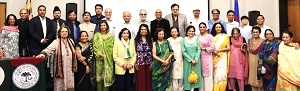
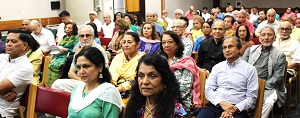
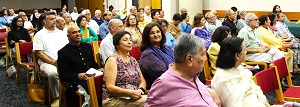
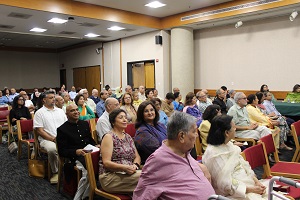
The Aligarh Alumni Association of Washington, DC (AAA-DC), and the Global Organization of People of Indian Origin of Metropolitan Washington (GOPIO-DC) hosted their annual Mushaira–Kavi Sammelan on Sunday, August 16, 2026, at the Montgomery County Auditorium. The gathering brought together poets, writers, community leaders, diplomats, and poetry enthusiasts for an evening celebrating the enduring literary and cultural traditions of the Indo-Pak subcontinent.
The program was co-sponsored by the Association of Indian Muslims (AIM), Montgomery Nawabs (MONA), Global Beat Foundation (GBF), RX Biosciences, American Society for Science, Engineering & Technology (ASSET), and the Hyderabad Association of Washington Metro Area (HAWMA).
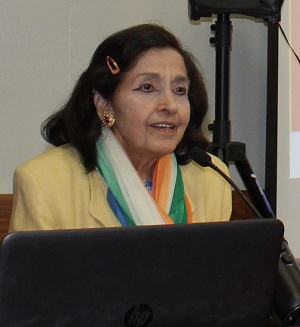
AAA-DC President-elect Mohammad Haziq and Dr Renuka Misra of GOPIO-DC welcomed the poets, distinguished guests, and attendees on behalf of their respective organizations.
A Tradition of Shared Cultural Heritage
Dr Zafar Iqbal provided a brief history of the Mushaira–Kavi Sammelan, tracing its origins to an AAA-DC initiative to commemorate Yaum-e-Azadi (Independence Day of the subcontinent) through a bilingual literary program. In 2008, the initiative was formalized in partnership with GOPIO-DC and evolved into an annual tradition celebrating the shared Ganga-Jamuni cultural heritage of the subcontinent. Recognizing the program's significance as a community arts platform and an expression of cultural diplomacy, the Embassy of India joined AAA-DC and GOPIO-DC in 2011 in supporting the first bilingual poetry recitation at the Embassy.
Over the years, the Mushaira–Kavi Sammelan has developed into a distinctive cultural institution in the Washington metropolitan area. Its audience has included students, families, recent immigrants, longtime residents, and diplomats. More than a poetry gathering, the program has served as a bridge across communities and generations, providing a welcoming forum where Urdu and Hindi poetry, literature, languages, and cultural traditions continue to flourish.
Promoting Literature and Literary Talent
A notable feature of the program has been its support for literary talent and writers in the region. Over the years, the platform has hosted book releases by distinguished authors and poets, including Professor Satyapal Anand, Professor Asghar Wajahat, Dr A. Abdullah, Dr K. Mohan, Raj Kumar Qais, Anadi Naik, Dr Astha Naval, Dhananjaya Kumar, Rashmi Sanan, Farah Kamran, Surinder Deol, Daler Deol Aashna, Salman Akhtar, and Professor Gopichand Narang.
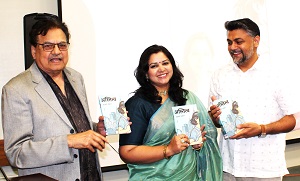
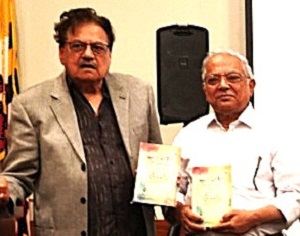
This year, Dr Astha Naval released her book Asthitva, while Jameel Usman released Mukalma-e-Adab, adding another dimension to the evening's celebration of contemporary literature.
Recognition of Community Contributions
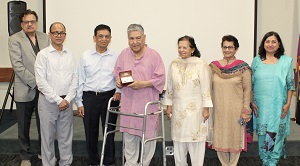
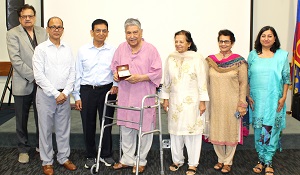
The gathering also recognized individuals for their longstanding contributions to the community. Umesh Agnihotri and Pushpa Agnihotri were felicitated for their literary and cultural contributions and their steadfast support of the association. Pratap Singh, Alka Batra, and Ashok Batra were recognized for their lifelong commitment and support of the association, while Shagufta Shah was honored for her dedicated service to the MCMF.
The contributions of Shoaib Ali Hasan, Shamaila Agnihotri, Pushpa Dashottar, and Shana Madhur to promoting art and literature in the greater Washington metropolitan area were also acknowledged and appreciated.
An Evening of Poetry
This year's program featured an impressive roster of poets: A. Abdullah, Astha Naval, Farah Kamran, Jameel Usman, Madhu Maheshwari, Mohammed Akbar, Mohammed Jaweed, Narendra Tandon, Nisha Dev, Preethi Govindaraj, Sukesh Chopra, Uday Kamath, Vinita Tiwari, Vishakha Thaker, and Yusuf Rahat. Their varied voices, poetic traditions, and distinctive styles reflected the richness and continuing vitality of South Asian literature.
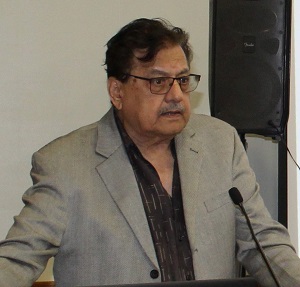
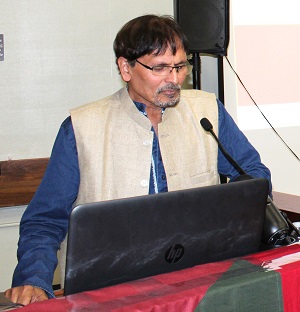
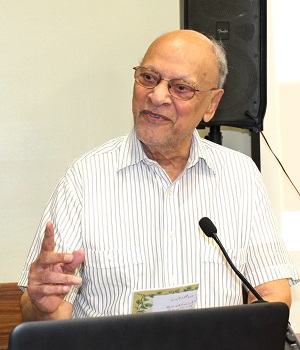
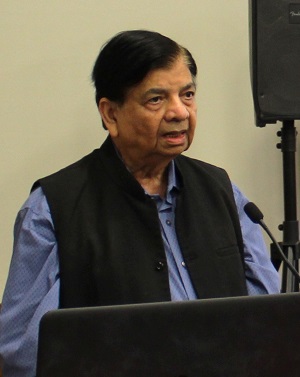
The poetry session was presided over by Yusuf Rahat, a senior poet in the Metropolitan Washington area, whose poetry celebrates the unity and harmony of diverse communities. Dr Mohammad Akbar, serving as master of ceremonies, added a distinctive literary dimension to the proceedings. His introductions to the participating poets were interwoven with verses, sustaining the evening’s poetic spirit and creating graceful transitions between the presentations.
Remembering Literary Figures
The program also included heartfelt tributes to colleagues and literary figures who passed away in recent months, including Dr Raj Kumar Qais, Dr Zaheer Parvez, Dr Ayoub Yusufi, and senior poet Basheer Badr. Their contributions to literature and the community were remembered with affection, respect, and gratitude.
Reflections from Participants
Dr Mohammed Younus, President of the Urdu Society of Baltimore, praised the program for its soulful ghazals, engaging poetry, and humorous kavitas. He described the gathering as a warm and enjoyable occasion that brought together members of the Urdu- and Hindi-speaking communities to exchange ideas, thoughts, and experiences.
Dr Astha Naval described the annual gathering as a cherished tradition, noting that she has participated for the past 18 years alongside distinguished poets. She appreciated the opportunity to share her poetry and connect with the literary community of the Washington metropolitan area. She also expressed gratitude for having both her poetry collection, published in 2016, and her 2026 novel released at the event. She thanked the organizers for introducing her to the gathering and said she looks forward to participating each year.
Poet Madhu Maheshwari described the Mushaira–Kavi Sammelan as an exemplary celebration of the shared Ganga-Jamuni Tahzeeb, calling it a powerful expression of the region's rich cultural heritage. She noted that the gathering carries an important message: the spirit of “Unity in Diversity” continues to be preserved, celebrated, and cherished even across the seven seas.
A Celebration of Poetry, Culture, and Community
The 2026 Mushaira–Kavi Sammelan once again demonstrated poetry's enduring power to connect people, languages, cultures, and generations. In the increasingly diverse American landscape, the annual gathering has become a meaningful celebration of South Asia's literary traditions, while fostering cultural understanding and community among people and friends who value the region's rich cultural heritage.
Selected Poetry Presented by the Participating Poets
Adullah Abdullah
Gardishe waqt ye kis moR pe layi mujhko Apni har saNs bhi lagti hai parayi mujhko
Rooh bechain hai itni ki dua karta hooN UmR ki qaid se mil jaye rehayi mujhko
Astha Naval
Desh ka hokar kya karoge, Aao apni jebien bharlo, Apna naam bada tum karlo, Aao party party
Khelo; Acha bura, sachcha jhoota kadwa Meetha, In sabki chinta mat karna, Bas apni apni party chun
lo, Phir vipaksh se sangam tum karlo
Farah Kaamran
Is tasalsul se mujhe dhoop kaDi milti hai Eik deewar giraati hooN, naee milti hai
Tum ne miTTi se kaee baar ukhaDa tha jise Kitni oonchaee pe voh beyl chaDhi milti hai
Jameel Usman
Jo ghum ko kum na ker sakey lekin barha gae aise bhi ghumgusar milay aur bichhar gae
Chhora hai dil peh naqsh faqat chand aik ne Waise to bay shumar milay aur bichhar gae
Madhu Maheshvari
NaujavanoN ka uTha hai karvaN jo desh main So rahe jo peyT bhar, kiya vahaN toofaan aaya hai
AAj bachhe rastoN par haq ki khatir aa gaye HukmaraanoN ke liye ab imtihaan aaya hai
Haath meiN chheni liyae chala voh vaqt ko trashne Suna hai aaj phir voh ghar lahulahaN aaya hai
Mohammed Akbar
Talq lahje se hum gurez kiye ja rahein hain Loug rooh-afzah samajh kar hamein piye ja rahein hain
Mohammaed Jaweed
Maine aksar sonchaa hai Duniyaa bhii ek lochaa hai
Zakhm dekar kehte hain, Bas halka sa khirochaa hai
Narendra Tandon
Chaar din ki zindagi ma, teen din sab kaa hasaai Ek din baaqii bacha tha, ho rahi hai jag hasaai
Chakkar kursi kaa Chaleo, yun bhi noubat aaii Chaakoo ghonpio peeth ma, kaun kisoo ko bhai
Preethi Govindraj---
Kare rabb muaaf hai jis tarah, na rakho Malaal, dafaa karo
Ho magar Jo lat hi gunaah Ki, na use muaaf kiya karo.
Bane rehnuma wo habib the, Jo daraa Gaye vo Raqeeb the
Taken muntazir Teri manzilen, rah-e-etimaad challa karo.
Sukesh Chopra
Teri Raah mein rahe Roshni Maine dil bhi apna jala dia
Meri Aakh mein hai dhuan dhuan Tu Nazar na Aye tau main kya karun
Uday Kamath
Zawaal-e-haqeeqat se hoon tang Maikash
Koi doosra ab khuda chahta hoon
Usha Dev
Saahabzaade chale daikhney apne liye ik ladki Prashnon ki fehrist jeb mein maa ki ungli pakri.
Ik din thaile par padi sabziyon mein jung chhidi, Apne sunder rang roop par sab theen apni jagah adin
Vinita Tiwari
Saawan ki rimjhim bauchhar Bheeg rahaa man bhaav pasaar
Tap-tap boondo si thirku main Gaau pi sung raag malhaar
Naa tum achchhe, na main achchhi, ghalatfahami me mat rahna
Hui ye baat ab nakki, ghalatfahami me mat Rahna
Vishakha Thaker
Kuchh kahi huee baateiN, kuchh unkahee huee batein
Kuchh thirakte huey qadam, kuchh sahme huey qadam
Kuchh aankhoN se chhlakte huey aansoo, kuchh lehrate huey qadam
Yeh sabhi un rishtoN ke naam haiN, jo rishte kisi ko kah gaey
Yusuf Rahat
Hamein ji vaqt mila tha, gavan diya hum ne, Tameez-e-rehbar-or-rehnuma na kar sake hum tum;
Voh taqatein jo panaptiN theiN hum ko laDwa kar, UnheiN ki baat hameisha suna kiyae hum tum;
HameiN to jang jo laDni thi, mil ke laDni thi, Huva sitam yeh ki apne udoo huey hum tum