Surviving under Economic Pressures: Human Stories from Karachi - III
By Dr Ahmed S. Khan
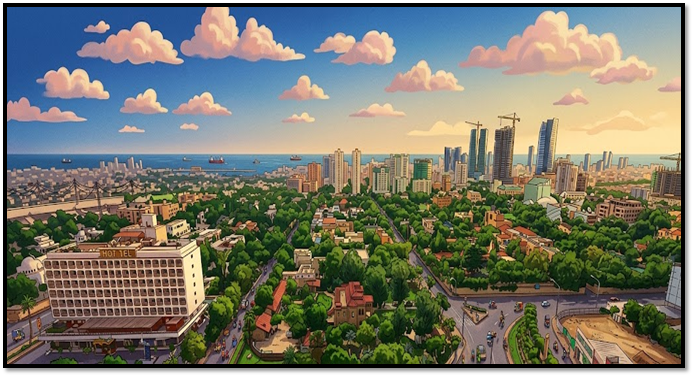
“You will yet be the glory of the East; would that I could come again, Karachi, to see you in your grandeur.”
— Sir Charles Napier, Governor of Sindh
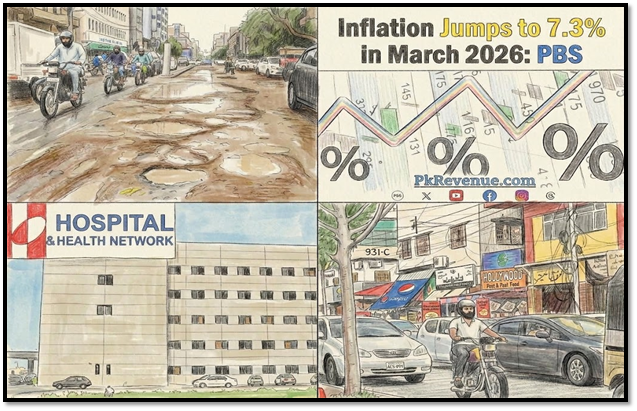
Inflation and Poverty Saga: A Ride from DHA to North Nazimabad
Planning to visit a friend in North Nazimabad, I asked Irfan to request an Uber. He told me that Uber was no longer active in Karachi, but app-based ride-hailing was still going strong—it had simply shifted to flexible-fare platforms like InDrive and Yango, alongside motorbike and auto-rickshaw services like Bykea. Irfan ordered a Yango, and after a ten-minute wait, a compact car approached our pick-up spot in DHA. As the driver pulled up, he gestured for us to get into the back.
“Sirs, please roll up the windows and lock the doors for your safety,” the driver advised as we settled in. “When we stop at traffic lights, many people will approach asking for money or trying to sell things. For your own safety, please keep the windows closed.”
“Alright, thank you,” I replied. “What is your name?”
“Shahid, Sir,” he said.
“How long have you been driving for Yango?” I asked.
“Over a year now,” Shahid replied.
“And what did you do before this?”
“I used to run a very successful poultry farm,” Shahid said with a sigh. “But when the bird flu hit, all my chickens died, and I hit rock bottom. I had no income coming in, but the bills kept piling up. The stress was overwhelming, and I started having heart problems. The doctors told me I needed bypass surgery, but I didn't have the money.”
He paused, navigating through the traffic, before continuing. “Someone suggested I go to the Cardiovascular Institute. The doctors there were wonderful and scheduled my surgery. But the lower staff was deeply corrupt. The night before my surgery, a ward boy told my wife she needed to buy an injection worth 13,000 rupees because it was out of stock in the hospital inventory, and it had to be administered before the operation. Luckily, some honest staff members pulled us aside and told us not to buy anything. Everything at the institute is free; those corrupt ward boys steal the injections and sell them to neighboring drugstores to turn a profit. In the end, the surgery went smoothly, and it took me a couple of months to recover.”
“How are you doing now?” I asked.
“The doctors prescribed several medications that I took for a while,” Shahid explained. “But for the past six months, I’ve stopped taking them altogether—I simply can't afford them. On top of that, my wife and I are preparing for my daughter’s wedding, so every rupee I earn goes straight toward that.”
“You really shouldn’t stop taking your heart medication,” I cautioned. “It could lead to serious complications.”
Irfan leaned forward from his seat. “You should check out places like SIUT, Indus Hospital, Memon Hospital, or Patel Hospital,” he suggested. “They provide quality treatment and care for free.”
“Thank you for the advice, Sir,” Shahid nodded. “I will take my medical file to them.”
Irfan shook his head in frustration. “Healthcare is becoming completely out of reach for the ordinary man. It’s turned into a massive business. There are deep links between doctors, private hospitals, and pharmacies—it’s like a healthcare mafia, and everyday people are suffering all across the city.”
Irfan then shared his own experience with medical corruption. “I took my wife to a private hospital to see an orthopedic doctor. She refused to accept the CT scan we had done just four months prior and insisted on ordering a new scan along with a long list of tests. She even insisted that we get them done right there at his hospital. When I inquired at the counter, the total cost was astronomical. So, I took my wife to another major university lab instead, and we got the exact same CT scan and tests done at a fraction of the price. So many physicians receive kickbacks from private testing labs. In the end, the patient who is already suffering physically has to suffer financially, too.”
Shahid nodded in agreement, and added: “Even during the COVID pandemic, government hospitals were also involved in massive corruption. They were vaccinating the rich in the comfort of their mansions and bungalows, while the poor received fake shots filled with water. May Allah have mercy on us—this obsession with money is wreaking havoc on our society. The line between halal and haram has completely vanished.”
Shahid continued: “Sir, inflation has severely strained daily life for ordinary people in Karachi. It has completely eroded the purchasing power of middle- and low-income families. The prices of basic food staples, medicines, and school fees have skyrocketed, forcing families to cut back on meals, give up any extra spending, and rely on charitable networks just to put food on the table.”
He looked in the rearview mirror and added, “The hardest hit for the poor and middle class are the soaring electricity, gas, and petrol prices. These costs take up an expanding share of our monthly income, making basic utilities and daily commuting a massive burden. Many safaid posh families are suffering in silence because their self-respect prevents them from asking for help. Their savings are completely wiped out, and women are selling their gold jewelry just to make ends meet.”
Irfan added, “Very true! A typical middle-class household budget has been completely upended. Food and basic groceries now eat up roughly 40% of total income, while utility bills—driven by inflated electricity and gas tariffs—consume another 30% to 40%. Rent and transportation take up whatever is left, forcing families to sacrifice education and routine healthcare. It’s becoming nearly impossible for ordinary people to survive. May Allah have mercy on us.”
“That is so true,” Shahid sighed. “Because of this inflation, I can’t even afford to buy proper wedding gifts for my daughter. I work 9 to 10 hours every day and still cannot make decent money. It appears that the elite have imposed an economic war on us the poor, and when money gets this tight, keeping one’s faith and integrity is the biggest challenge of all.”
Shahid glanced at the road ahead. “The traffic is picking up now—it’ll stay choked until late evening.” A few minutes later, he indicated to pull over. “Sir, we’ve arrived at your destination.”
He brought the car to a stop. We stepped out onto the curb and thanked him for the ride and the conversation.
“Thank you, sirs. It was a pleasure chatting with you,” Shahid smiled warmly. “Khuda Hafiz!”
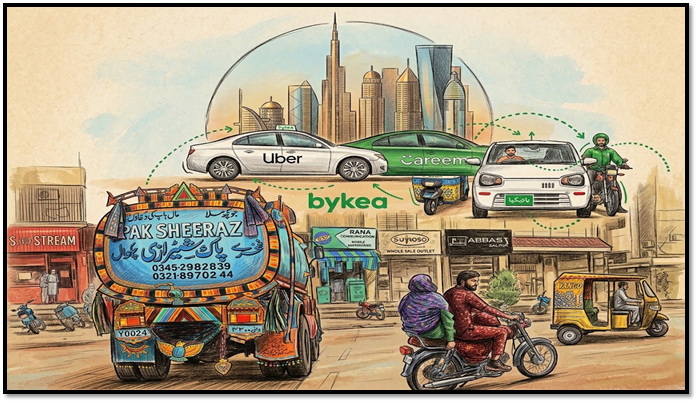
Where Did Uber and Careem Go? A Commute from North Nazimabad to DHA
As we finished our visit to North Nazimabad, Irfan used his Smartphone to order a Bykea car. Within a few minutes, the vehicle pulled up. We verified the license plate and climbed into the back seat.
“Assalamu Alaikum, sirs,” the driver greeted us. “Should I switch on the AC, or is natural air fine?”
“Please turn on the AC,” I said, hoping to escape Karachi’s polluted air, which ranks among the worst in the world on the AQI index.
“What is your name? And how long have you been driving for Bykea?” I asked as we pulled into traffic.
“Sahib, mera naam Javed hai. Main do saal se Bykea chala raha hoon,” (Sir, my name is Javed, and I have been driving for Bykea for the last two years) he replied politely.
“Whatever happened to Uber and Careem?” I inquired.
“Careem and Uber were fantastic companies—they ran honest, well-organized businesses,” Javed reflected. “I used to drive for Careem. You never had to wait around for a passenger; the moment you dropped someone off, the next ride was already queued up. I used to complete 13 rides in an eight-hour shift and make 7,000 rupees easily. Even when they asked us to take corporate rides without taking cash up front, we honored it because we trusted them. But things are completely different now with platforms like Yango and InDrive.”
“Why did Careem and Uber leave the market?” I asked.
“It all changed during the COVID-19 pandemic in 2020,” Javed explained. “The entire market shifted. Once upon a time, you just downloaded the app, signed a straightforward agreement with Uber or Careem, and got to work. But when COVID hit, they dissolved those old contracts and made us sign new ones. Previously, we weren't allowed to work for competing services, but under the new agreement, they released us to work with other platforms.”
Javed continued navigating through the crowded streets. “So, we became free agents. Investors saw an opportunity and approached former Uber and Careem drivers with a middle path—a win-win scenario for everyone. Former Careem team members launched a new service called InDrive. Instead of taking huge cuts, they let drivers keep the majority of the fare. They gave customers lower rates, like 350 rupees instead of 500, and didn't charge drivers any commission for the first year. Later, they introduced a 5 percent commission, raised it to 7 percent, and today it’s up to 15 percent.”
“Then Yango came in,” Javed added, “outdoing InDrive by charging drivers a 20 percent commission. Meanwhile, Bykea started out as a motorbike service that most people only associated with two-wheelers, but now they’re heavily into cars too. They advertise 30 percent off to customers, but they support us drivers with cash bonuses. If I complete 12 rides in an eight-to-nine-hour shift, Bykea hands me an extra 2,500 rupees in cash the next day. They make money off drivers who only do a few rides, earn from their bike services, and build customer loyalty. Compared to the rest, I consider Bykea’s earnings halal.”
“That’s great for the drivers,” I noted. “But from a customer’s perspective, Uber and Careem used to run thorough background checks on their drivers. They also made sure the vehicles were clean and well-maintained. These new companies don't seem to care as much.”
Javed nodded in agreement. “That is very true, Sir. The current platforms don't require proper background checks, and they operate entirely online with no local offices. If a driver steps out of line or an emergency happens, the customer can’t go to a physical office to file a complaint. Everything is handled through automated app support—that's a huge drawback for passengers.”
Javed skillfully navigated the dense Karachi traffic, dodging deep, potholed craters along the way. As we crossed the Nazimabad flyover, the city's deteriorating infrastructure and surrounding decay was visible on every side.
Irfan, who had been listening intently, chimed in. “Historically, platforms like Uber and Careem completely transformed urban transport in Pakistan. They brought Smartphone convenience to major cities like Lahore, Karachi, and Islamabad. Uber was the budget-friendly option with rickshaws and mini cars, while Careem offered tiered options from ‘Go’ to ‘Business.’ Even though Uber was cheaper, people favored Careem because the drivers felt safer and more professional.”
He paused before adding, “The whole dynamic in Karachi shifted because of rising fuel costs, severe inflation, and competition from flexible-fare apps like InDrive and Yango. The traditional fixed-fare model became unsustainable for both price-sensitive commuters and drivers struggling with high platform cuts. While the original Uber model died out, app-based mobility in Karachi is still alive—it’s just shifted toward lower-cost, negotiable-rate alternatives.”
Javed nodded along with Irfan’s analysis as he brought the car to a stop along the curb. “Sirs, we have arrived at your destination.”
We stepped out, handed him the agreed fare, and said, “Thank you, Javed. It was a pleasure talking with you.”
“Thank you, sirs. Allah Hafiz!” he smiled, waving as he pulled back into the dense Karachi traffic.
(Continued next week)
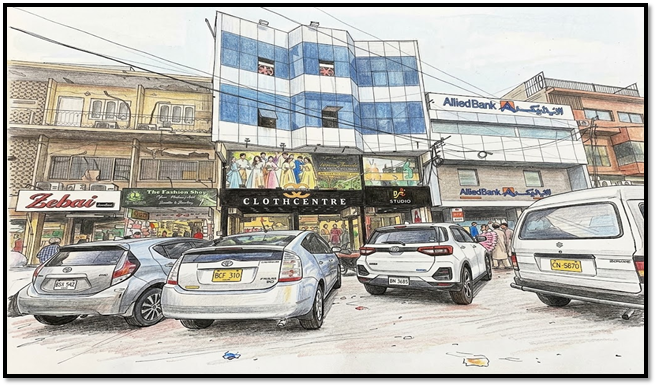
Cars parked along the road block half the driving lane and choke traffic—a clear sign of poor planning
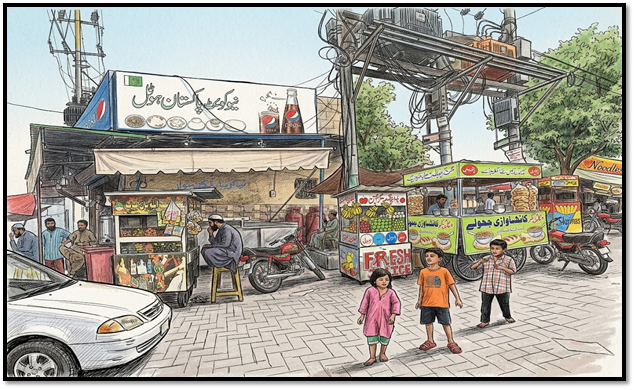
Kids will be kids—they always find a way to have fun
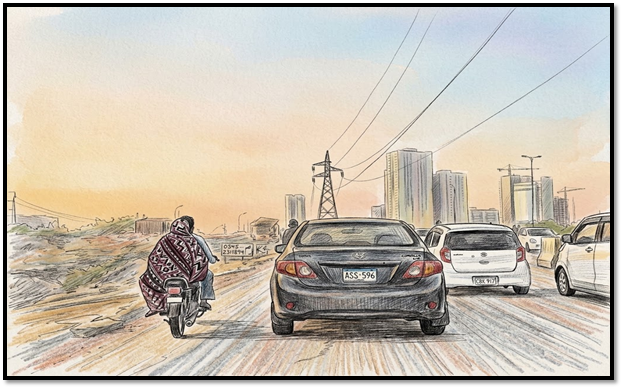
People head home at sunset