Urban and Rural Tales: Human Stories from Karachi-II
By Dr Ahmed S. Khan
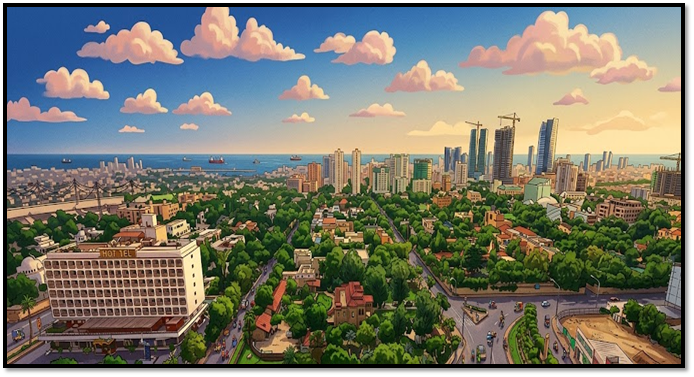
“You will yet be the glory of the East; would that I could come again, Karachi, to see you in your grandeur.”
— Sir Charles Napier, Governor of Sindh
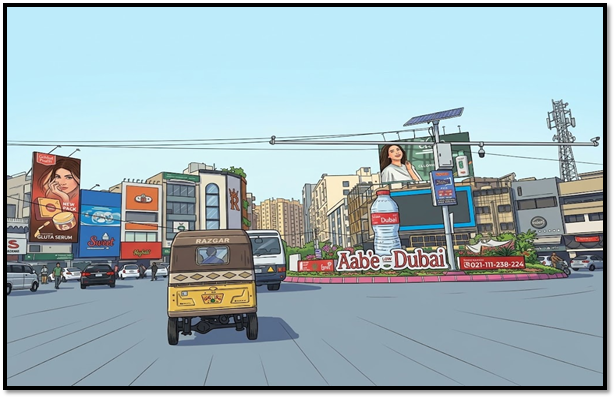
Urban Tale: Rickshaw Ride from DHA to Gulshan e Iqbal
I waved at a vacant rickshaw passing along Khayaban-e-Ittehad in DHA. The rickshaw screeched to a halt with grinding brakes.
"Would you go to Gulshan-e-Iqbal?" I asked the driver.
"Where in Gulshan-e-Iqbal do you want to go?" he inquired.
"Near Disco Bakery. How much will the fare be?"
"Two thousand rupees," he replied.
"How about fifteen hundred?"
"No, Sahib," he said. "I am charging you a fair rate. Petrol prices are high due to inflation, and I also have to pay hush money to the police whenever they stop me."
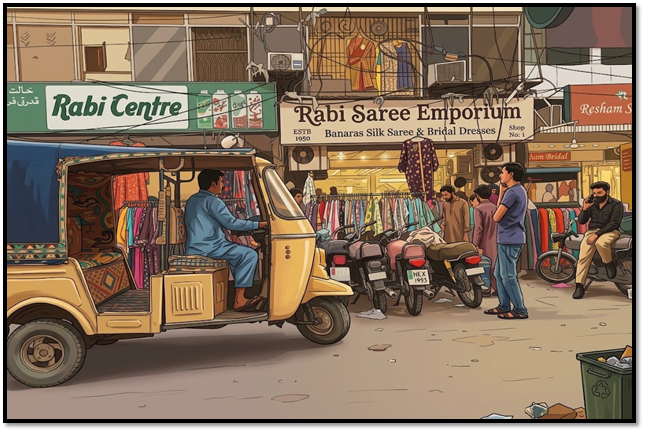
I agreed to the fare, stepped through the narrow door, and sat on a seat covered in torn plastic. As I placed my feet on the floor, I noticed the cracked, rusting metal sheets below.
"Sahib, we will go via Kala Pul," he said.
"Alright," I agreed.
As the rickshaw rattled to life, I asked, "What is your name, son?"
"Farrukh," he replied.
"How old are you?"
"Twenty-one."
"How long have you been driving a rickshaw?"
"Three years," he said, before adding, "Due to my father’s illness, I had to leave school in grade nine to support my family. I did odd jobs for a meager salary, but I couldn't cover our expenses. So, I leased this rickshaw. My mother works too, but we can barely support a family of seven—my parents, four siblings, and me. I’m the eldest."
"What did your father do for a living?" I asked.
"He was a schoolteacher, teaching science and math to grades nine and ten. But he had to retire because of his failing health."
"Does he receive his pension?"
"No, Sahib," Farrukh replied bitterly. "The pension officers demand a huge bribe before releasing it. My father is an honest man who has earned a Halal living his entire life. He strongly believes in the saying of the Prophet Muhammad (SAW) that the curse of Allah is upon the one who offers bribe and the one who accepts it."
He continued, "With today's high inflation and widespread corruption, it is nearly impossible for common people like us to survive."
Suddenly, the rickshaw hit a massive pothole, tossing me into the air.
"Sahib, keep a firm grip on the sidebars so you don't get hurt!" Farrukh warned. "My father tells me Karachi was once a clean, beautiful city with smooth, shining roads. Now, there are hardly any pieces of asphalt left. The roads are filled with potholes—some as big as small caves. Once you land in one, there is no getting out without help."
He skillfully navigated the rickshaw through the jam-packed traffic on Korangi Road. As we drove onto Kala Pul, he gestured toward the bridge. "This bridge is the Pul-e-Sirat of Karachi. On one side, the ultra-rich live in a heavenly enclave; on the other, the poor endure an earthly hell."
He went on, "The rich drive huge SUVs—cars so massive that Karachi’s narrow streets can barely fit them. Many of them drive under the influence of drugs or alcohol, crashing into smaller vehicles and pedestrians, killing innocent people before fleeing the scene. Even if they get caught, they pay off corrupt law enforcement to avoid jail. There is no rule of law here. If you are rich, you are above the law; the law is only enforced against the poor."
"You mentioned having to pay hush money to the police?" I asked.
"Yes," he said. "Every now and then, cops stop me and demand a couple of thousand rupees, claiming my paperwork isn't in order. When I tell them I don't have that kind of money, they reach into my pockets and snatch whatever they find. Sometimes they threaten to frame me for a serious crime like theft or murder if I don't comply. Just last month, they stopped one of my friends near the Baloch Colony flyover and demanded a bribe. My friend told them he had just started his shift and hadn't made a single fare yet. The police refused to listen—they seized his rickshaw, took him to the police station, and framed him in a kidnapping case. His mother had to sell her gold bangles just to buy his freedom. Things have deteriorated so much, Sahib. The distinction between Halal and Haram has vanished from our society. May Allah have mercy on us."
Traffic on Shahrah-e-Faisal was lighter, allowing Farrukh to maneuver swiftly, and finally reaching the broken remnants of what had once been a paved road in Gulshan-e-Iqbal.
"Sahib, we have arrived near Disco Bakery. Where should I drop you?"
"Make a left at the next street and pull over," I guided.
I handed him the fare along with a generous tip. "Shukriya. It was a pleasure talking to you. I hope you remain steadfast and continue to earn an honest living, just like your father. May Allah bless you. Khuda Hafiz."
"Thank you, Sahib. It was very nice chatting with you as well. Khuda Hafiz."
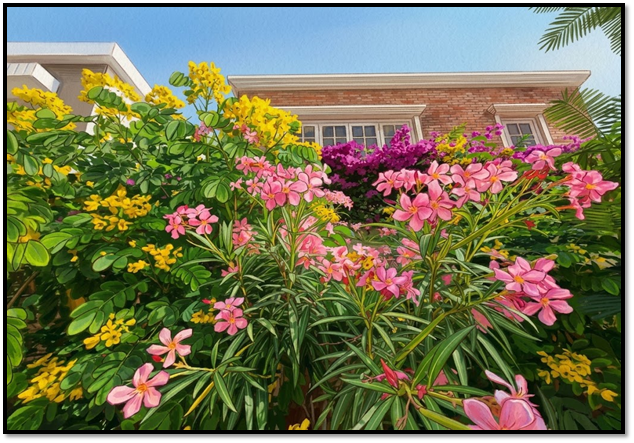
Karachiites share a deep emotional and aesthetic appreciation for flowers.
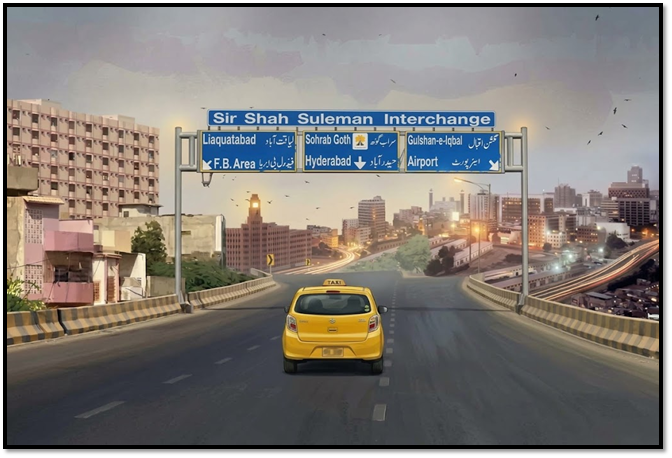
Rural Tale: Taxi Ride from HBL Plaza to University of Karachi
After meeting a friend in Karachi’s financial district on I.I. Chundrigar Road, near Habib Bank Plaza—once Pakistan’s tallest building—I waited for transportation. A taxi pulled up, and the driver leaned out: “Sahib, KhahaaN Jao Gay (Sir, where would you like to go)?”
“University of Karachi. How much will it cost?”
“Thirty-five hundred rupees,” he replied. After a bit of haggling, we settled on twenty-eight hundred.
I opened the door and tried to settle into the backseat, but it was remarkably uncomfortable. The seat cushions were worn down to the frame and the door had no armrests, leaving me suspended awkwardly between the front seats and the back bench.
“Sahib, should we take the Lyari Expressway?” the driver asked. “It’s much quicker—we’ll arrive at the university in about forty-five minutes, compared to the Saddar and Shahrah-e-Faisal route which could take up to an hour and a half.”
“Is the Lyari Expressway safe?” I asked. “I’ve heard criminals set up blockades to slow down cars and rob them.”
“SaiN, that happens at night,” the driver reassured me. “During the daytime, it’s relatively safe.”
“Alright, let’s take the Lyari Expressway.”
“We’ll go via Muhammad Ali Jinnah Road and Garden Road to get onto the Expressway,” he explained.
“What is your name?” I asked.
“SaiN, my name is Sachal—meaning 'truthful.'”
“How long have you been driving a taxi?”
“I’ve been driving off and on for the past five years to support my family, with the permission of my SaiN (feudal lord, or Wadera).”
“What do you mean, ‘with the permission of your SaiN’?”
“I work for my SaiN—a Wadera who lives in a huge bungalow in Defense,” Sachal explained. “He owns vast farmland in interior Sindh, along with a large mansion on the estate. My family and I are his Haris—landless peasants who till his soil. During the agricultural off-season, he brings us to his Karachi residence for domestic help. I handle outdoor chores like driving, gardening, and security, while my wife takes care of the kitchen and attends to his wife and children. Right now, he is vacationing in Europe with his family, so he gave me permission to drive a taxi to earn extra income while he’s away. As soon as the harvesting season starts, he will send us back to the land.”
“What is the name of your SaiN, and where are his lands located in Sindh?” I inquired.
“Sir, with due respect, I would rather not reveal that information for the safety of my family and myself.”
“It’s alright, no problem,” I said. “Even here in Karachi, you don't feel free to speak openly!”
“Karachi is a wonderful place,” Sachal replied. “We aren't treated as mere Haris here—everyone treats us kindly. In rural Sindh, things are completely different; we live in a master-slave dynamic. We, the Haris, aren't even allowed to sit on a bed or chair at eye level with the Wadera. We must sit on the Zameen (ground) and touch his feet to appease his ego. We have to obey his every command. Any sign of defiance can unleash a terrifying wrath with deadly consequences for us and our families—especially the women.”
“Can you share an example?” I asked.
“A couple of years ago, during the elections, my SaiN ordered me to secure votes from local Haris for a specific candidate,” Sachal recalled. “As Election Day approached, I tried my best, but I couldn't pull in the expected numbers. To punish me, he threw me into his private jail and ordered my wife and children to mobilize support instead. My family tried, but his politician friend still lost the election. Enraged, he locked up my wife and children in his private jail as well. We were imprisoned for nearly six months. Only after endless pleas and apologies did he release us, on the condition that future orders would be obeyed without question.”
He paused, navigating the road before continuing. “Living in Karachi is a peaceful escape for us. So many people want to leave the Waderas land and move here, but they remain trapped in economic bondage. In Karachi, these Waderas live in grand bungalows and present a charitable, humane face to society. But in rural Sindh, their true nature emerges. They run criminal networks and gangs of dacoits to generate fortune through kidnapping for ransom. There is no rule of law in rural Sindh—only the rule of the Wadera. I could tell you countless stories of their brutality, but for my family’s safety, I better keep quiet.”
“Hopefully, with better access to education, the condition of the Haris will improve,” I offered.
“I wish that were true,” Sachal said softly. “But the Waderas don't allow the Haris to get educated. They want us to remain lifelong slaves. They abuse Hari women and demand absolute obedience—otherwise, we face private imprisonment or even lose our lives.”
“That sounds like a hopeless situation.”
“Unfortunately, I see no light at the end of the tunnel for us,” Sachal murmured.
As we passed through the gates of Karachi University, Sachal asked, “Where should I drop you off, Sir?”
“Near the library,” I replied.
I stepped out of the cab, handed him the fare along with a tip, and said, “Thank you, Sachal, for living up to your name and telling the truth about interior Sindh. In Sha Allah, one day the Haris will break free from this economic bondage.”
(Continued next week)
Golden hour fades over the bustling city of Karachi