
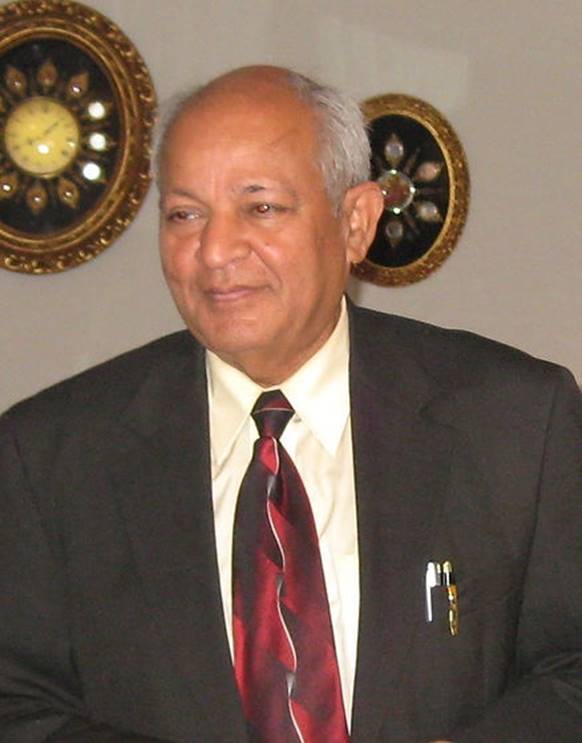
In Loving Memory of Dr Hameed Khan(1935–2026)
By Dr Aslam Abdullah
CA

“O tranquil soul, return to your Lord, well-pleased and pleasing. Enter among My servants. Enter My Garden.” — Qur’an 89:27–30
On February 24th, in Los Angeles, California, Dr Hameed Khan returned to his Creator at the age of 91. His was a life that stretched across continents and generations — from the princely state of Manavadar in British India, to the birth of Pakistan, to the promise of America in the early 1970s. In every land he touched, he left behind something enduring: service, compassion, dignity, and love. We do not simply mourn his passing; we bear witness to a life fully lived.
Dr Hameed Khan was born into a family shaped by responsibility and public trust. His father, Abdul Wahab Khan Asim, served as Ataleeq and treasurer for the State of Manavadar during British India — a position of integrity and accountability. From him, Hameed inherited discipline, moral steadiness, and a deep respect for duty. Manavadar (also spelled Manawadar) was a small princely state in the Kathiawar region of western India, in what is today Gujarat. It was ruled by a Muslim Nawab under British colonial administration. At the time of the Partition of India in 1947, Manavadar became historically significant because its ruler chose to accede to Pakistan, despite being geographically surrounded by territory that became part of India. This decision led to political dispute, Indian military intervention, and eventually Manavadar was integrated into India after a plebiscite. For families like Dr Hameed Khan’s, who were connected to its administration and governance, the events surrounding Partition were not abstract history — they were lived reality. Migration meant leaving behind land, position, and familiarity to step into an uncertain but hopeful future in Pakistan. Today, Manavadar is a town in Junagadh district, Gujarat, India.
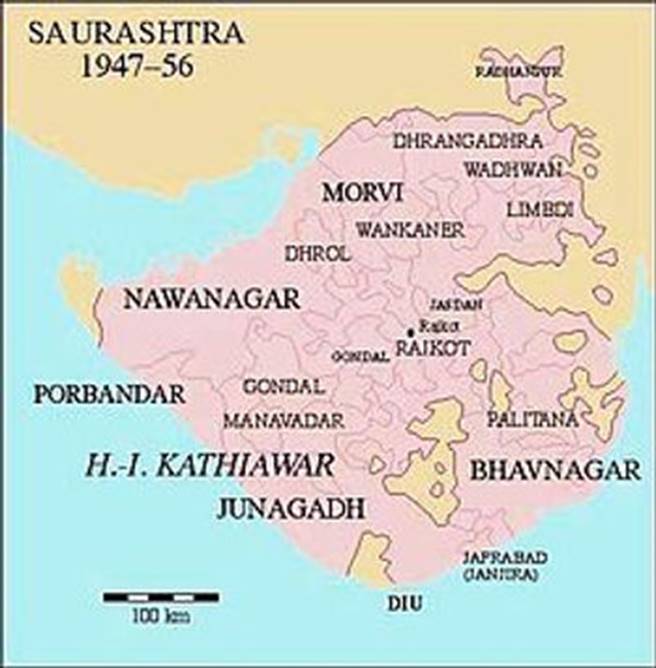
At the time of Partition, as millions crossed uncertain borders, the family migrated to the newly formed Pakistan. It was a period of upheaval, but also of hope. In Pakistan, Dr Khan pursued his medical education, studied diligently, and began practicing medicine — already showing signs of the lifelong devotion that would define him. He belonged to a large and close-knit family: seven sisters — Qudsia, Zakia, Nafisa, Wasima, Anisa, Amina, and Samina — and one brother, Professor Dr A. T. Khan. Their bond was strong, sustained across distances and decades.
Last year, the family endured the loss of his younger sister, whose passing left a quiet ache in his heart. He carried her memory tenderly. Now, perhaps, the reunion of siblings is complete once more — a mercy we entrust to Allah. “Indeed, to Allah we belong, and to Him we shall return.” — Qur’an 2:156
In the early 1970s, with courage and vision, Dr Hameed Khan came to the United States. Like so many immigrants of his generation, he carried little in material wealth but immense reserves of knowledge, resilience, and faith. He and his wife began their American chapter in Chicago, working diligently as they established their home. Their children were born here, roots taking hold in new soil. Later, the family moved to Los Angeles, where they would build not only a livelihood but a community. His wife — his lifelong partner — devoted herself to nurturing children.
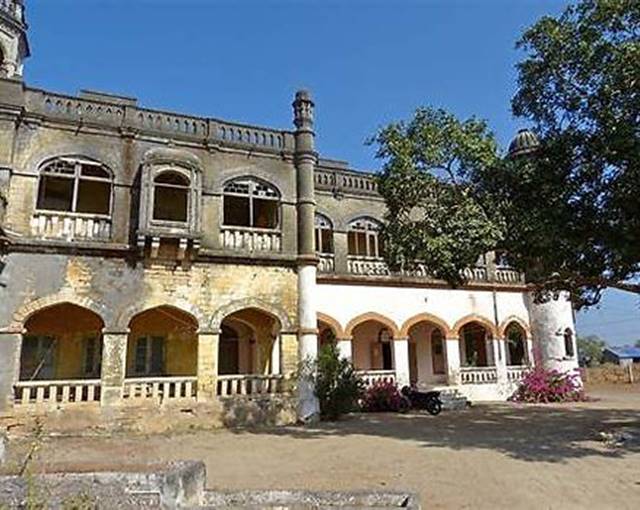
Dr Khan’s place of birth in 1940s
Dr Khan practiced medicine with unwavering commitment. Patients found in him not only a skilled physician but a kind listener. He offered care to underserved communities, guided by conscience rather than convenience. His office was more than a clinic; it was a place of reassurance. He was widely respected by colleagues and deeply loved by patients. His punctuality was legendary, his standards high, his ethics firm. Yet he balanced discipline with warmth — often greeting others with humor and, frequently, with sweets in hand. He believed that healing was not merely clinical; it was human.
Dr Khan’s spirit was adventurous. He did not live cautiously; he lived expansively. He loved sailing, feeling the wind stretch across open water. He flew a Cessna, lifting himself into the sky with the same calm precision he brought to medicine. He scuba-dived in Cancun, exploring depths few dare to enter. He traveled, learned, and sought new experiences even when others might have settled into routine. As an avid gardener, he cultivated what he fondly considered his own Garden of Eden. Plants flourished under his attention; flowers bloomed where he planted them. Gardening was not merely a hobby — it was a metaphor for his life. He believed in tending patiently, watering consistently, and pruning gently. Growth required care. “And it is He who sends down rain from the sky; and We bring forth thereby the growth of all things.”— Qur’an 6:99 His life, too, was growth — steady, purposeful, generous.
If medicine was his calling, family was his sanctuary. He was preceded in death by his beloved wife, whose absence he felt deeply. Their shared journey — from South Asia to America, from early struggles to stability — was a testament to companionship grounded in mutual respect. He is survived by his sons, Junaid and Obaid; his daughter, Jeena; his daughters-in-law, Sarah and Emily; his grandsons, Asim, Amir, and Zachary; and his sisters. To them, he was more than a doctor, more than a respected community elder. He was father, grandfather, brother, anchor. He loved hosting gatherings, opening his home, filling rooms with conversation and laughter. He delighted in seeing children play in the yard he had so carefully cultivated. His presence at family events was steady and reassuring. For his grandchildren, he was an example of discipline paired with tenderness. For his children, he was a model of perseverance and integrity. For his extended family, he was the elder whose counsel carried weight.
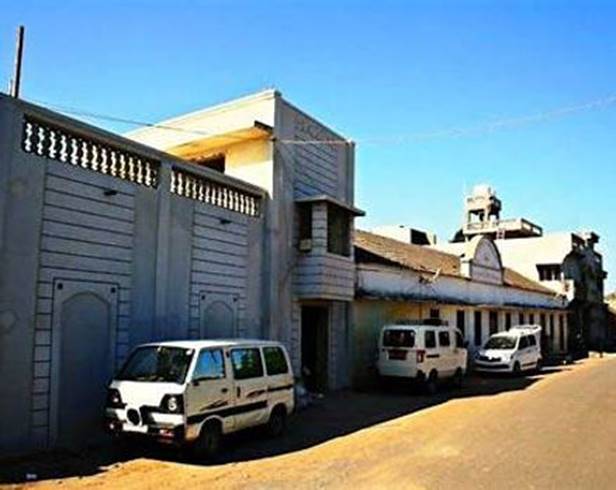
A building in Manavdar
At ninety-three, Dr Hameed Khan had witnessed empires fall, nations rise, and technologies transform the world. Through it all, he remained grounded in faith. The Qur’an reminds us: “Every soul shall taste death.” — Qur’an 3:185 Yet death in Islam is not annihilation; it is return. A return to the One who fashioned us. A return to mercy. For the grieving family and friends, solace lies not in the absence of pain but in the presence of meaning. The Prophet Muhammad (peace be upon him) taught that when a person dies, their deeds continue through lasting charity, beneficial knowledge, and righteous children who pray for them. Dr Hameed Khan leaves behind all three. His service to patients was charity. His medical knowledge benefited countless lives. His children and grandchildren are living extensions of his prayers and values.
To the family: grief is love that has lost its visible form. The ache it feels is testimony to the depth of the bond it shared. Take comfort in knowing that he lived a full life — one of purpose, adventure, devotion, and dignity. To his siblings and extended family: the arc of your shared history — from Manavadar to Pakistan to America — is rare and remarkable.
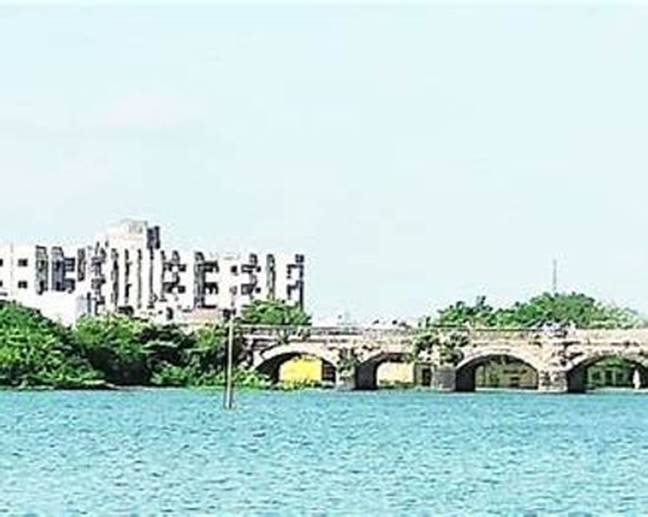
A beautiful lake in his birthplace
They carry forward a lineage of service and resilience. To his friends and patients, the kindness they experienced was real and deliberate. It was who he was.
In moments of quiet, when memory rises unexpectedly, remember that Allah is Al-Raḥmān, the Most Compassionate. No tear falls unnoticed. No prayer is unheard. “Allah is Gentle with His servants.” — Qur’an 42:19 May his grave be filled with light. May his reunion with his beloved wife and departed sister be one of joy. May his record be heavy with good deeds. May his children and grandchildren carry forward his integrity. May patience (ṣabr) settle upon every heart that mourns him.
Dr Hameed Khan’s story is not merely one of migration or medicine. It is the story of a man who embraced responsibility without complaint, adventure without fear, and service without seeking applause. His loss will be felt across every community he touched. But his legacy remains alive — in gardens he planted, in patients he healed, in children he raised, and in the quiet strength he modeled. May Allah grant him Jannat al-Firdaus. May his memory continue to inspire. And may peace descend upon his soul.
Innā lillāhi wa innā ilayhi rājiʿūn.
(Dr Aslam Abdullah is the resident scholar at Islamicity.org, the largest internet portal on Islam. He has served as Director of the Islamic Society of Nevada and Masjid Ibrahim, Las Vegas. Dr Abdullah has also been the Editor-in-Chief of the Minaret Magazine since 1989. He was an associate editor of The Arabia in the 1980s. He also served as vice chairman of the Muslim Public Affairs Council. Not only that, but he is involved in interfaith dialogue and has represented Muslims in several interfaith conferences. He has published several books and more than 1,000 articles and papers in magazines worldwide. Originally from India, he is based in Southern California and has appeared on several TV and Radio shows.)
