
Women International Film Festival Announces February Dates for Landmark 10th Edition in Islamabad
The Women International Film Festival (WIFF) is heading back to where it all began, and it’s doing so with a neat bit of poetry.
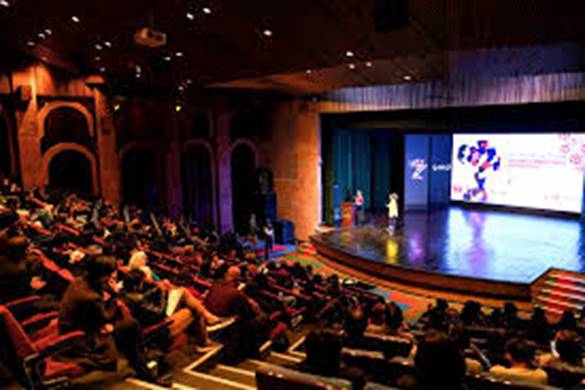
For its 10th edition, WIFF is returning to Islamabad for a two-day celebration at the Silk Road Culture Centre on February 14 and 15, marking a decade of women-led storytelling that has steadily grown from a small, stubborn idea into one of Pakistan’s most consistent independent film platforms.
Organized by the women-led community organization Women Through Film, this year’s festival — dubbed WIFFX — is being dubbed both a milestone and a homecoming.
Screening and discussions will run from 4pm to 9pm on both days, and early bird registrations are already live, with organizers urging audiences to secure their spots before the usual last-minute rush.
The full two-day schedule is already up on the festival’s website for anyone wanting to plan ahead. Day one will include screening of Seemab Gul’s Ghost School and Javeria Waseem’s A B C, among other films, while day two features films including Aisha Hamid’s Ponytail and Mahsa Ahmadzadeh’s Hidden Moon. In total, nine films are set to be screened on the first day, with a longer slate of 13 screenings scheduled for the second day.
According to its website, WIFF has spent much of the past decade operating on momentum, community goodwill and the persistent belief that women’s stories deserve more than occasional, tokenistic screen time. The festival was founded to represent stories of women and depict the diverse and multifaceted roles they play in society, as well as the struggles they face.
According to founder and director Madeeha Raza, it has also served as a space where female filmmakers can network, collaborate and celebrate one another’s work.
WIFF’s origins go back to 2016 and 2017, when Women Through Film was set up in response to a fairly obvious but often ignored problem: women were present in Pakistani cinema, but their stories were usually filtered through male perspectives. The first edition of the festival, launched in 2017, positioned itself as a home-grown platform for self-expression, citizen journalism and what the organizers described as the “raw power of the female gaze”.
Between 2018 and 2021, the festival evolved into what its organizers now describe as a sanctuary for social-impact cinema, supported at different points by the European Union and the German Embassy. Even as independent film struggled for funding and screens, and as the pandemic forced cultural events to rethink how they functioned, WIFF managed to keep its programming going, building links between international filmmakers and Pakistani audiences and reinforcing the fact that women-centered narratives are not niche add-ons.
The years that followed saw the festival grow more ambitious. From 2022 to 2024, WIFF expanded into a multi-city event, with editions held in Karachi, Lahore and Peshawar in addition to Islamabad, supported by partners such as the British Council and the embassies of France, Spain and Ukraine.
According to its organizers, this 10th edition marks 10 consecutive years of programming, making it the longest-running women’s international film festival in Pakistan. Returning to Islamabad, where it first found its footing, is less about nostalgia and more about acknowledging the community that helped keep it afloat in its early, uncertain years.
For audiences, that means two evenings of curated screenings and conversations that reflect the festival’s long-standing commitment to women’s perspectives, rather than a glossy anniversary spectacle that forgets why the festival started in the first place. - Images
