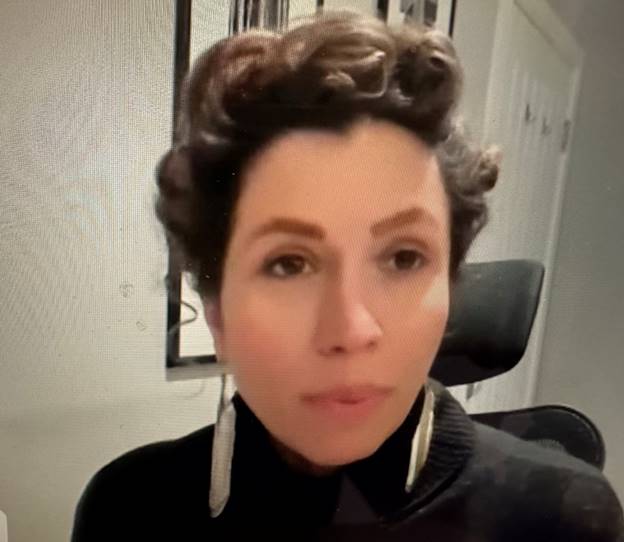
Ellie Geranmayeh
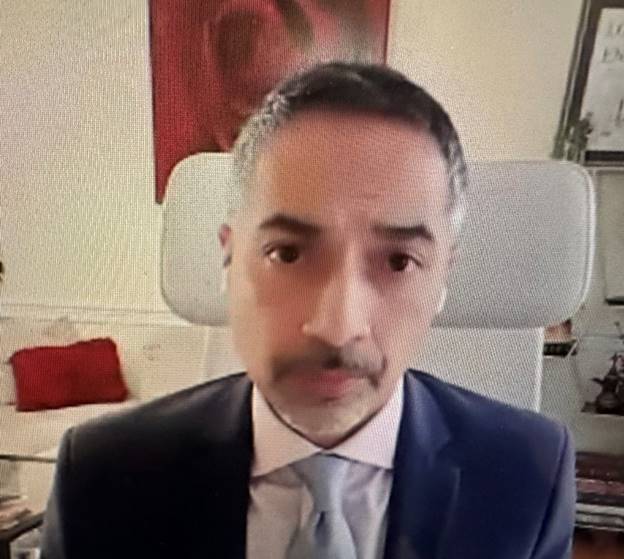
Trita Parsi
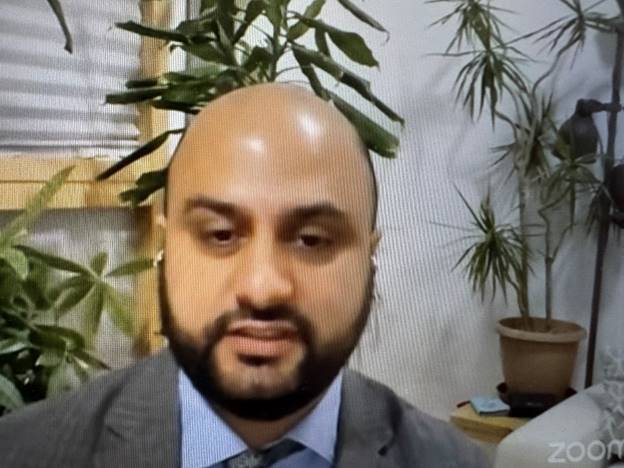
Mohammed Ali Shabani
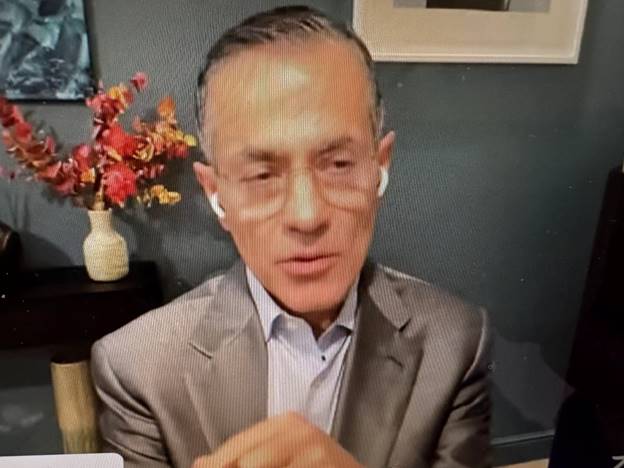
Vali Nasr
Quincy Institute Spotlights Iran at a Crossroads: Protests, Repression and the Risk of US Military Escalation
By Elaine Pasquini

Washington, DC: The Quincy Institute for Responsible Statecraft hosted an online panel on January 12, 2026, to analyze the recent wave of anti-government protests across Iran. Beginning four days earlier, due to the collapse of the Iranian rial and skyrocketing prices, protests originating in the bazaars of Tehran exploded across the country.
This mass uprising, noted Trita Parsi, executive vice president of the Quincy Institute, is the largest in the Islamic Republic since 2009, igniting speculation that the regime may be approaching a breaking point or even face an internal coup.
Fully understanding that providing any major predictions may be difficult – especially considering the oscillating threats by US President Donald J Trump of US intervention, Parsi convened a panel of experts to discuss the uprising.
The first panelist, Vali Nasr, a professor of International Relations at Johns Hopkins School of Advanced International Studies, was a senior advisor to Ambassador Richard Holbrook, US Special representative to Afghanistan and Pakistan between 2009 and 2011.
He explained that the protests which began on January 8 in a way that people expected would cause the Islamic Republic to collapse are difficult to sustain with the subsequent internet blackout and without leadership. The idea of a defection from within the regime, or regime change itself, has been on the table for a while largely because “everybody in the political class in Iran knows that the regime as is, is at a dead end,” Nasr argued. “It cannot get out of its economic situation. It's mismanaging the country…which has water shortages, electricity shortages…[and] an unhappy population.”
Being almost completely isolated diplomatically, Iran lacks options under its current circumstances to address these things, “so this idea that the country needed a new direction has been out there,” he added.
Ellie Geranmayeh, a senior policy fellow and deputy head of the Middle East and North Africa program at the European Council on Foreign Relations, observed that over the decades rounds of protests in Iran have led to different types of change without regime change. “I think it's important to note that with every major political upheaval we have seen in the country in the past, it has forced the Islamic Republic of Iran to provide some gifts to the people,” she said, “[but] it hasn't at all met the expectations of those leading the demonstrations and giving their lives for the protests.”
She went on to question whether the degree of anger we have seen from the protests on the ground will lead to a process of “some sort of a change or reconciliation offer from the state to the citizens.” The “off-ramps right now,” she continued, “are limited for a system that is facing huge economic problems, so that economic part of the social contract is going to be very difficult to repair as sanctions remain and so long as the corruption networks continue to lead the way on the economy.”
Geranmayeh also pointed out that inside Iran there is a shrinking but viable civil society coalition, who have worked through unions, student movements and different types of bodies to organize some of these protests over the past two decades. “I think too often in the West we are forgetting that those people in the country exist, and that those people have not been necessarily calling for foreign intervention through military strikes, and they have not been calling for violence by the protesters,” she said.
Mohammed Ali Shabani, an award-winning Middle East expert and scholar, and editor of Amwaj media, a leading London-based news site focusing on Iran, Iraq and the Arabian Peninsula, noted there are also massive state-sponsored rallies across Iran supporting the government. “It's an attempt by the Islamic Republic to show that it still has a base, however small, that it can mobilize in an organized manner,” he said.
Trita Parsi pointed out there is a segment of the population that wants to get rid of the regime, but not at the cost of complete chaos. There seems to be a growing element inside, he said, who have reached the conclusion that in the absence of getting rid of the regime nothing will really change, because the trajectory has been so negative.
Asked by Parsi if there is a role for Iranian Crown Prince-in-Exile Reza Pahlavi and his movement in all of this, Shabani skeptically questioned why Iranians inside Iran would consider a role for Pahlavi who lives in Virginia and hasn't been in Iran for 47 years.
“I believe the protests require organization to be able to succeed in achieving its declared aims of changing the political structure and right now it doesn’t seem like that organization exists,” he said.
In conclusion, Shabani stressed the importance of the middle class without which “you cannot have a push for political change. Unfortunately, the sanctions of the past 20 years have hollowed out that middle class, and I think it's really vital to reverse that trend.”
(Elaine Pasquini is a freelance journalist. Her reports appear in the Washington Report on Middle East Affairs and Nuze.Ink.)