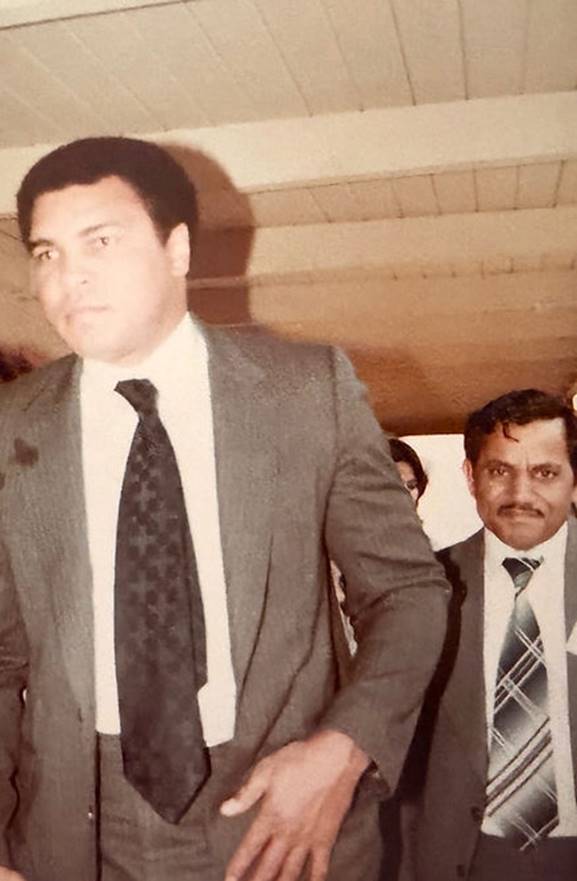
In order to give an immigrant community a voice and dignity, he joined the Pakistani American Association as a founding member in 1981. He represented the Pakistani community at the 1984 Summer Olympics in Los Angeles, hosting athletes and officials while maintaining cultural sensitivity. In public, he praised Muslim greatness, such as Muhammad Ali, as a conscience rather than a celebrity
Dr Atiq Alam Siddiqi: A Life Lived in Service
By Aslam Abdullah

Humility was his dress.
Love was his breathing.
Politeness was his language.
Simplicity was his style.
Dr Atiq Alam Siddiqi did not announce his service. He lived it. He moved through communities quietly, stitching together what history, fear, and neglect had pulled apart.
When he arrived in America, Muslims were few, fragmented, and often invisible. When he returned to Allah ﷻ on January 11, 2026, more than 300 Muslim centers stood across the landscape—organized, respected, and connected. That transformation did not happen by chance. It happened because of a man who believed unity was an obligation, not an option.
Roots of Character and Faith
Born on January 1, 1941, in Varanasi, India, Dr Atiq was shaped early by knowledge and discipline. His father, Mohammad Rafiq Alam Siddiqi, was a teacher—one who taught not only lessons, but values. His mother, Fatima Binti Shakur, instilled quiet strength, faith, and compassion. Atiq learned humility naturally, listening before speaking and serving before exercising authority. In 1952, the family migrated to Karachi, Pakistan. Displacement became part of his early vocabulary, but it never bred bitterness. Instead, it cultivated adaptability and empathy—qualities that would define his leadership decades later.
Scholarship Anchored in Purpose
Serious about his studies, Dr Atiq earned advanced degrees in Economics and Mathematics, including a PhD. He married Iqbal Fatima Siddiqui in 1967, starting a lifelong marriage based on service and faith. Together, they brought up Naveid and Sabiha Siddiqi, two children, setting an example of a life in which community and family were never seen as mutually exclusive.
Crossing continents and cultures symbolically, he traveled through Istanbul on his way out of Pakistan in 1971 in pursuit of economic opportunity. He traveled first to Canada and then to Jamaica, where he managed academic systems and curricula while teaching advanced mathematics at Happy Grove High School and acting as assistant principal. Even in those places, education was always amanah, a trust, rather than just a job.
After four years, violence and political unrest compelled him to leave Jamaica. Adversity once more redirected him instead of defeating him.
The instructor who built institutions
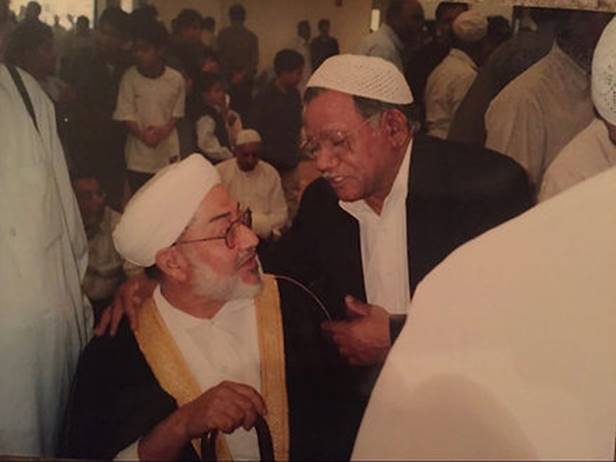
Dr Atiq carried the same subdued mission from Nottingham, England, to Queens, New York, and then, in 1979, to Southern California. After moving to Rosemead, California, he worked as a math teacher at several high schools, and Cal State LA for a short time as an adjunct professor. His pupils recall patience combined with precision—rigor tempered by compassion. His vision, however, went well beyond classrooms.
Empathic Civic Leadership
In order to give an immigrant community a voice and dignity, he joined the Pakistani American Association as a founding member in 1981. He represented the Pakistani community at the 1984 Summer Olympics in Los Angeles, hosting athletes and officials while maintaining cultural sensitivity. In public, he praised Muslim greatness, such as Muhammad Ali, as a conscience rather than a celebrity.
He asserted that the Muslim presence was a civic right and not a permitted exception in the early 1980s by assisting in the official approval of Pakistan Independence Day celebrations in Southern California, working with Tom Bradley and Pete Wilson.
Constructing Sacred Spaces in Southern California
Masjid Gibrael in San Gabriel was established by Dr Atiq in 1981. He established the Masjid Qurtubah in Monrovia in 1991. Between these landmarks and beyond, he helped innumerable communities throughout Southern California by creating Islamic curricula, drafting bylaws, obtaining city approvals, and serving on advisory boards for masjid like the Islamic Center of Fontana and Medina Islamic
Center. However, he was never interested in structures alone. That was unity.
A pioneer of American-Muslim harmony
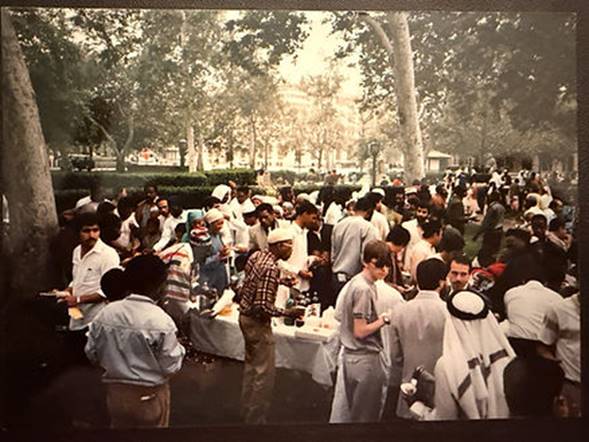
For the first time in the nation, Dr Atiq was a trailblazer in bringing together immigrant Muslim communities and African American Muslims in a systematic, long-term manner, something that many people thought was impossible. While immigrant Muslims provided institutional momentum, he recognized that African American Muslims carried the moral authority of struggle and indigenous American Islam. According to him, American Islam could only develop when both parties acknowledged each other as equal partners.
Dr Atiq, in close collaboration with Warith Deen Mohammed's adherents, assisted in planning the inaugural joint Eid prayer between African American and immigrant Muslims, which took place at the University of Southern California in 1985. Regardless of race, culture, or history, thousands of people prayed together. Muhammad Ali stood among them, a living example of faith manifested through bravery. It was a pivotal moment.
Transforming Communication into Group Leadership
In 1984, Dr Atiq established United Islamic Centers (UIC), which produced an extensive database of South Asian, Arab, and Black masajid, complete with contacts, locations, and leaders. This straightforward yet groundbreaking action made it possible to coordinate, communicate, and make decisions as a group, particularly during a single Ramadan and Eid al-Fitr.
Later, UIC changed its name to the Islamic Shura Council of Southern California (ISCSC), which he co-founded
with leaders from a generation that influenced American Muslim institutional life, including Dr Maher H. Hathout, Dr Ahmad Sakr, Dr Muzammil H. Siddiqi, Adam Bholat, Imam Harun Abdullah, Imam Abdul Kareem Hassan, and Imam Saadiq Saafir.
Religion that permeated public life
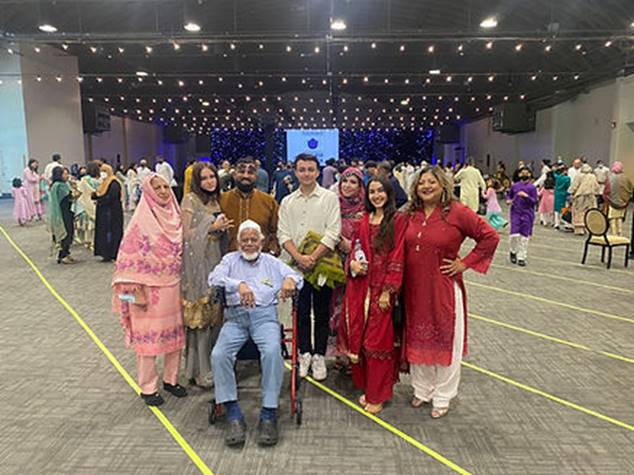
Faith, according to Dr Atiq, must also uphold dignity in public life. The Muslim Electoral Council of America, which he co-founded with Dr Aslam Abdullah, actively participated in voter registration and civic engagement during the 2004 US elections. He saw political involvement as stewardship rather than a quest for power.
No-Spotlight Service
Because he believed that guidance must reach even the forgotten, he collaborated with the Saudi Arabian government to provide free copies of the Qur'an and Islamic literature to prisons across the United States. He was a co-founder of the Muslim Mortuary and Cemetery Committee (MMC) in 1991, which helped to secure Islamic burial rights in California and guarantee dignity both in life and in death.
Dreams That Outlived Him
Among his unfinished projects were the Islamic Court of America, Crescent Tax Services (Islamically compliant), and an Islamic academy. Yet unfinished institutions do not diminish a finished life.
A Quiet Departure, A Lasting Presence
Dr Atiq Alam Siddiqi returned to Allah ﷻ on January 11, 2026. He left without monuments — but with something far greater: a connected, confident American Muslim community shaped by humility, unity, and service.
He taught us that leadership need not be loud. That unity requires patience. That sincerity builds what ego cannot.
He came quietly. He served faithfully. He left the world stronger than he found it.
And that is the measure of a life well lived.
(Dr Aslam Abdullah is the resident scholar at Islamicity.org, the largest internet portal on Islam. He has served as Director of the Islamic Society of Nevada and Masjid Ibrahim, Las Vegas. Dr Abdullah has also been the Editor-in-Chief of the Minaret Magazine since 1989. He was an associate editor of The Arabia in the 1980s. He also served as vice chairman of the Muslim Public Affairs Council. Not only that, but he is involved in interfaith dialogue and has represented Muslims in several interfaith conferences. He has published several books and more than 1,000 articles and papers in magazines worldwide. Originally from India, he is based in Southern California and has appeared on several TV and Radio shows.)