
Sapan News
A Call to Lift the Ongoing Media Bans between India and Pakistan
By Regina Johnson / Sapan News
Virginia
Several organizations and individuals have jointly urged India and Pakistan to unblock each other's news websites and digital media platforms.
The groups, which include South Asia Peace Action Network (Sapan), South Asians for Human Rights, the Pakistan-India People’s Forum for Peace and Democracy, the Rural Media Network of Pakistan and various media outlets, warned in a statement released Wednesday , that the escalating restrictions were undermining press freedom and the public’s right to information in South Asia. The Editors Guild of India released a similar statement the same day.
“We urge both states to uphold the principles of freedom of expression, press freedom, and the public’s right to information, as guaranteed under international human rights frameworks,” according to the joint statement.
The statement invites media organizations, journalist unions, civil society groups, academic institutions, and peace networks across South Asia to join them in collectively urging the governments of India and Pakistan to reverse the restrictions.
More than 18 organizations and 85 individuals across the spectrum, from journalists to human rights activists, educators, and business leaders from Nepal, Sri Lanka, Bangladesh, Pakistan, India, the United Kingdom, the US, Canada, and Japan, have supported the statement, which is still open to endorsements.
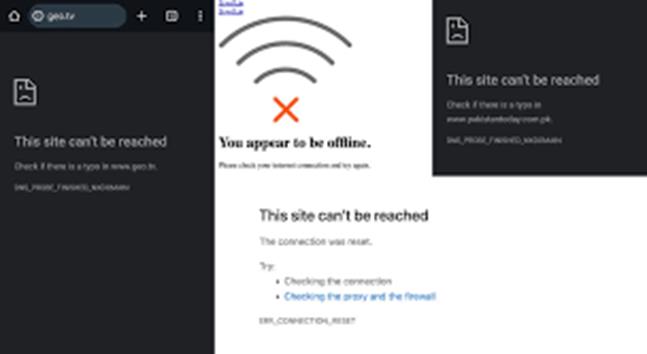
The appeal follows a series of reciprocal actions by the two nuclear-armed neighbors, which blocked access to each other’s news outlets amid heightened political and security tensions last May. Authorities in both countries have justified the measures on national security grounds, accusing each other’s media of spreading misinformation.
“Some media sites do spew hate and propaganda, both through mainstream outlets and social media and this toxic content is amplified by algorithms. But a blanket ban is not a solution as it also silences saner voices,” senior journalist Kunda Dixit in Kathmandu told Sapan News. Dixit, who also endorsed the joint statement, is publisher of the Nepali Times.
Critics argue that the bans are basically censorship that normalize information control during periods of diplomatic strain.
Pakistan-India relations have been tense since the Partition of India in 1947 following the exit of the British. The two countries have fought four wars, in 1947-1948, 1965, 1971, and in 1999, a year after testing nuclear weapons. A fifth conflict flared up in May 2025, following a deadly attack in Pahalgam , Kashmir. Then too, South Asia had initiated a statement widely supported by civil society groups, and peace networks urging India and Pakistan to stop the hostilities .
Until about 12 years ago, India and Pakistan allowed two journalists each from across the border to report from the ground in each other’s capital cities. In 2014, Pakistan asked the two Indian correspondents in Pakistan, Meena Menon of The Hindu and Snehesh Alex Philip of the Press Trust of India, to leave . They did not give a reason, but the expulsion was apparently part of a tit-for-tat policy, since India had for some years been refusing permission for Pakistani journalists to report from Delhi.
Now, media professionals from India or Pakistan are restricted to meeting each other in third countries sometimes facilitated by journalism programs like the one in Kathmandu 2024, organized by Hawaii’s East-West Center.
“Reciprocal bans prevent people on both sides of the border from accessing news, perspectives, and information from their neighbors, further shrinking an already constrained public sphere,” says the joint statement.
(Regina Johnson is coordinating editor, Sapan News. She has extensively reported on America’s energy policy at S&P Global, Washington, DC and written articles for LATINA Style Magazine, Advisors Magazine, Inkstick Media, and Thrive Magazine. Email: regina@sapannews.com . - Sapan News)
