A Visit to APWA Headquarters and Community Projects
By Dr Ahmed S. Khan
Chicago, IL
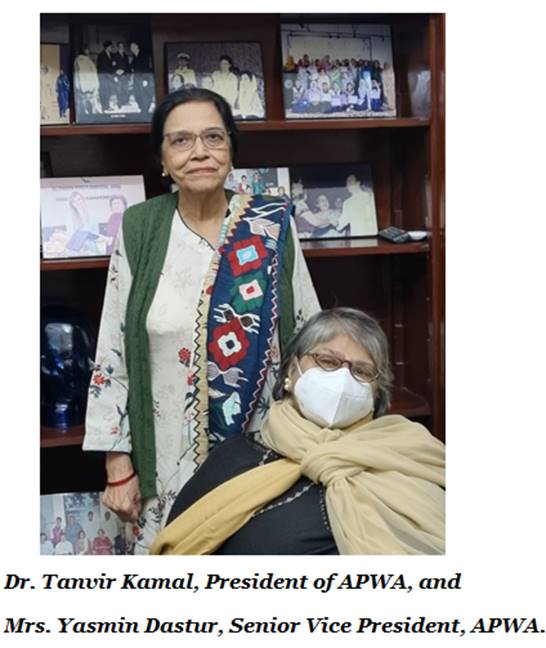
“As the President of APWA, I am guided by a passion for innovation and impactful solutions. By leveraging our collective strengths, I strive to lead APWA toward initiatives that uplift communities, break down barriers, and provide women with the tools and opportunities they need to thrive.” - Dr Tanvir Kamal, President APWA
“In my role as the Senior Vice President, I am deeply committed to driving the heart of APWA's initiatives. With a steadfast focus on collaboration and inclusivity, I work tirelessly to shape a brighter future for women by fostering partnerships, amplifying voices, and leading the charge for gender equality.” - Mrs Yasmin Dastur, Sr Vice President, APWA
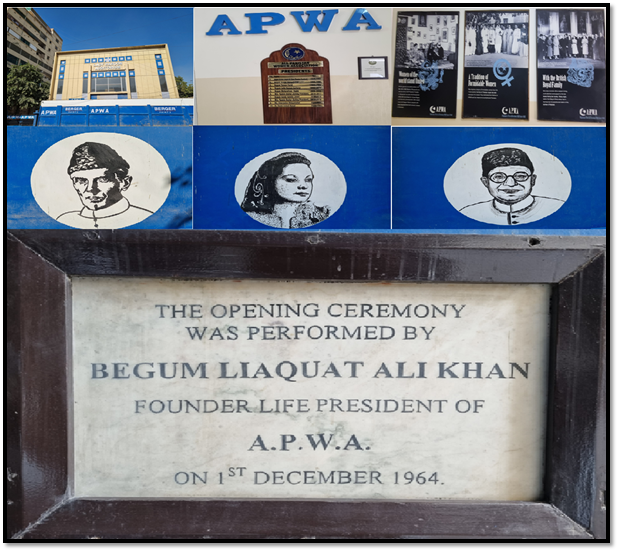
Recently, the author visited the national headquarters of the All Pakistan Women’s Association (APWA) in Karachi. Housed in a spacious building, the headquarters is adorned with photographs and historical records showcasing APWA’s remarkable contributions under the leadership of Begum Ra’ana Liaquat Ali Khan and other
pioneering women leaders who championed women’s empowerment in Pakistan.
Our team was warmly welcomed by Dr Tanvir Kamal, President of APWA, and Mrs Yasmin Dastur, Senior Vice President, APWA. They provided an insightful overview of APWA’s history and its extensive services.
APWA: A Legacy of Empowerment
Founded in 1949 by Begum Ra’ana Liaquat Ali Khan, APWA quickly evolved from emergency relief work into Pakistan’s first and largest women’s welfare NGO, spearheading the women’s movement and empowering women nationwide. Its contributions span five key areas:
1.Education and Literacy
APWA established schools, colleges, and vocational training centers across Pakistan, including the APWA College for Women in Lahore and the College of Home Economics in Dacca. Its slogan, “You educate a woman, you educate a family,” reflects its commitment to female literacy.
2.Health and Social Welfare
APWA set up mother-and-child health centers, maternity homes, and family planning clinics, providing healthcare services in both urban and rural areas.
3.Legal and Political Advocacy
APWA played a pivotal role in passing the Family Laws Ordinance of 1961, introducing reforms such as marriage registration, minimum marriage age, regulated divorce procedures, and improved inheritance rights for orphans—groundbreaking steps for women’s legal status.
4.Economic Empowerment
APWA launched income-generation projects, craft centers, and industrial homes, equipping women with skills and employment opportunities while advocating for their participation in leadership roles.
5.International Representation
APWA earned consultative status with the United Nations Economic and Social Council (ECOSOC) and represented Pakistan at global forums, promoting gender equality and social development.
Today, APWA remains active with branches in 56 districts, overseas units in the UK, USA, and Canada, and partnerships with international organizations—a testament to Ra’ana Liaquat Ali Khan’s vision of a progressive, inclusive Pakistan.
Exploring APWA’s Community Initiatives
The APWA leadership graciously served green tea, and Mrs Rashida Kiran Adil, member APWA, shared copies of two publications:
- Ra’ana Liaquat Ali Khan, N.I.: Biography & Speeches
- Empowering the Future: Sustainability Through Education, Environment, and Health — 24th Triennial Conference 2025 Official Report
They also arranged a tour of Ra’ana Liaquat Public School (RLPS) and Ra’ana Liaquat Craftsmen’s Colony (RLCC) in Shah Faisal Colony, Karachi. The visit was coordinated by Mrs Rozina Khuwaja, Project Director, and Mrs Sarwat Mansoor, Director of Health.
Ra’ana Liaquat Craftsmen’s Colony (RLCC)
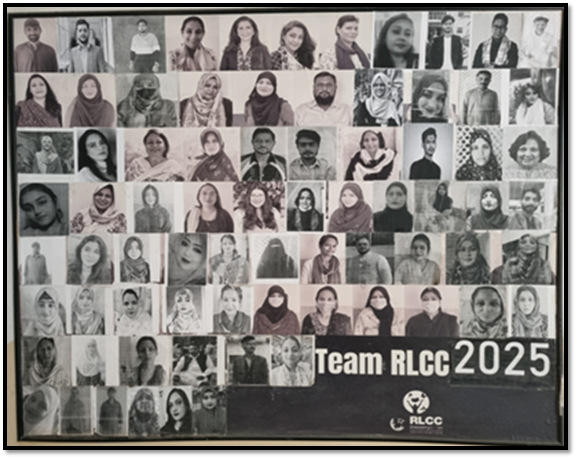
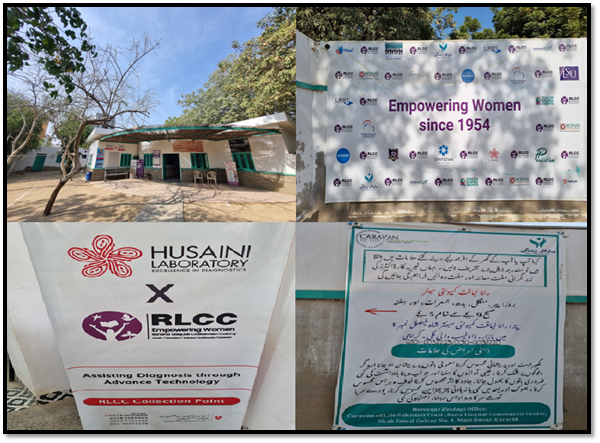
Upon arrival, our team was welcomed by Ms Rubica, Executive Committee Member of RLCC, along with teachers and students. RLCC, inaugurated on August 25, 1954, by Begum Ra’ana Liaquat Ali Khan, is dedicated to uplifting underprivileged communities. It offers education, healthcare, vocational training, and community outreach, benefiting over 20,000 people in nearby areas such as Natha Khan Goth, Drigh Road, and Shah Faisal Colony.
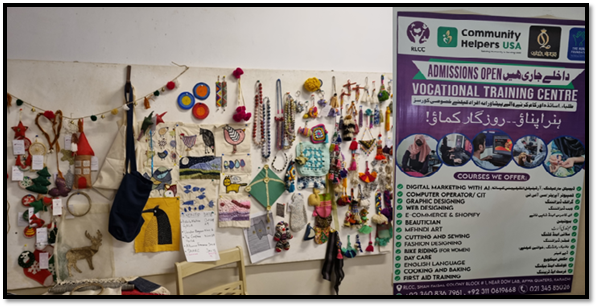
Ms Rubica guided us through RLCC’s various departments, which teach skills including:
- Handicrafts from recycled materials
- IT and digital literacy
- Khaadi operations
- Sewing and stitching
- Beauty and salon training
- Culinary arts
The professionalism and dedication of the teachers and artisans left a lasting impression.
Ra’ana Liaquat Public School (RLPS)
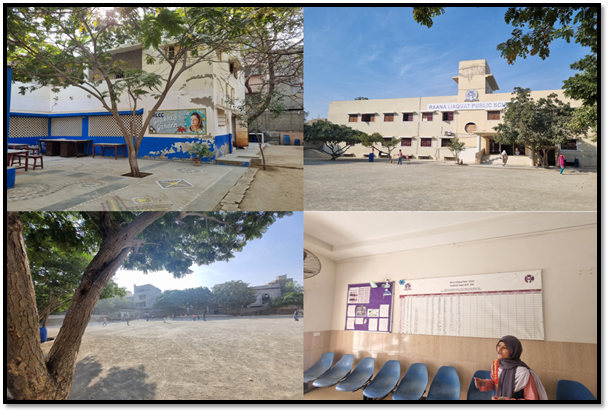
Next, we toured RLPS, where we were greeted by Mr Taimoor, a Karachi University graduate, two very talented female students (winners of a Model UN contest held at NED University, Karachi), and the school’s head boy. The classrooms and science laboratories were well-equipped and managed by highly competent teachers. We observed a student-led conflict resolution session in progress—an example of progressive education in action. The clean classrooms, disciplined students, and high academic standards reflected an outstanding learning environment. Ms Rubica deserves special credit for her leadership in managing RLPS.
Community Health Services
Finally, Ms Sana Farooqui, Director of RLCC’s Community and Medical Outreach, led us through the community clinic. The clinic serves over 10,000 women and youth, providing:
- Mental health support to more than 3,000 individuals
- Free eye care services to 2,300 people through LRBT
- General medical and gynecological care to 5,000 patients
The on-duty psychiatrist noted a rise in anxiety and depression cases due to economic hardships and job losses in surrounding communities, often leading to domestic conflict and violence.
The visit to APWA headquarters and its community projects was an inspiring experience. APWA’s national and local leaders are doing exceptional work to empower women and children by providing education, healthcare, and vocational skills—transforming lives and shaping a better future. Kudos to APWA for its unwavering commitment to progress and social justice!
To sustain its projects and services across Pakistan, APWA relies on financial support. If you wish to contribute to the empowerment of women and children, you can:
Email: apwa1949@gmail.com
Visit: https://www.apwanational.com/ for donation details.
( The author gratefully acknowledges Dr Tanvir Kamal, Mrs Yasmin Dastur, Mrs Rozina Khuwaja, Mrs Sarwat Mansoor, Ms Rubica, and Ms Sana Farooqui for sharing valuable information and arranging the tour of APWA’s community projects. Their assistance is deeply appreciated.)
Dr Ahmed S. Khan — dr.a.a.skhan@ieee.org — is a Fulbright Specialist Scholar.