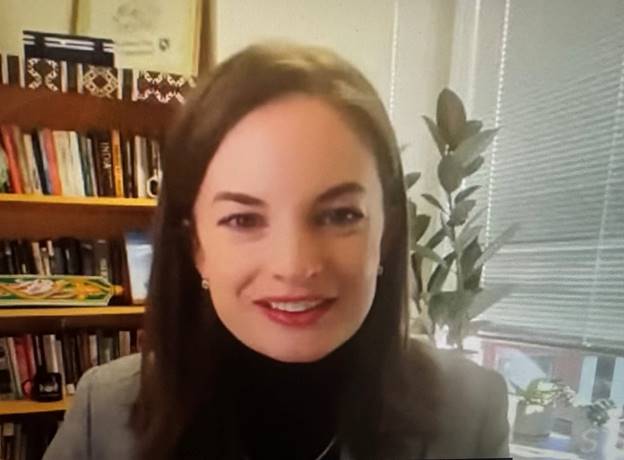
Elizabeth Threlkeld
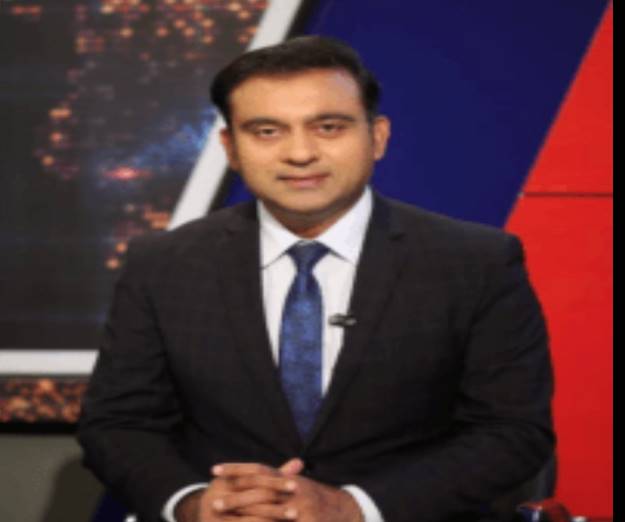
Kamran Yousaf
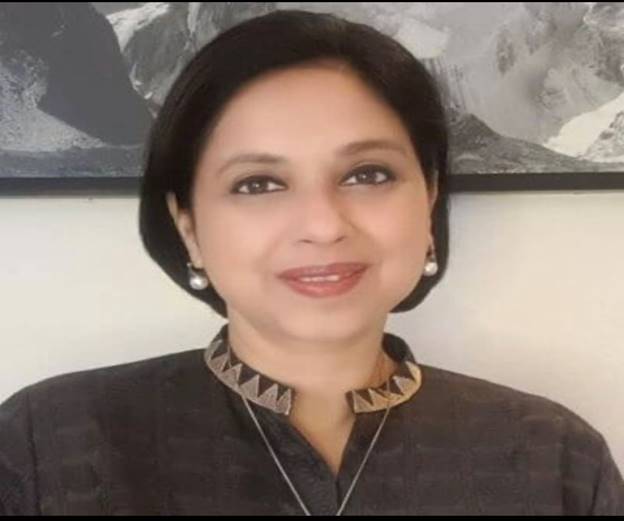
Suhasini Haider
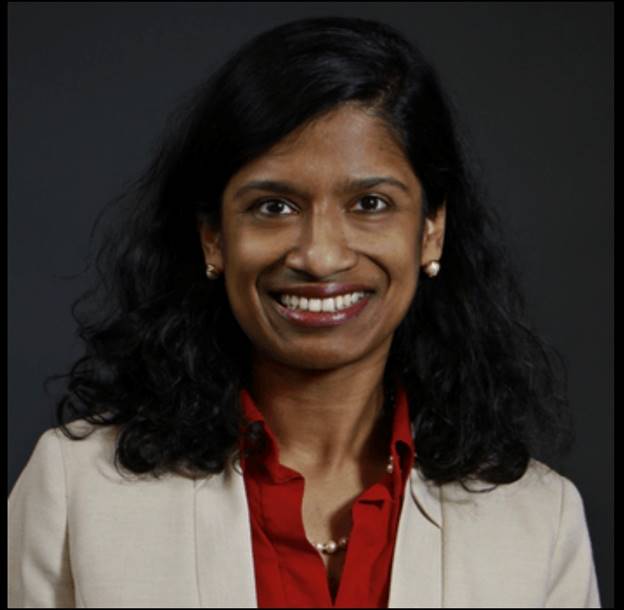
Nilanthi Samaranayake
Stimson Center Reviews South Asia 2025: A Year of Shocks and Shifts
By Elaine Pasquini

Washington, DC: Elizabeth Threlkeld, director of the South Asia program at the Stimson Center, moderated a webinar on December 9, 2025, to review the seismic shocks and shifts in the geopolitical landscape of South Asia this past year.
Unrest in Nepal saw the overthrew of its government, while the aftereffects of similar events in Bangladesh and Sri Lanka continued to be felt both domestically and in their foreign policy, Threlkeld noted.
Regional alignments also shifted. Tensions between erstwhile allies Pakistan and the Taliban boiled over into kinetic conflict, and India and Pakistan experienced the most significant friction between them in decades.
Providing India’s perspective on these events, Suhasini Haider, diplomatic affairs editor at The Hindu, said the Indian government entered this year with a “huge kind of optimism.” Having dealt with President Donald J Trump successfully in his first term, “there seemed to be no reason why India couldn’t pick up where we left off,” she said, noting that Prime Minister Narendra Modi was one of the first leaders to meet with Trump in the White House.
“Then things started to just go off the rails,” she lamented. While the Trump administration’s visa restrictions and clamp down on immigration were distressing to the Modi government, above all, the 25 percent surcharge on India’s procurement of Russian oil threatened India’s economic security. “In his first term, Trump forced India to give up Iranian oil, Venezuelan oil and now he is making India give up Russian oil,” she said.
With respect to India’s foreign policy, India still stands by its position of strategic autonomy, Haider related. “Policy heads speak about multi-alignment and the idea that India is going to have to diversify and find new partners,” as the world is moving to a different place.
“There must be a recalibration of how India wants to keep its diplomatic message going,” she continued. “With Russia and China, it is a difficult one.” Importantly, India will host the BRICS summit in 2026, and the country is firmly in the Shanghai Cooperation Organization sphere as well.
Kamran Yousaf, journalist at the Express News Pakistan, pointed out that one major development is how Pakistan’s strategic profile has risen from being diplomatically isolated to again being relevant, whether it is in South Asia or the Middle East. “I believe that no one, even Pakistan’s staunchest supporters, could have written a script that the relationship between Pakistan and the United States under President Trump would really improve to the extent where I cannot recall any US president previously praising Pakistani civilian and military leadership so much,” he said.
Relations between India and Pakistan deteriorated to the extent that during Diwali, the Hindu festival of lights, the Indian High Commission in Pakistan even eliminated the practice of sending sweets to their Pakistani friends. “This may be inconsequential,” he observed, “but it really highlights the level of the relationship currently between the two countries, that now two neighbors are doing away with the normal courtesies.”
Asked about Pakistan’s efforts to balance its relationships with both China and the US, Yousaf pointed out that historically Pakistan has successfully managed that delicate balance. “The US is probably wary of Pakistan’s close strategic relationship with China, while China welcomes any reproachment in the relationship between Pakistan and the US, given the fact that it was Pakistan that helped open that diplomatic channel between the US and China in the 1970s,” he added.
Yousaf also noted that given the history between Washington and Islamabad, he believed that the Pakistani policymakers are confident they can manage these relationships because Pakistan thinks they should have good relations with all of the big powers, whether China, Russia or the United States.
Now heavily dependent on China when it comes to Pakistan’s defense needs and other strategic objectives, Islamabad must “accept that the US still controls the global financial system,” he argued. “We are still under the IMF program; we certainly need the support of the US.”
With respect to relations between Pakistan and the Afghan Taliban, both sides, Yousaf warned, “have reached a point of no return and I don’t see things really returning to normal unless there is some big miracle.”
He also noted that Pakistan is scheduled to be part of the Gaza peace plan as a component of the international stabilization force in the devastated region. Pakistan views their active participation in this peace process, he opined, “as a way to have more leverage with the Trump administration and other Arab countries. This is something to watch in 2026.”
Concluding the program, Nilanthi Samaranayake, adjunct fellow at the Washington’s East-West Center, said among the smaller South Asian countries the standout moment in 2025 for her was the ousting of Prime Minister KP Sharmi Oli of Nepal by young protesters in September.
She compared this event to the mass protests in 2024 that drove Prime Minister Seikh Hasina of Bangladesh out of office and into exile in India, and to the large popular uprising which forced the resignation of Prime Minister Mahinda Rajapaksa of Sri Lanka three years ago.
These acts suggest “a pattern that’s going on within the smaller South Asian countries,” she said. Common factors of these events, which are advanced through social media platforms, are corruption among the elites, along with dissatisfaction with the low prospects for jobs, especially among the youth.
One successful relationship in 2025, however, was Maldives relationship with India, as shown by Prime Minister Modi’s visit to the archipelagic nation to celebrate the 60th anniversary of its independence.
“In terms of implications, I think this suggests a successful case of a smaller South Asian country figuring out how to approach its relationship with India and how to seemingly assure India of its intent,” she concluded.
(Elaine Pasquini is a freelance journalist. Her reports appear in the Washington Report on Middle East Affairs and Nuze.Ink.)