CSIS Program Analyzes Oil Markets vis-à-vis Iran-US Relations
\ By Elaine Pasquini

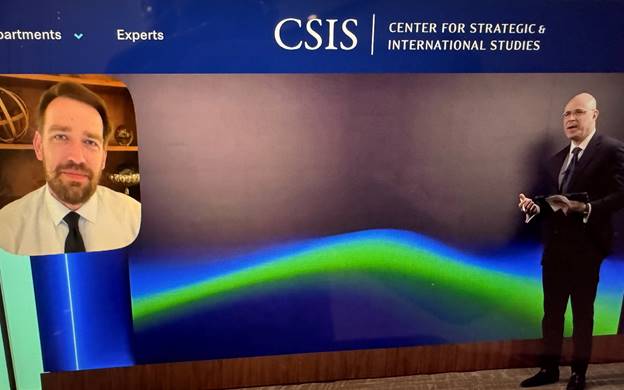
Washington, DC: As tensions escalate between the United States and Iran, the issue of Iranian oil security was the main topic on the February 6, 2026, episode of Energy Shots, a biweekly 30-minute online program telling energy stories through data, personalities and politics, at the Center for Strategic and International Studies (CSIS).
Speaking virtually from Abu Dhabi, Joseph Majkut, director of the Energy, Security and Climate Change Program (ESCC) at CSIS, noted there were few details emanating from the current talks between Iranian officials and US government representatives in Geneva, other than more meetings were scheduled.
Meanwhile, the US is continuing to ship both offensive and defensive military hardware into the Gulf region, and “every time we talk about conflict in this region,” Majkut pointed out, “the Strait of Hormuz rears its head yet again and we think about oil prices.”
Following up on the topic of oil valuation, Kevin Book, non-resident senior advisor to the ESCC program at CSIS, asked if the reactions of financial markets to these tensions would be different than during past conflicts.
Looking back at security events over the last couple of decades, Majkut responded that out of 17 major security events between the US and Iran that he’s tracked since 2018, overlayed with the Brent crude oil price, eleven led to increasing prices in the following month on an average basis and seven did not. “Even though there is this persistent sense that oil out of the Strait could be interrupted by security events, we still see significant trends driven by the macro environment,” he said.
Majkut went on to recount that in September 2019 during the attack on the Abqaiq oil processing facility in eastern Saudi Arabia by al-Qaeda militants prices rose 15 percent on an inter-day level. The Saudis, however, were able to restore production relatively quickly “so the monthly average was only up about six percent in that context,” he said.
Then on January 3, 2020, the US drone strike that killed Iranian Maj Gen Qassim Soleimani in Baghdad “gave the [US] president so much confidence, going into Venezuela but also what we may be seeing again in Iran, that the US could take a more aggressive stance attacking leaders of other countries and kind of get away with it,” he argued. “In that month, the Brent average fell to 5.5 percent, not necessarily due to that strike, but because of larger macro trends associated with declining demand in the first part of the COVID crisis.”
Turning to 2026, oil began at $60 a barrel. In mid-February it is around $65 a barrel, and while traders see “elevated risk compared to what they saw two months ago, they’re not panicking,” he added.
“I think there’s a reason we talk about the Strait of Hormuz the way we do,” Book interjected. “On a crude oil basis, we’re talking an enormous share of seaborn crude that could be interrupted in this narrow chokepoint,” he said. “Should there actually be an interruption in those flows, you’d have price consequences in the mid-double digits to low triple digits by most reasonable estimates… if a conflict goes beyond just instantaneous to several days.”
Then there’s the question of where the crude actually goes, Book continued. Roughly 90 percent of the crude oil going to Asia passes through the Strait of Hormuz. That situation could adversely affect China which has been and remains “Iran’s crude oil buyer of last resort, still taking down more than 90 percent on a trailing 12-month basis through January of this year,” he stated.
With indirect talks between American and Iranian officials continuing into the future, Majkut stressed the need to watch “US leadership and get their readout on the meetings as military equipment is moved into the region,” adding: “We’re going to be living with this tension for some time, and we’ll see what the markets decide the risks are.”
(Elaine Pasquini is a freelance journalist. Her reports appear in the Washington Report on Middle East Affairs and Nuze.Ink.)