
Pakistan Embassy Observes Kashmir Solidarity Day
By Elaine Pasquini

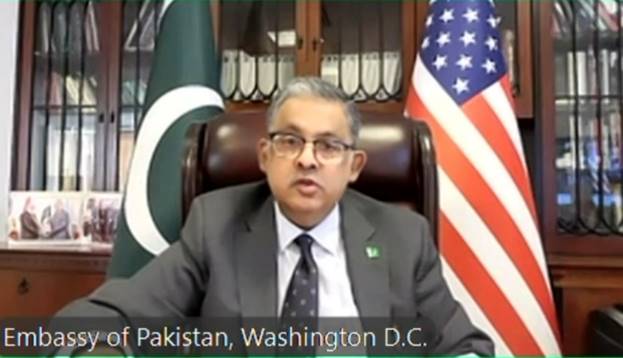
Washington, DC: Every year on Kashmir Solidarity Day, the Pakistani people express heartfelt attachment to their Kashmiri brothers and sisters who are struggling to obtain moral, diplomatic and political support in pursuit of their right to self-determination, Rizwan Saeed Sheikh, Ambassador of Pakistan to the United States, said in a special webinar at the Embassy of Pakistan on February 5, 2026.
Ambassador Sheikh, along with several experts, spoke on the history of Kashmir, highlighting key legal, political and security dimensions of this longstanding conflict. After the partition of British India in 1947, Kashmir, while semi-autonomous, was administered by India from 1952 until 2019, when Indian Prime Minister NarenDr a Modi’s ruling Bharatiya Janata Party (BJP) revoked Article 370 of India’s constitution, which provided Kashmir its special autonomous status.
India’s unilateral and illegal actions in occupied Jammu and Kashmir are a clear violation of UN resolutions and proof of Indian obstinacy, Ambassador Sheikh said. The Kashmir issue, pending for years, is a question mark on the role and effectiveness of the United Nations. After India’s illegal and unilateral action of August 5, 2019, and the situation in Gaza, there is a need to examine the legal aspects of the Kashmir issue with greater scrutiny. The policy of evasion regarding the resolution of the Kashmir issue is exposing regional and global peace to severe dangers, he warned.
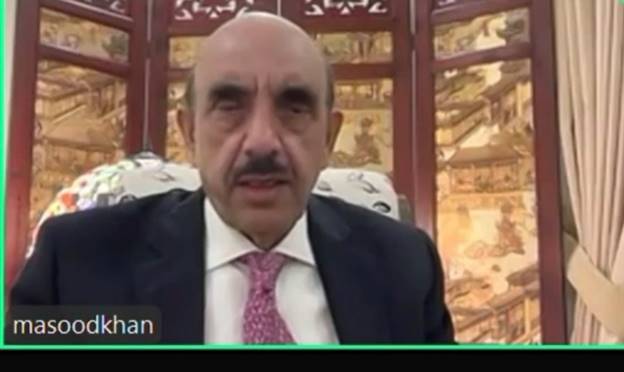
Former president of Azad Kashmir and former ambassador of Pakistan to the United States Masood Khan stressed the need to highlight the Kashmir issue as an international civil rights movement, along with adhering to UN Security Council resolutions. While the Kashmir and Palestine issues are both based on the right to self-determination, Ambassador Khan noted the fate of Kashmiris living under illegal Indian occupation in Jammu and Kashmir receives less international attention.
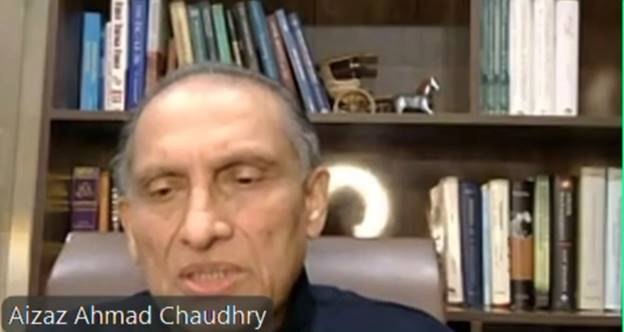
For years, both Kashmiris and Palestinians have been awaiting the implementation of UN resolutions guaranteeing their right to self-determination, said former foreign secretary of Pakistan Aizaz Ahmad Chaudhry.
“Pakistan will continue its political, diplomatic and moral support for the Kashmiri and Palestinian people,” he averred. “For the purpose of a ceasefire in the horrific ongoing assault on Gaza by Israel, Pakistan supports President Donald J Trump’s Peace Board. As a member, Pakistan will be the voice of the Palestinians on the Peace Board.”
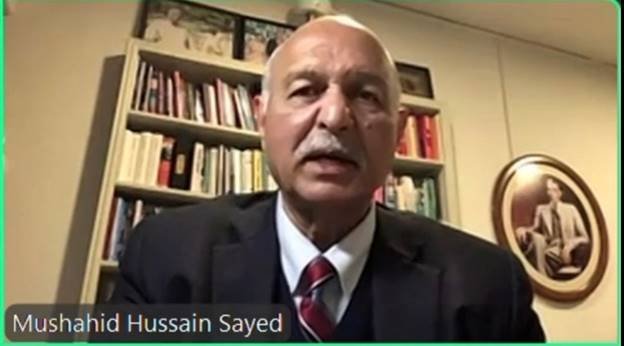
According to Pakistani Senator Mushahid Hussain, “The establishment of the Peace Board by the US president has provided Pakistan with an opportunity to raise the Kashmir issue at this important forum.” He went on to note that following the massacre of Palestinians by the Israeli military “there has been a clear change in global public opinion regarding Israel. The recognition of Palestine by 153 countries is clear proof of this reality.”
India’s unilateral and illegal action of August 5, 2019, in occupied Jammu and Kashmir has also made China a party to this issue, he said. Indian leadership has made it clear that after Azad Jammu and Kashmir and Gilgit-Baltistan, their eyes are set on the Aksai Chin region along with the Trans-Karakoram Tract and Demchok sector presently under Chinese administration.
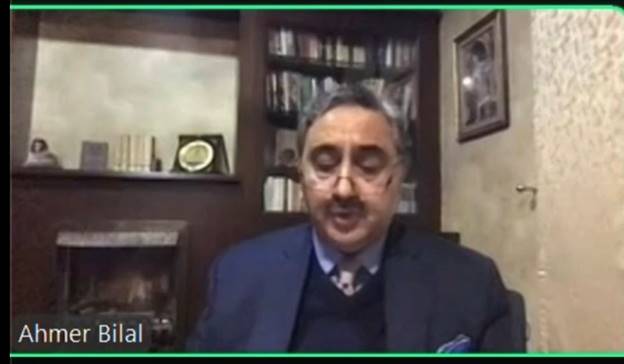
“The importance of the resolutions approved by the United Nations Security Council on the Kashmir issue remains accepted and applicable even today,” said Ahmer Bilal, an attorney and former Pakistan minister of law. Under Article 25 of the UN Charter, the responsibility to implement them rests on all member states.
The supremacy of the UN Charter prevails over domestic and state law, he continued. Article 103 of the document gives precedence to the provisions over the domestic laws or bilateral agreements of any member state. Under internationally accepted laws, Kashmiris possess the right to self-determination and, according to the United Nations, resistance against occupying forces while obtaining external support is permissible. Indian claims regarding Gilgit-Baltistan, Azad Jammu and Kashmir, “and the Chinese claims are baseless and illegal,” he argued. “Effective rebuttal of India’s illegal and aggressive claims at every forum is extremely necessary.”
In a special message from Islamabad, Pakistani Prime Minister Shehbaz Sharif pointed out that the Jammu and Kashmir conflict “remains one of the oldest unresolved disputes on the agenda of the United Nations.”
(Elaine Pasquini is a freelance journalist. Her reports appear in the Washington Report on Middle East Affairs and Nuze.Ink.)
