Practical Strategies to Enhance Pakistan’s Exports to the United States Explored in New York City
By Elaine Pasquini

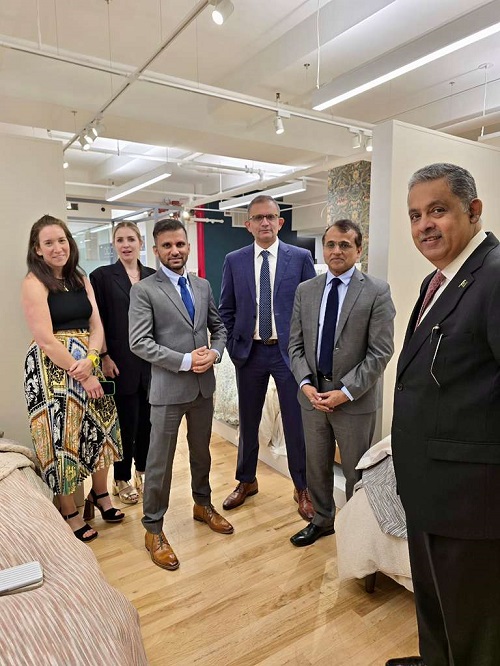
New York City: As part of Pakistan’s ongoing efforts to deepen economic engagement with the United States, Rizwan Saeed Sheikh, Ambassador of Pakistan to the United States, accompanied by Minister of Trade and Investment Mohammad Hanif Channa, undertook a three-day visit to New York City from September 15–17, 2025. The constructive meetings focused on promoting textile exports and strengthening linkages between Pakistani exporters and the American market.
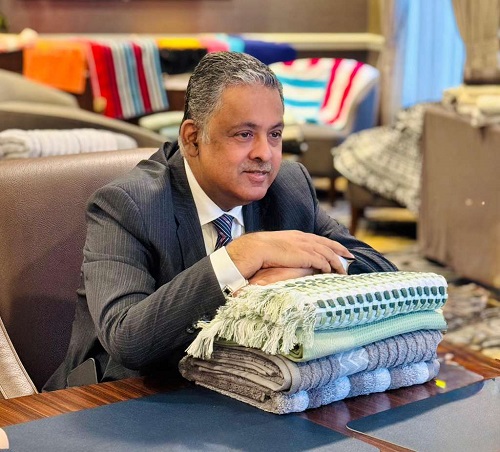
During the visit, the ambassador and his team interacted with a wide range of stakeholders, including the senior leadership of leading Pakistani textile manufacturers, including Gul Ahmed, Alkaram Industries, Alkaram Towels, Nishat Mills, and Lucky Textiles, along with key commercial facilitators such as TEU, Trade Exhibitor USA, GPL LLC, US-based importers, and prominent sourcing agents active in the home textile and apparel sectors.
.jpeg)
Discussions focused on practical strategies to enhance Pakistan’s exports to the United States by leveraging the country’s industrial capacity, competitive advantage in home textiles, and strong compliance and traceability record. In light of recent global trade realignments and tariff shifts affecting other suppliers, the ambassador underlined the importance of swiftly converting these emerging opportunities into sustainable commercial outcomes for Pakistan’s textile sector.
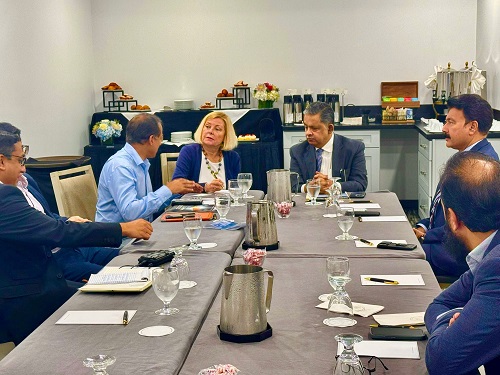
Ambassador Sheikh highlighted the proactive commercial diplomacy being undertaken by the Embassy and assured exporters of the full support of Pakistan’s Trade and Commercial Wing in Washington DC together with the Consulate General in New York.
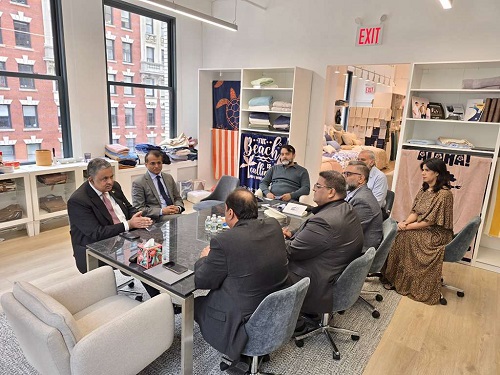
The ambassador encouraged exporters to diversify into e-commerce and direct-to-consumer platforms, highlighting the success of pioneering Pakistani ventures in the US digital retail space. Exporters, in turn, briefed the ambassador on key competitiveness challenges, particularly high energy costs, working capital constraints, and the need for dedicated Special Economic Zones (SEZs) for e-commerce and sustainable manufacturing initiatives.
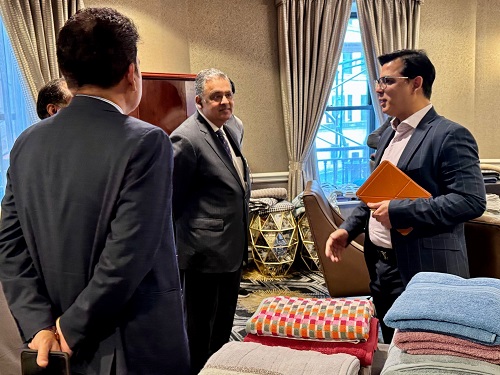
The visit underscored Pakistan’s strategic focus on boosting value-added exports, building lasting commercial linkages with the United States and positioning itself as a trusted, long-term partner in global textile supply chains.
(Elaine Pasquini is a freelance journalist. Her reports appear in the Washington Report on Middle East Affairs and Nuze.Ink.)