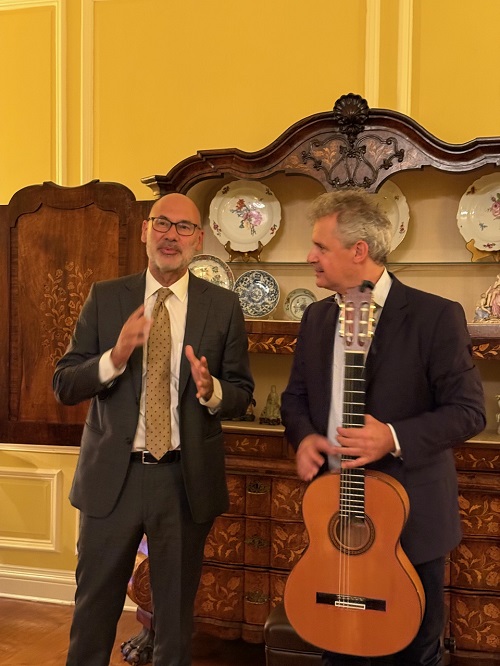
Ambassador Francisco Duarte Lopes and Guitarist Pedro
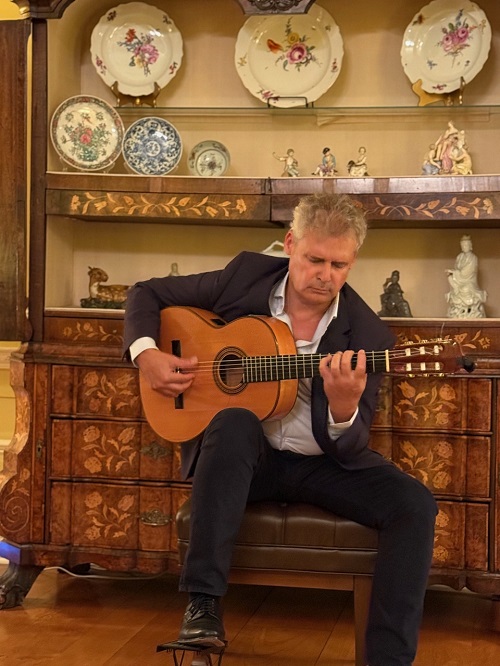
Pedro playing his guitar
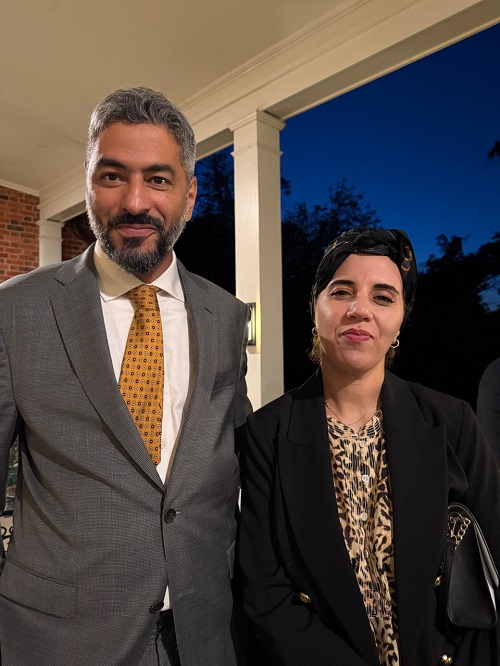
Algerian Deputy Chief of Mission, Djamel KHALFI with his wife
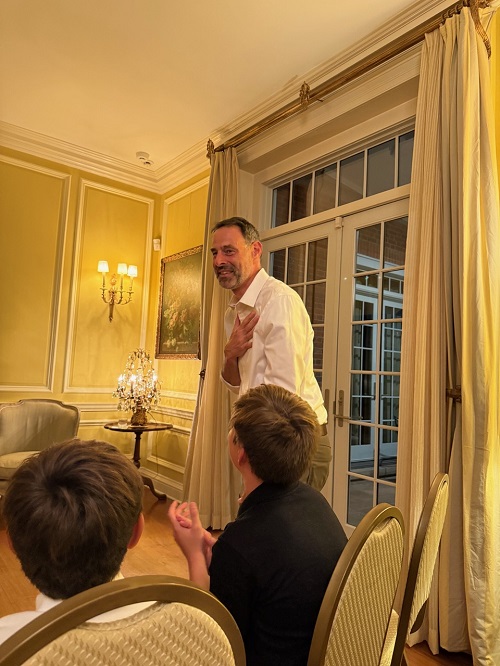
Sava, with his sons seated, acknowledges the kind human gesture of birthday wishes
Pedro Jóia: A Guitar That Bridges Lisbon and Lahore
By C. Naseer Ahmad
Washington, DC

The evening began at six o’clock sharp in Washington. Doors opened, and Ambassador Francisco Duarte Lopes, together with his wife Paula, welcomed guests into their historic Kalorama residence with quiet elegance. At 6:45, the Ambassador’s words of greeting set a warm but formal tone. Yet formality quickly gave way to something more intimate, almost sacred. At 6:50, Pedro Jóia took his seat, lifted his guitar, and transformed the gathering into a celebration of memory, music, and identity. By the time the concert yielded to a reception at 7:30 — with glasses raised and flavors of Portugal shared — those present knew they had witnessed something far beyond diplomacy.
When Music Becomes Communion
There are evenings when music stops being performance and becomes communion. This was one of them. What might have been a polite diplomatic occasion — a circle of officials, expatriates, and friends of Portugal — became, instead, a night of recognition and belonging. From the first chord, Lisbon was in the room.
The sound carried the essence of saudade: longing that is both sorrow and beauty, the ache that defines the Portuguese soul. Yet Jóia’s guitar did not remain bound to fado. Beneath his delicate phrasing pulsed the fire of flamenco, the trance-like rhythms of North Africa, and the ecstatic devotion of Sufi qawwali. The message was unmistakable: though rooted in Portugal, his music belongs to no single shore.
A Life between Tradition and Discovery
Pedro Jóia was born in Lisbon in 1970 and trained as a classical guitarist. As a teenager, he sought out the flamenco masters — Paco Peña, Gerardo Núñez, and above all, Manolo Sanlúcar. They taught him rigor and discipline, yet he never abandoned the sounds of home. Instead, he began to weave them together: fado breathing in dialogue with flamenco, classical form meeting improvisation.
His journey carried him far beyond Portugal. In Brazil, he collaborated with Gilberto Gil, Ney Matogrosso, and Yamandú Costa. As musical director for Mariza, he brought the guitarra portuguesa to stages across the globe, from New York to Tokyo. His own recordings — Variations on Carlos Paredes, Waiting for Armandinho, Zeca — reimagine the works of Portuguese masters for new generations. Twice awarded the Prémio Carlos Paredes, Jóia has secured his place as both guardian and innovator of our musical heritage.
And yet, no matter how far he travels, his art remains anchored in Portugal.
Songs of Memory and Resistance
That anchoring was evident in Washington, where Jóia played not only classical repertoire but also the songs of José “Zeca” Afonso, the voice of resistance under the Estado Novo dictatorship. When he performed A Morte Saiu à Rua, the mournful verses filled the hall like a solemn procession:
Death walked out into the street
carrying in her hands
a bouquet of cold ashes.
Written in a time of censorship and fear, the song’s return in this setting — a Portuguese guitar echoing through a diplomatic residence in the US capital — carried immense weight. For many in the audience, particularly those of the diaspora, it was a moment of recognition. Resistance is also identity: the courage to endure, the refusal to forget. Just as Grândola, Vila Morena became the anthem of the Carnation Revolution, so too does A Morte Saiu à Rua remind us of the cost of freedom and the resilience of a people.
Portugal in Dialogue with the World
Yet Pedro Jóia does not treat these songs as relics. He treats them as living voices, capable of dialogue. His guitar has conversed with traditions far from Lisbon. In Lahore, Pakistan, he performed at the Alhamra Arts Center, where the intensity of qawwali reminded him of the lament of fado. The audiences there, hearing Nusrat Fateh Ali Khan and the Sabri Brothers in his strings, recognized the same devotion they knew in their own music.
These encounters are not accidents but acts of listening. Jóia approaches music not as possession but as encounter. Before Algerian diplomats, his guitar evoked Gnawa chants; before students in South Asia, fado cadences met Sufi ecstasy. Always Portugal is the root — but the branches reach outward, seeking light across the world.
A Bridge for the Diaspora
For Portuguese abroad, evenings like this are more than concerts. They are acts of remembrance. To hear Jóia’s guitar is to recall that Portugal gave the world not only explorers and poets, but also sounds that touch the deepest human emotions.
The diaspora knows saudade better than anyone, for it is the emotion of distance. In Jóia’s music, saudade becomes universal. It resonates with Algerian chaâbi, Andalusian cante jondo, the fervor of South Asian qawwali. His guitar reassures us that Portugal’s voice is not solitary, but part of a global chorus.
The Silence That Remains
What lingers after his performance is not simply admiration for his precision or versatility, though both are immense. What remains is silence — the silence after the final note, heavy with recognition. Recognition that the songs of resistance still speak. Recognition that fado’s saudade can be understood wherever longing exists.
For Portugal, this silence is more than pride. It is proof that our traditions endure, not frozen in the past but alive in dialogue with the world. Pedro Jóia honors Armandinho, Carlos Paredes, Zeca Afonso — yet he refuses to confine them to history’s museum. Instead, he lets their voices converse with flamenco, with Brazil, with Sufi mysticism.
And so, on that evening in Washington, the guitarra portuguesa became something more than an instrument. It became a bridge between past and present, Lisbon and Lahore, memory and resistance. In Pedro Jóia’s hands, it became the sound of Portugal — a sound that belongs to us, and to the world.
A Final Note of Surprise
Every evening has its moment of spontaneity. On this night, it came when the Ambassador and Mrs. Paula Lopes reminded the artist that it was the birthday of a guest, Sava, a Serbian teacher and friend of the family. Smiling, Jóia led the room in a birthday song, and soon the entire gathering joined in chorus. It was a simple gesture, but it sealed the evening with joy and intimacy — the kind of moment that lingers in memory, turning a diplomatic reception into something profoundly human.