Twin Oaks and Taiwan’s Embassy Night: Where Diplomacy Meets Memory
By C. Naseer Ahmad
On September 4, 2025, the Taipei Economic and Cultural Representative Office (TECRO) opened the doors of its storied Twin Oaks Estate in Washington, DC, to international correspondents and leaders of the National Press Club (NPC). The occasion was part of the Club’s long-running Embassy Night series—off-the-record gatherings that blend diplomacy and culture in an atmosphere of conversation rather than ceremony.
Unlike podium speeches or formal communiqués, Embassy Nights thrive on dialogue. They are built on the premise that true understanding between nations grows best in informal settings, where food, art, history, and personal exchanges make the strongest connections.
The Organizers and Participants
This edition of Embassy Night was orchestrated by the NPC’s International Correspondents Team, led by Nicola Wenz, a producer for Germany’s ZDF television service. NPC President Mike Balsamo of the Associated Press offered remarks on behalf of the Club. Adding to the sense of continuity and tradition, several past presidents of the National Press Club also attended, underscoring the event’s significance within Washington’s journalistic circles.
The presence of TECRO as host gave the evening added weight. TECRO functions as Taiwan’s de facto embassy in the United States, an arrangement made necessary by Washington’s “One China” policy.
Taiwan’s Diplomatic Balancing Act
When the United States formally switched recognition from Taipei to Beijing in 1979, Congress responded quickly with the Taiwan Relations Act. The legislation ensured continued cooperation on security, trade, and cultural matters, even without official diplomatic recognition. To carry out this framework, the American Institute in Taiwan (AIT) was established in Taipei, while TECRO assumed embassy-like responsibilities in Washington.
For more than four decades, this structure has allowed US-Taiwan relations to thrive in the gray zone of unofficial diplomacy. Today, the model remains central to one of the most strategically important relationships in the Asia-Pacific region. Yet on this September evening, geopolitics gave way to something more personal: cultural exchange and human connection.
A Night of Conversation, Not Negotiation
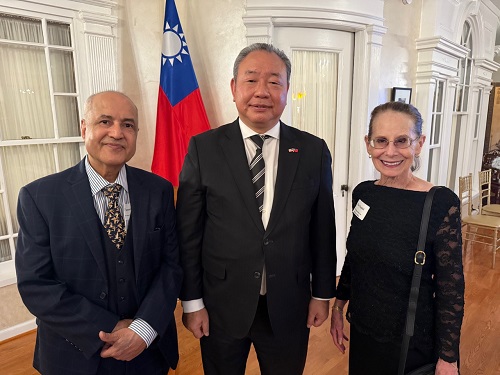
Envoy Tah-Ray Yui and his staff greeted guests warmly, encouraging open conversations about Taiwan’s history, economy, and global role. The tone was candid and inviting, with journalists and diplomats mingling as equals. Among the attendees by coincidence were two reporters from Pakistan Link, whose presence underscored that diplomacy extends beyond officialdom. It lives in the shared stories and human exchanges that take place in moments like these.
Twin Oaks: More Than a Venue
The choice of venue gave the evening added resonance. Twin Oaks Estate is not only larger than the White House grounds but also steeped in history. Built in the 1880s by Gardiner Greene Hubbard, the first president of the National Geographic Society and father-in-law of Alexander Graham Bell, it has long stood at the intersection of invention, science, and diplomacy. Hubbard financed Bell’s early telephone experiments, later became the first president of the Bell Telephone Company, and helped launch the National Geographic Society in Washington in 1888. Bell himself succeeded Hubbard as the Society’s second president.
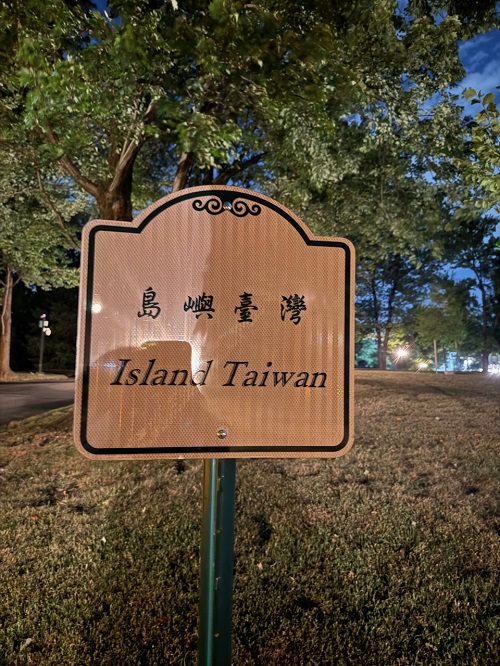
Twin Oaks later became the residence of Republic of China ambassadors, and even after formal US–Taiwan ties ended in 1979, it remained a symbol of Taiwan’s enduring presence in Washington. A sign at the estate reads simply “Island Taiwan,” an understated yet powerful declaration of identity and continuity.
Memory and Personal Connection
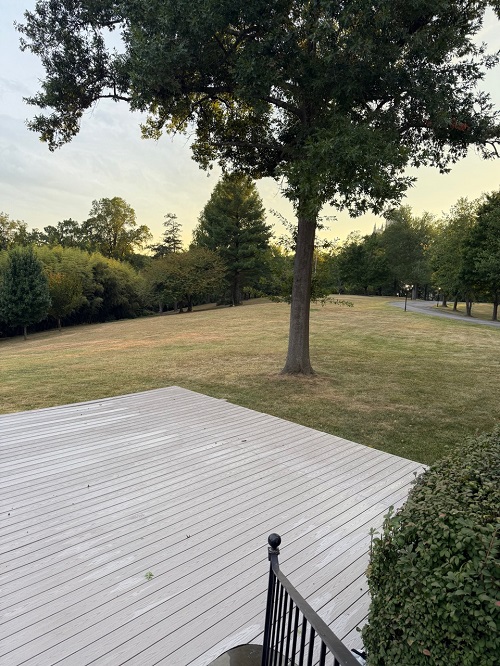
For some attendees, Twin Oaks carried personal meaning beyond history books. This writer recalled first standing beneath a tree on the estate in 1974 as a graduate student, alongside two lifelong friends - Mowahid Shah and Mushahid Hussein Sayed. More than fifty years later, the return to that same spot felt like a meditation on memory, history, and the unexpected currents of world affairs. By coincidence, in years gone by, Mowahid also served as a leader of the NPC’s International Correspondents Committee—another thread linking past and present.
As the journalist in me reflected: “Sometimes diplomacy is found in conference halls. Other times, it’s under an old tree that remembers.”
The Embassy Night Tradition
Embassy Nights are organized by the NPC’s International Correspondents Committee and rely on close partnerships with embassies and missions across Washington. The gatherings typically include welcoming remarks from the host ambassador or envoy, cultural presentations, and time for informal conversations. For journalists, it is a rare chance to hear directly from diplomats without the pressure of deadlines or soundbites. For embassies, it is an opportunity to showcase their country’s culture and perspectives beyond official policy documents.
In recent years, the series has brought correspondents into a diverse set of diplomatic spaces:
- Pakistan (June 2024): An evening with Ambassador Masood Khan highlighted Pakistani culture and the country’s ties with international correspondents.
- Australia (September 2024): Ambassador Kevin Rudd hosted discussions on US–Australia relations, paired with cultural offerings from home.
- Iraq: A reception designed to “strengthen communication bridges” spotlighted bilateral issues while offering Iraqi hospitality.
Each Embassy Night is distinct, but all share a mission of connecting people through dialogue.
Why Twin Oaks Mattered
The Embassy Night at Twin Oaks was more than an elegant reception. It symbolized Taiwan’s unique role in global affairs and highlighted the fact that diplomacy often flourishes outside formal treaties and official summits.
At a time when US–Taiwan relations remain strategically vital yet diplomatically delicate, the evening demonstrated the power of human-scale encounters. Diplomacy is not only about policy but also about meals shared, stories exchanged, and memories revisited in spaces like Twin Oaks.
With its layered history—from Gardiner Greene Hubbard and Alexander Graham Bell to Taiwan’s enduring diplomatic presence—the estate served as the perfect stage for this tradition of quiet dialogue. The night offered a reminder that while nations negotiate in conference rooms, understanding is often forged in personal exchanges under the shelter of old trees.
As the evening closed, one truth lingered: diplomacy belongs not only to governments but to people—listening, learning, and finding common ground.