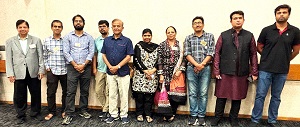
17th Annual Mushaira–Kavi Sammelan Held in Washington
By Zafar Iqbal, PhD

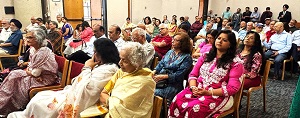
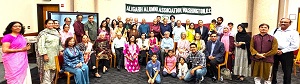
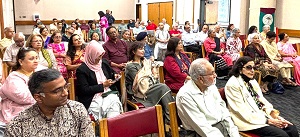
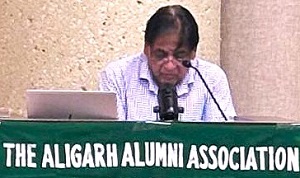
The Aligarh Alumni Association, DC (AAA-DC), and the Global Organization of People of Indian Origin, Metro Washington (GOPIO-Metro Washington), jointly hosted the 17th Annual Mushaira–Kavi Sammelan on Saturday, September 6, 2025, at the Montgomery County Executive Building Auditorium in Rockville, Maryland. The program was co-sponsored by several local community organizations, including the Association of Indian Muslims (AIM), the Hyderabad Association of the Washington Metro Area (HAWMA), the Montgomery Nawabs (MONA), the Global Beat Foundation (GBF), the Bazm-e-Harf-o-Sukhan (BHS), and R K Biosciences.
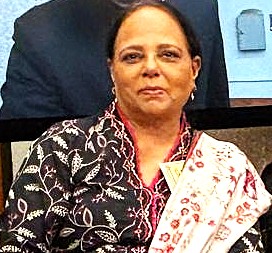
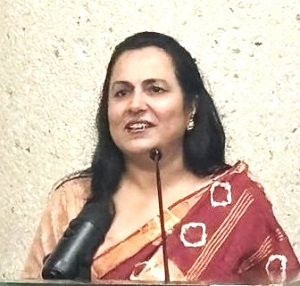
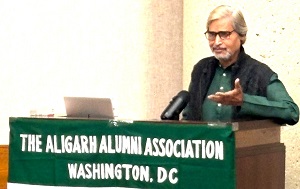
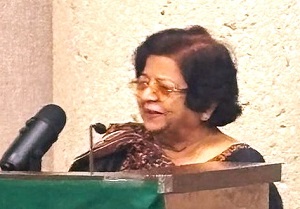
AAA-DC President-Elect Ms Ariena Rashid warmly welcomed the participants and audience, highlighting the Association’s upcoming Golden Jubilee Celebration. She also expressed gratitude to the participating organizations for their support in making the Mushaira–Kavi Sammelan a resounding success.
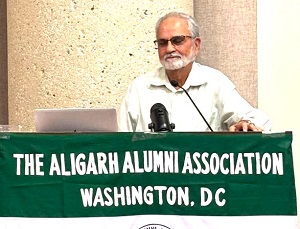
Program Coordinator Dr Zafar Iqbal recalled the event’s 2008 launch as a forum to commemorate Yaum-e-Azadi through Urdu and Hindi poetry. Conceived by Dr A. Abdullah (AAA-DC) and Drs Renuka Misra and Zafar Iqbal (GOPIO-Metro Washington), the Mushaira–Kavi Sammelan has become an annual tradition celebrating South Asia’s Ganga–Jamuni cultural heritage.
A milestone was reached in 2011, when the Embassy of India joined AAA-DC and GOPIO to host the first international bilingual poetry recitation—an initiative inspired by the late Dr Virandar Paul (my colleague from the All-India Institute of Medical Sciences, New Delhi), then Minister at the Embassy in Washington. This recognition solidified the event as a platform for cultural diplomacy.
This year, Mr Vivek Chaudhary, First Secretary at the Embassy, commended the organizers for presenting an inspiring program.
Literary Contributions
A defining feature of the Mushaira–Kavi Sammelan has been its encouragement of diaspora literary talent, often marked by book launches. Over the years, the stage has hosted distinguished writers such as Prof Satyapal Anand, Prof Asghar Wajahat, Dr A. Abdullah, Dr K. Mohan, Raj Kumar Qais, Anadi Naik, Dr Astha Naval, Dhananjaya Kumar, Rashmi Sanan, Farah Kamran, Surinder Deol, Daler Deol Aashna, Salman Akhtar, and Prof Gopichand Narang.
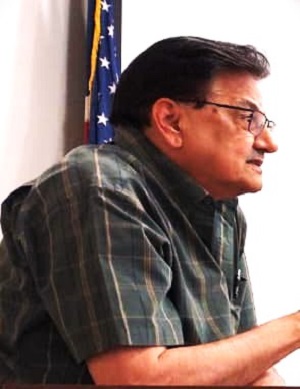
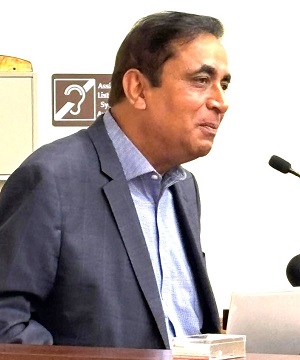
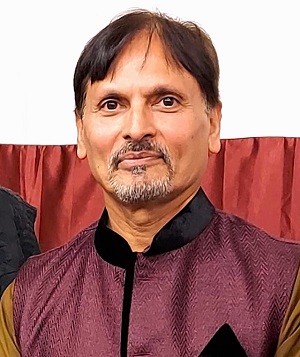
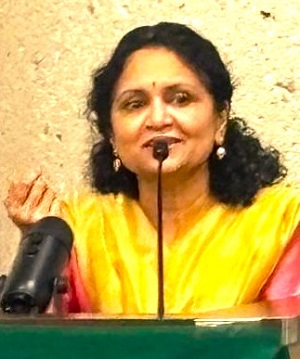
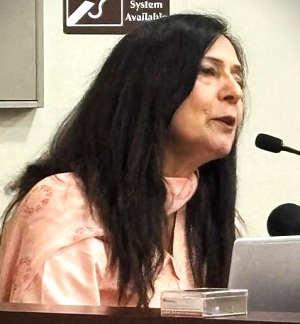
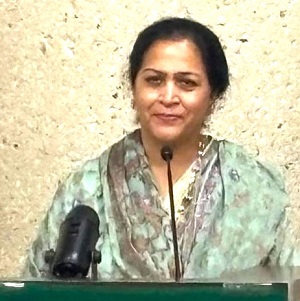
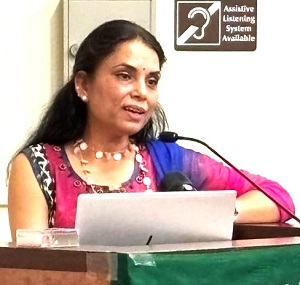
The 2025 session featured 22 poets, including Dr A. Abdullah, Dr Astha Naval, Dr Harish Naval, Ms Madhu Maheshwari, Dr Mohammed Akbar, Mr Mohammed Jaweed, Dr Narendra Tandon, Ms Nisha Narayan, Ms Preethi Govindaraj, Dr Razi Raziuddin, Dr Rizwan Ali, Mr Sarwat Parvez, Dr Sarwat Zehra, Ms Shamsa Najam, Ms Sneh Sudha, Ms Sukesh Chopra, Ms Tabassum Jabeen, Dr Uday Kamath, Ms Vinita Tiwari, Dr Vishakha Thaker, and Mr Yusuf Rahat.
Program Highlights
The session was presided over by Dr Harish Naval, acclaimed satirist, author of 40+ books, Yuva Jnanpith Prize recipient, and former Chief Editor of Gagananchal. His insights and literary observations enriched the proceedings.
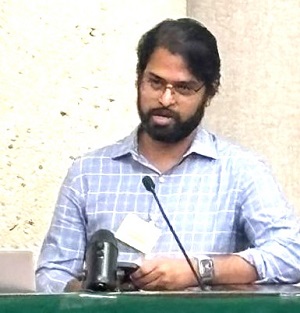
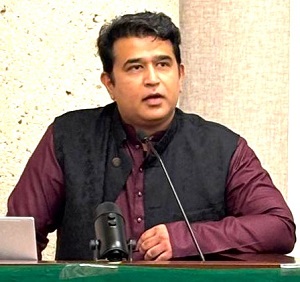
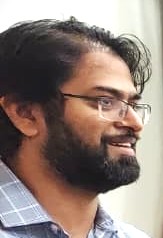
The poetry session was conducted by Dr Mohammed Akbar, who also introduced poets with his appropriate verses. Dr Mohammad Haziq served as master of ceremonies, while Dr Salman Rashid delivered the vote of thanks.
The program also paid heartfelt tributes to late senior poets of the Washington area—Professor Satyapal Anand, Aziz Qureshi, and Rakesh Khandelwal, as well as to eminent Urdu scholars Professor C.M. Naim (University of Chicago) and Professor Tahsin Siddiqi (University of Michigan, Ann Arbor) for their lifelong contributions to literature and education.
Guests and Partners
Special guests included representatives of partner organizations and the Embassy of India. Recognized for their continued support were Ms Ariena Rashid (AAA-DC), Dr Renuka Misra (GOPIO), Mr Kaleem Kawaja (AIM), Mr Mir Zahid Ali (HAWMA), Dr Mohammad Akbar (MONA), Ms Nuzaira Azam (GBF), Dr Arif Mahmood (BHS), and Dr Qazi Hamid (R.K. Biosciences).
Cultural Impact
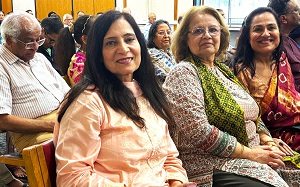
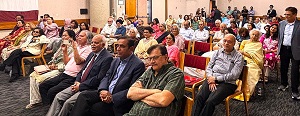
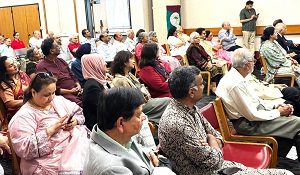
By bringing together poets of both Urdu and Hindi traditions, the Mushaira–Kavi Sammelan bridges linguistic divides and highlights the interwoven richness of vocabulary, idiom, and poetic form. It consistently draws diverse audiences—students, families, immigrants, longtime residents, and diplomats, fostering interfaith understanding and intergenerational bonds. Its continuity and inclusiveness ensure that South Asia’s literary heritage remains vibrant in the US capital region.
Poets’ Reflections
Several participating poets expressed their appreciation:
Yusuf Rahat reflected on Partition:
“Mazhaboun ki jung mein ik aisa batwara hua,
Eik Hindustaan ka dil tha do diloun mein bat gaya.”
Mohammed Jaweed praised the smooth organization and the Sadr Mushaira’s personalized feedback.
"Chhal kapat ki is duniyaa mein apnii jhooti chhaap rakhe, Hanste khilte raushan chehre tanhaai ko dhaap rakhe."
Dr Astha Naval, a 17-year participant, commended the diverse lineup and Dr Harish Naval’s commentary, including his tribute to Prof Satyapal Anand:
“Maa ne bataya tha laga lena paiband phate kapde aur toot te rishton par bhi…
Lekin paibandon ki maujudgi ne kabhi bhulne na diya, Ki inke neeche se kapda phata hai aur rishta toota hi hai."
Dr Sarwat Zehra appreciated the efforts of the organizers for assembling Urdu and Hindi poets in one place:
“Preet mile gi us ko jis ne apni hasti khoee Kiya Dhhonde gi aankh jo ab tak apnea ap mein khoee.”
Ms Preethi Govindraj noted the fragrance of parental guidance in her verse:
"Saans bacchon ki mehakti rahe sandal jaise, Hai karam maaN ka, jo pisti rahi chandan ki tarah."
Ms Shamsa Najam applauded the event as excellent, prestigious, and well-organized, praising both the attentive audience and the beauty of the poetry:
"Narm lafzon se buna, tanz bhara pehnava, Aadmi ki isi poshaak se dar lagta hai."
Dr Narendra Tandon called the program a grand success, noting its smooth execution.
Dr Rizwan Ali appreciated the warm hospitality and suggested limiting the number of poets to 10–15 for better audience engagement.
Dr Uday Kamath lauded the poet lineup and overall management, recommending that food service be scheduled before or after the program to avoid interruptions.
Ms Nisha Narayan thanked the organizers for the opportunity to present her work to a seasoned audience, commending the flawless execution.
Acknowledgment: The author gratefully acknowledges Mr Aslam Azad and Mr Mohammad Haziq for providing photographs.