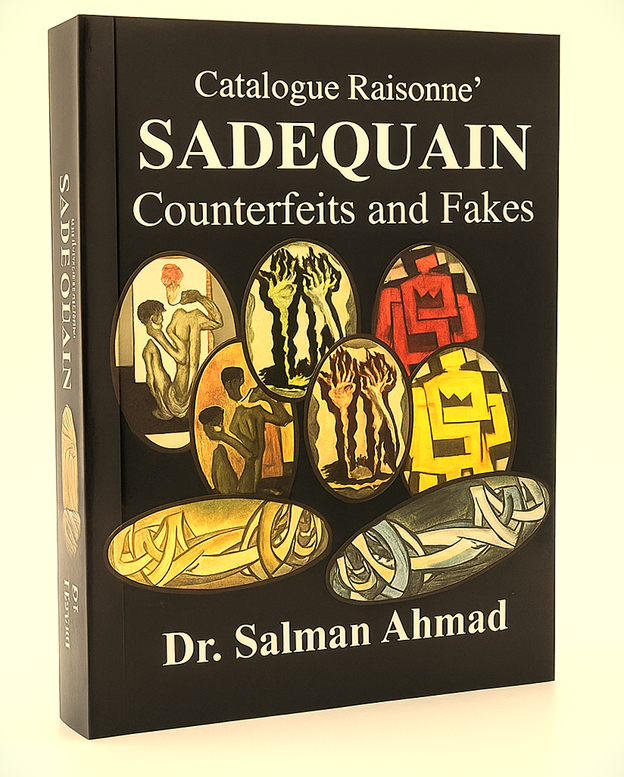
Catalogue Raisonné: SADEQUAIN Counterfeits and Fakes Released
San Diego, CA: A groundbreaking new book, Catalogue Raisonné: SADEQUAIN Counterfeits and Fakes, has been released to shine an unflinching light on one of the most pervasive art-fraud epidemics in South Asia. The publication meticulously documents more than 800 forged works attributed to Pakistan’s most celebrated modern artist, Sadequain (1930–1987), and names key individuals and networks linked to the forgeries.
“I have always believed in the adage that imitation may be a form of flattery, but fakes are a betrayal,” said Dr Salman Ahmad, founder of the Sadequain Foundation and author of the Catalogue. “These third-rate counterfeits do not honor Sadequain’s genius; they damage his reputation and distort the market for genuine works.”
The 550-page Catalogue draws on years of forensic research, provenance analysis, and field investigations by the SADEQUAIN Foundation. Dr Ahmad explained that the book includes 800 examples only because of publisher page limits. “Our records actually exceed 1,000 documented forgeries,” he noted. “The scale of this problem is staggering and likely unmatched in the global art world.”
Sadequain, hailed internationally for his calligraphic innovations and bold social commentary, has long been a target for art forgers due to his immense popularity and the soaring value of his work. While Sadequain himself did not sell his work, the proliferation of counterfeits has threatened the integrity of his artistic legacy and eroded buyer confidence in South Asian art markets.
Catalogue Raisonné: SADEQUAIN Counterfeits and Fakes serves several urgent purposes:
- Protection for Collectors and Institutions: By providing images, the Catalogue offers a vital reference for collectors, galleries, and museums worldwide.
- Market Transparency: The Catalogue supports honest dealers and serious art investors by discouraging fraudulent sales and inflating market values for authenticated pieces.
- Historical Accountability: Naming individuals and networks associated with forged works exposes the systemic nature of art fraud and calls for stronger regulatory oversight.
The SADEQUAIN Foundation, established to preserve and promote the artist’s authentic oeuvre, has long warned of the dangers posed by unchecked forgeries. This new publication represents its most comprehensive effort yet to safeguard Sadequain’s reputation and to educate buyers, curators, and scholars.
“Art is not merely commerce; it is culture and history,” Dr Ahmad emphasized. “Allowing forgeries to circulate unchallenged distorts our understanding of Sadequain’s contribution to world art. This catalogue is both a shield for collectors and a tribute to the truth.”
Catalogue Raisonné SADEQUAIN Counterfeits and Fakes is now available through major booksellers.