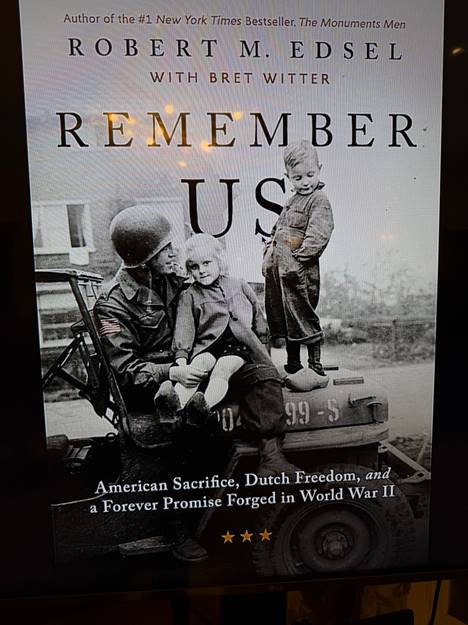
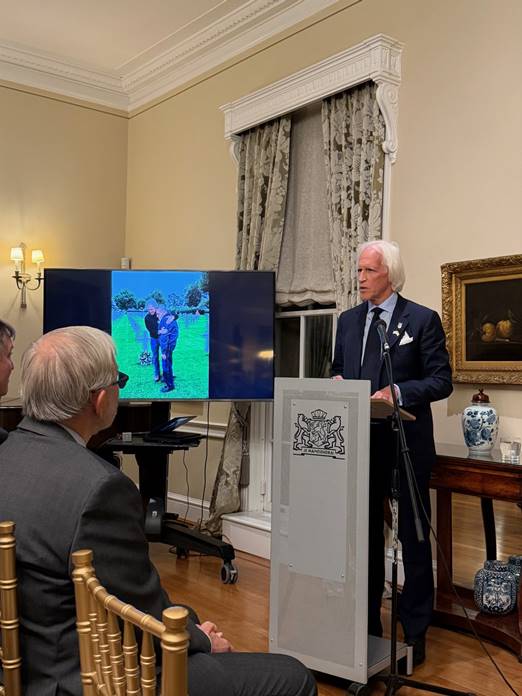
The keynote address by Robert Edsel—acclaimed author of The Monuments Men and Remember Us—added an extraordinary dimension to the evening. Known for his work documenting unsung stories of wartime courage and cultural preservation, Edsel shared a deeply moving narrative about a lesser-known tradition: the Dutch practice of adopting the graves of American soldiers after the war
An Evening of History, Gratitude, and Enduring Friendship in Washington, DC
By C. Naseer Ahmad
Washington, DC

On November 19, 2025, the residence of Her Excellency Ambassador Birgitta Tazelaar in Washington, DC, became the setting for an evening of remembrance, reflection, and the celebration of a transatlantic partnership shaped by shared sacrifice. Joined by Defense Attaché Air Commodore Erwin van Beijouw and held in partnership with Stars and Stripes, the event brought together diplomats, members of the US military community, scholars, and friends of the Netherlands. For many of us in attendance, including those from Pakistan, it offered a profound window into a chapter of history that continues to influence global alliances even today.
The evening opened with thoughtful remarks from Ms Janna van der Velde, Minister Plenipotentiary and Deputy Chief of Mission at the Embassy of the Kingdom of the Netherlands. She reminded the audience that diplomacy is more than trade agreements or political strategy; it is also rooted in collective memory, shared values, and the stories nations choose to honor. The bond between the Dutch and American peoples, she noted, is not merely a military or strategic partnership—it is a human story. A story of liberation, resilience, and mutual respect that has endured for generations.
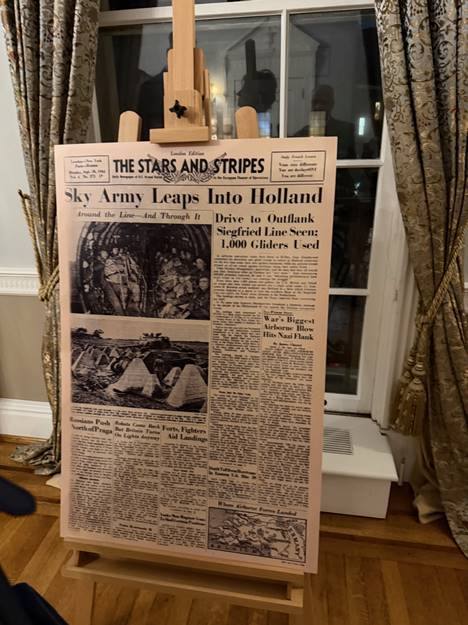
Before and after the speeches, guests were invited to explore a remarkable exhibition of original Stars and Stripes wartime newspapers displayed in the residence’s elegant Dining Room. These prints, carefully preserved despite their browned edges and aging ink, offered a vivid glimpse into the liberation of the Netherlands during World War II. As visitors studied the bold headlines reporting Allied advances or read accounts of Dutch civilians emerging from years of occupation, they were transported back to a moment when freedom was fragile and desperately fought for. One could almost sense the urgency felt by young American soldiers whose sacrifices altered the fate of an entire nation.
The keynote address by Robert Edsel—acclaimed author of The Monuments Men and Remember Us—added an extraordinary dimension to the evening. Known for his work documenting unsung stories of wartime courage and cultural preservation, Edsel shared a deeply moving narrative about a lesser-known tradition: the Dutch practice of adopting the graves of American soldiers after the war. Families who had endured hunger, fear, and the brutality of occupation voluntarily took it upon themselves to tend the graves of young Americans who never made it home. Over decades, these families placed flowers, wrote letters, and visited these resting places faithfully, ensuring that these men would always be remembered as more than names carved in stone. Edsel described this gratitude as a powerful force—one that binds nations long after conflicts end.
A panel discussion followed, offering deeper insight into the Dutch wartime experience. Panelists revisited the horrors of the “Hunger Winter” of 1944–45, when severe food shortages devastated the population, and highlighted the humanitarian operations by Allied forces that delivered life-saving food from the air. These conversations underscored an essential truth: liberation is not a single event but a process—one made possible by courage on the battlefield, compassion in humanitarian efforts, and the resilience of civilians long after the war ended.
For me, the evening resonated on a personal level. Having recently returned from a visit to the Netherlands, Edsel’s words brought back memories of the tranquil Dutch countryside I had explored with my cousins Safeer, Imran, Amri, and Basheer. We drove past fields stretching endlessly beneath soft northern skies and villages filled with warmth and quiet dignity. I still recall Basheer stopping by a country farm, stepping out to buy fresh milk from a vending machine that operated on simple trust—a small but telling reflection of Dutch societal values.
My visit also illuminated the lasting impact of the Marshall Plan on the Netherlands’ postwar recovery. Many European countries benefited from this ambitious American initiative, but the Dutch harnessed it with remarkable foresight. The funds helped modernize industries, rebuild infrastructure, and diversify the economy. Today, the Netherlands stands as one of Europe’s most dynamic and innovative societies—a nation that has embraced globalization, technological advancement, and demographic change while preserving its core identity. Like Pakistan, it navigates complex questions around immigration and cultural integration. Yet what stands out is the Dutch ability to approach these challenges with pragmatism, openness, and a deep historical awareness of what it means to lose—and then regain—freedom.
Often, when the Netherlands is mentioned, the image that comes to mind is the iconic tulip. And while the tulip does symbolize beauty and renewal, the true beauty of the Netherlands lies in the character of its people—their resilience, compassion, and unwavering commitment to remembrance. This spirit was captured poignantly in the words of the American poet Archibald MacLeish, quoted by Edsel: “They say: We leave you our deaths. Give them their meaning.” On that evening, through stories, reflections, and shared memory, meaning was truly given—not only to sacrifices of the past, but to the responsibilities of the present.
MacLeish ends his poem with a simple plea: “We were young, they say. We have died. Remember us.” And they were remembered—both in the beautifully appointed rooms of the ambassador’s residence and in the hearts of everyone who gathered there. Events like this reaffirm the enduring bond between the Netherlands and the United States, a bond built on sacrifice, gratitude, and an unwavering commitment to peace.
For Pakistani readers, an interesting geographical footnote adds its own layer of symbolism. The distance between Islamabad and The Hague is roughly 4,755 miles. Yet in Washington, DC, the residences of the Dutch and Pakistani ambassadors sit only a few steps apart on the same side of S Street NW. In 2012, former Pakistani Ambassador Aizaz Ahmad Chaudhry—whom I had the privilege of meeting several times—published Pakistan Mirrored to Dutch Eyes. Standing between these two diplomatic residences, one might imagine a fitting companion volume: “Netherlands Mirrored to Pakistani Eyes.”