Following the signing of a mutual defense pact in Riyadh on September 17, 2025, between Crown Prince Mohammed bin Salman of Saudi Arabia and Prime Minister Shebaz Sharif of Pakistan, Washington’s Arab Gulf States Institute (AGSI) hosted a program to discuss this important partnership.
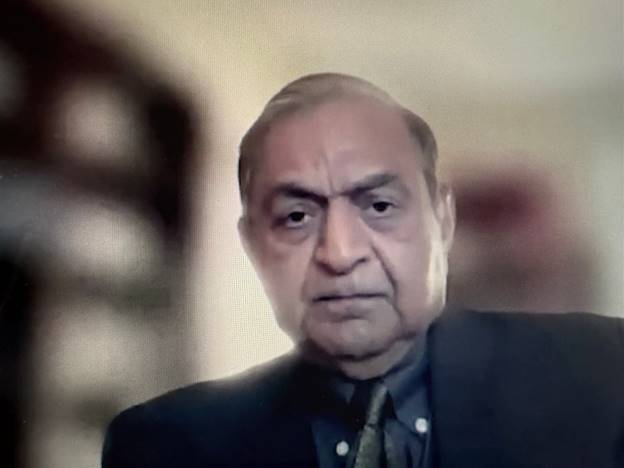
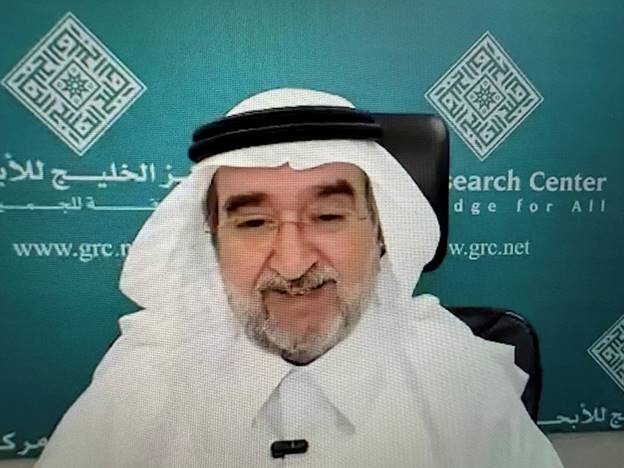
While the agreement came in the immediate context of the Israeli strike on Qatar on September 9, it was years if not decades in the making, said Hussein Ibish, senior resident scholar at the AGSI who moderated the October 20 discussion between Brigadier (Retd) Feroz Hassan Khan, professor in the Department of National Security Affairs at the Naval Postgraduate School in Monterey, California, and Abdulaziz Sager, founder and chair of the Gulf Research Center.
Ibish opened the discussion by noting that Pakistan did not contribute troops to the international intervention in Yemen in 2015 with the objective of pushing back Houthi rebels who had taken over the capital, Sana'a, and reinstating the government of President Abdrabbuh Mansur Hadi. In response, Khan acknowledged Pakistan did not get involved, just as Saudi Arabia has not involved itself in Kashmir. “There have been limitations to the cooperation based on the national interests of both countries, naturally,” he explained.
There is a history of physical involvement of Pakistani forces on Saudi soil dating back to the 1950s, he said, noting that presently there are 30,000 Pakistani forces in Saudi Arabia.
“Pakistan’s critical problem is essentially that it is a country which has very insecure borders vis-à-vis India, vis-à-vis Afghanistan,” Khan said. With respect to the Afghan factor, “in the 1980s Pakistan was heavily involved with the Soviet invasion of Afghanistan. Saudi Arabia, the United States and Pakistan were really together in that war.”
With respect to the nuclear component, Khan, author of Eating Grass: The Making of the Pakistani Bomb, stated that 1974 was a very important year for Pakistan, Saudi Arabia and many Muslim countries when India conducted its first nuclear test.
Former Prime Minister Zulfikar Ali Bhutto was the architect of Pakistan’s nuclear program which Muslim countries supported, including providing financial aid. Saudi Arabia not only politically supported Pakistan’s nuclear program, but financially also, he recalled.
Due to its location in south Asia and Muslim majority population, Pakistan, Khan said, “sees itself as the arc of the Islamic crescent that extends from Morocco to Pakistan. And it sees itself playing a critical role in terms of all Islamic contingencies. It matters a lot to the Pakistanis about anything that happens in the Muslim world. That’s very, very important for them.”
Of common interest to both Saudi Arabia and Pakistan is the Indian Ocean region, an historic trading zone that has been active for well over 1,000 years in international trade and is now a strategic chokepoint involving maritime security.
Dr Sager noted the aim of the new agreement between Saudi Arabia and Pakistan is to bring stability and security to the region and not an escalation. It was never meant to be directed against any other region.
“I think this is a good framework and agreement,” he said. “Some people have interpreted it quite wrongly by thinking that this includes nuclear capability. Saudi Arabia does not need to have any nuclear capability from Pakistan at this stage.”
While the pact is a defense collaboration, it has a broader scope as a framework that goes from training to joint exercises to sharing of intelligence to cyber-security.
“Saudi Arabia does not feel that we have a nuclear threat because if you define what is the threat perception in Saudi Arabia then you can define what sort of weapon system that you need or what sort of defensive agreement or umbrella that we need to get,” he explained.
Sager went on to note that to be able to have a nuclear umbrella by any country, that country should have access capacity. “Pakistan is overstretched with the neighborhood problems that they have there,” he opined, “which is Afghanistan on one side and India on the other side so there is a serious border issue.”
Regarding maritime security, more than 90 percent of Saudi exports and imports go through the sea, he said, so “maritime security for us is extremely essential. Any threat to Bab al-Mandab or to the Strait of Hormuz or movement toward the Indian Ocean, is a threat to global trade and economy.”
As to the American dimension, the US footprint in the region remains strong, he noted, adding, however, there is the question as to whether the US is still “the most reliable, strongest source for us that we can count on. We understand when we have 40,000 troops and four carriers in the region, they’re not here to play golf; they are here for a special mission. At the same time, the security architecture of the region was based on building our own capability and adding to it the US presence whether the land force in Kuwait or the Fifth Fleet in Bahrain or in Qatar.”
“We still have strong relations with the United States and we’re not going to apply any shifting policy relation at this stage as long as we have that strong relation,” he added.
At the same time, Saudi Arabia would like to push all its friends – the US, EU and the other members – “for a peaceful co-existence for de-escalation,” he said. “We have endorsed the de-escalation between the US and Iran, and we wanted to see that sort of de-escalation that will lead to a peaceful region because then the whole region can prosper.”
(Elaine Pasquini is a freelance journalist. Her reports appear in the Washington Report on Middle East Affairs and Nuze.Ink.)