Ambassador Sheikh Urges Enhanced Economic Ties between Pakistan and the US
By Elaine Pasquini

Washington, DC: Rizwan Saeed Sheikh, Ambassador of Pakistan to the United States, launched the Pakistan-USA Joint Business Conference and Expo 2025 on November 1, in Springfield, Virginia. Emphasizing the critical role of economic collaboration in forging a lasting partnership between the two nations, he called the event a “pivotal seed-sowing exercise” to cultivate enduring bilateral relations.
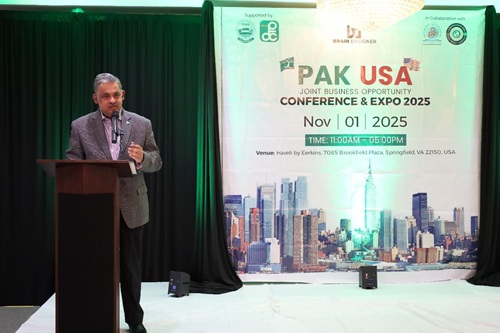
Organized by Brain Designer Pakistan and the Rawalpindi Chamber of Small Traders and Small Industries, in collaboration with the US-Pakistan International Chamber of Commerce (USPICC), the event showcased Pakistani products to the US business community and brought together business leaders, traders and investors to explore trade, investment and commercial opportunities.
In his keynote address, Ambassador Sheikh highlighted the immense potential of the US market for Pakistani businesses and called for strategic adaptions to thrive in the dynamic American market.
“Pakistan's relations with the United States are best underwritten by economic, commerce, trade and investment ties that can survive our generation if we sow the right seeds today,” the envoy stated. “I consider this conference a seed-sowing exercise, and I pray that the seeds being sown today develop into a full-blown forest.”
The ambassador underscored the significance of the United States as the world's premier consumer market, essential to scaling up global businesses.
Drawing on Pakistan's centuries-old tradition of trade along historic routes, Ambassador Sheikh encouraged Pakistani entrepreneurs to embrace formal business practices, form coalitions, and pool resources to meet the demand of the American economy.
He also reaffirmed the embassy's commitment to supporting participants in refining their business models tailored to American standards. “Diplomacy can only create opportunities; it cannot capitalize on them,” the ambassador concluded. “That rests with you—the business community. We have done our job; now we look to you to do yours.”
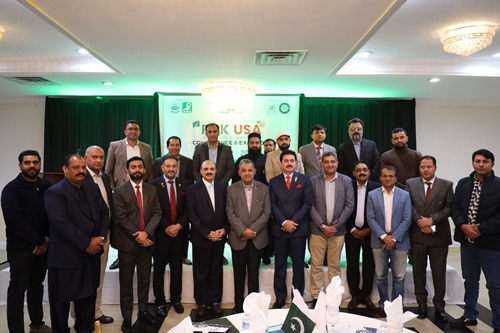
The day-long event brought together a large number of Pakistani companies from diverse sectors, including tourism, real estate, textiles, furniture, leather goods, pharmaceuticals and IT to explore business opportunities and strengthen economic ties between Pakistan and the United States.
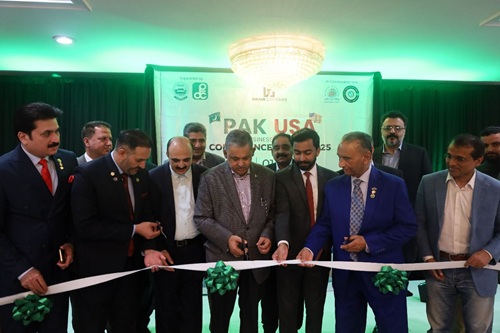
Muhammad Rauf Raja, CEO of Brain Designer, told attendees he was “thrilled to see the success of our joint business conference and expo with USPICC. This event has provided a unique platform for Pakistani businesses to expand their footprint in the US market, and we're excited to explore new opportunities for collaboration and growth.”
USPICC chairman Muhammad Siddique Sheikh emphasized the conference's significance in enhancing bilateral economic cooperation between small businesses and entrepreneurs of both countries.
Sardar Saqib Nasim, president of the Rawalpindi Chamber of Small Traders and Small Industries, reiterated the Chamber's commitment to promoting trade and investment between Pakistan and the US.
Earnie Porta, mayor of Occoquan Town in Prince William County, also spoke on the contributions of the vibrant Pakistani diaspora to the US economy.
During the event, Ambassador Sheikh visited various stalls and interacted with the business community. Thanking the organizers, he said the event especially helped small traders and the business community towards increasing their footprint in the United States. Pakistan's relations with the United States are best underwritten by economic, commerce, trade and investment ties, he said.
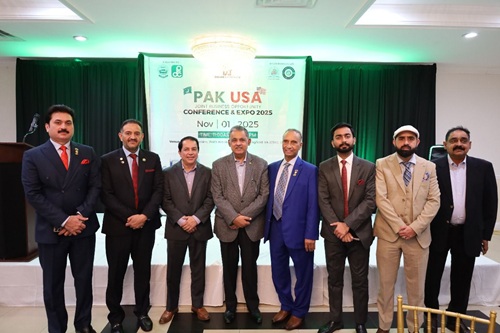
In a meeting at the embassy with the delegation from the Rawalpindi Chamber of Small Traders and Small Industries the day before the Expo opening, the ambassador stressed the importance of robust trade and investment interaction between Pakistan and the United States.
These two issues, he noted, are critical for sustaining strong bonds between the two longtime allies. While the United States remains Pakistan's largest trading market, there is a substantial potential to increase the current business volume, he added.
The ambassador said that low costs and superior quality give Pakistani products a competitive edge over those from other countries in the region. In addition to traditional products, there is a need to focus on non-traditional exports as well, he stressed.
By deepening business relations and catering to the market needs, he pointed out that the business volume can be increased significantly.
Considering the demands of this vast market, it is essential to fully leverage existing resources and promote a collective mindset, the ambassador told the Pakistani delegation which is currently visiting the United States.
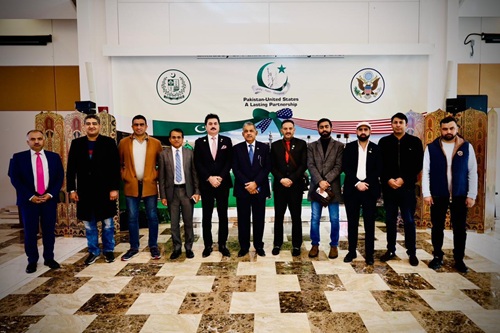
The contingent was led by Sardar Saqib Nasim, president of the Rawalpindi Chamber of Small Traders and Small Industries, and Brain Designer CEO Muhammad Rauf Raja. The group included prominent business figures representing various industries. Pakistan’s trade minister, Mohammad Hanif Channa, was also present during the meeting at the embassy in Washington, DC.
(Elaine Pasquini is a freelance journalist. Her reports appear in the Washington Report on Middle East Affairs and Nuze.Ink.)