
Nippon-US Steel Deal Tackled at Stimson Center
By Elaine Pasquini
Washington, DC: On June 13, 2025, President Donald J. Trump signed an executive order finally allowing Japan’s Nippon Steel to enter into a “partnership” with Pittsburgh-based US Steel, although conditions and details of the transaction are still unclear.
Ten days prior to this announcement, the Stimson Center held a webinar on the controversial subject titled “US Steel and Nippon Steel ‘Partnership:’ The Next Steps,” featuring Stimson board member and former deputy undersecretary of defense for industrial affairs Jeff Bialos, and Sarah Baurle Danzman, associate professor of international studies at the Hamilton Lugar School of Global and International Studies at Indiana University and senior nonresident fellow at the Atlantic Council.
President Trump made the “surprise announcement that he will give a soft green light to allow Nippon Steel and US Steel to proceed with their partnership,” Yuki Tatsumi, co-director of Stimson’s East Asia program and director of the Center’s Japan program, said in opening comments.
Bialos noted that former President Joe Biden, after months of negotiations, had vetoed the deal in late 2024, but “Trump resurrected it.”
One issue of the transaction relates to a “golden share,” which Bialos described as “certain strategic actions a government could veto, usually from a security or supply standpoint.” He went on to note “it would be ironic to see a real golden share here because the US, as a matter of foreign investment policy, has generally been unsupportive of that notion.”
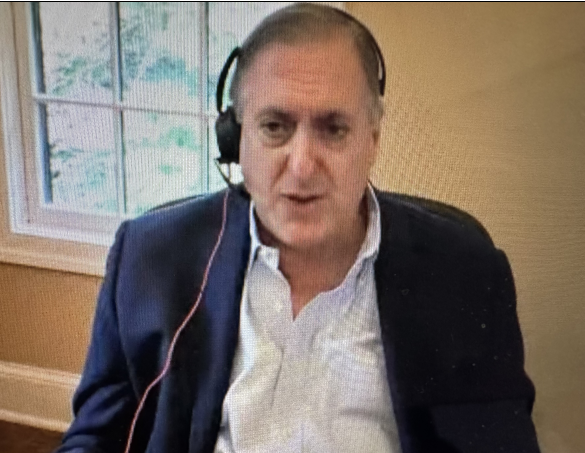
Jeff Bialos
As to whether this agreement was a national security threat, Bialos pointed out that Japan is a “close ally of the United States and Nippon has been a good steward of assets in the United States.” In addition, data shows very little steel is used for defense purposes, he added. “It’s hard to see it’s going to have any national security impact.”
Danzman said that initially Nippon was offering some $14 billion to acquire US Steel, but now the deal has shifted, and full details are unclear.
Throughout the process of negotiating with CFIUS (Committee on Foreign Investment in the United States), an interagency committee within the US government that reviews certain transactions involving foreign investments in the US to determine their impact on national security, Nippon Steel had made several amendments to the deal.

Sarah Danzman
From the very beginning the Japanese steelmaker made it clear that US Steel would maintain its Pittsburg headquarters which is obviously of great importance from a psychological perspective. The 124-year-old manufacturer “looms large in the history of the state,” she stressed.
According to Danzman, Nippon was willing to sign a national security agreement that would allow for a majority of US directors on the Board that could be approved by the US government, and that there is a commitment that the CEO of US Steel under Nippon will be American.
The degree to which Nippon will invest more funds in capital allocation towards growing the company and in modernization as well as potentially expansion of current facilities is unknown. “We don’t have all of the details forthcoming, nor do we know the timeline of those investments or what would happen if some of those investments fell through,” she said.
Beyond that, there is some information about a national security arrangement which is a document that is negotiated between CFIUS and the parties to the transaction that support some restrictions on the ability of Nippon to make its own determinations about production levels and the extent to which they will continue to agree to produce in the US. “That was a concern from the very early stages of the deal,” she said. But Nippon made a commitment they would not move production to other countries in the future.
Danzman discussed the concept of a “golden share” which is a frequent practice in Europe but not in the US. The “golden share” is a small equity stake that the government takes in a transaction and provides the government the ability to make decisions such as board compensation. “We don’t know if the US government is actually taking an equity share in this new partnership,” she said. Trump, however, in his June 13 announcement, said he would be taking “a golden share.”

Yuki Tatsumi
With respect to CFIUS, she explained that the committee is not supposed to impose mitigation terms on a transaction unless it finds a national security risk to the transaction. “They try to stay out of transactions unless they actually need to intervene in some way,” she noted. “For a long time CFIUS really functioned as a method of last resort and guardrails, but now has expanded. We are now in an era in which the government is trying to manage the economy in a more active way than it has in the past as well as export controls.”
In closing, Danzman observed that “we are in a different world than we were seven to ten years ago, and corporations when they are embarking on major cross-border acquisitions, particularly in industries that hold symbolic meaning in some way and particularly when the investments are going to affect an important constituency, need to be more thoughtful about how to engage.”
“I think better understanding the political context that you are jumping into is going to be super important,” she added.
(Elaine Pasquini is a freelance journalist. Her reports appear in the Washington Report on Middle East Affairs and Nuze.Ink.)
