
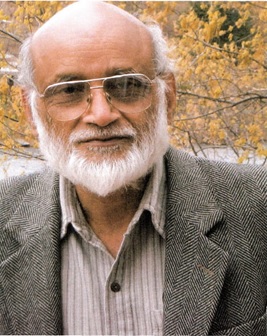
Professor C. M. Naim
3 June 1936–9 July 2025
Professor C. M. Naim: A Scholar’s Legacy, A Personal Tribute
By Zafar Iqbal, PhD
Washington, DC

Professor Choudhri Mohammad Naim, a towering figure in Urdu language and literature and one of the foremost intellectuals of his generation, passed away in Chicago on July 9, 2025, at the age of 89. Widely hailed as the father of Urdu studies in North America, his passing marks the end of an era, though his luminous legacy will continue to guide generations of scholars, writers, and readers around the world.
Born in Barabanki, India, Naim Sahib received his early education in the classical traditions of Urdu. After earning a master’s in Urdu from the University of Lucknow in 1955, he pursued an MA in linguistics at the University of California, Berkeley, in 1961. He later became a naturalized US citizen and spent the rest of his academic life primarily at the University of Chicago, where he joined the Department of South Asian Languages and Civilizations in 1961 and served as its chair from 1985 to 1991. He retired in 2001 as Professor Emeritus but continued to write, translate, and mentor well into his final years.
Naim Sahab’s contribution to Urdu pedagogy is unparalleled. His Introductory Urdu (Volumes I & II) and Urdu Reader became essential texts across American universities. With linguistic clarity and cultural sensitivity, these works opened the world of Urdu to generations of students unfamiliar with its script, rhythm, and idiom.
Beyond the classroom, his academic leadership shaped the future of Urdu studies. He co-founded Mahfil in 1963 (later The Journal of South Asian Literature) and launched The Annual of Urdu Studies in 1981, editing it until 2014. These platforms helped bring global attention to the richness and diversity of Urdu literature.
A master translator, he introduced Urdu’s finest voices to English-speaking audiences. His translations include Qurratulain Hyder’s A Season of Betrayals, Harishankar Parsai’s Inspector Matadeen on the Moon, and Zikr-e-Mir—the memoirs of Mir Taqi Mir. His work preserved literary nuance while making Urdu prose accessible, setting a high standard for literary translation.
In his later years, Naim Sahib explored underrepresented areas of Urdu literature with characteristic insight. His 2022 translation of A Most Noble Life illuminated the contributions of 19th-century Muslim women educators, while Urdu Crime Fiction (1890–1950): An Informal History (2023) combined literary critique with his lifelong passion for mystery stories. He called it “a labor of love and an exercise in nostalgia”—a phrase that aptly describes much of his work.
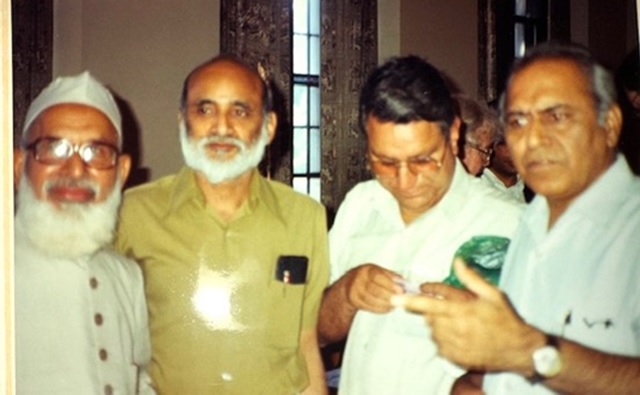
Là R: Professors Nazir Ahmad, C. M. Naim, M. Tabassum, and Gopichand Narang at the First International Ameer Khusro Society of America Conference in Chicago, May-June 1987
Naim Sahib was also a fearless cultural critic. He lamented the rise of sectarianism, the decline of Urdu journalism, and the fading tradition of serious literary quarterlies. “In Urdu journalism… Ahmadiyas and Jews are easy scapegoats,” he once observed, critiquing the spread of conspiracy theories and the erosion of intellectual rigor. Yet, he remained hopeful about the future of thoughtful discourse, particularly in digital formats.
Beloved by students and respected by peers, he was known for his humility, clarity of thought, and generous mentorship. Scholars such as Khalid Alvi and Ravi Kant praised his erudition and accessibility, while artist Vidya Rao affectionately called him a “guru.” Many of his former students now carry forward his legacy in classrooms and conferences across the globe.
His influence extended beyond academia. He served in advisory roles for the Asia Society, the National Endowment for the Humanities, the American Institute of Pakistan Studies, and Princeton University Press. He also held visiting appointments at Jamia Millia Islamia in New Delhi and the Indian Institute of Advanced Study in Shimla—testaments to his enduring cross-border relevance.
Tributes have poured in from around the world. Dr Moazzam Siddiqi, former Chief of South and Central Asian Services at Voice of America, remembered their summers co-teaching at UC Berkeley, Wisconsin, Virginia, and Duke—a bond of friendship that spanned decades. Noted journalist Anwar Iqbal of Dawn recalled meeting him in the 1980s while working for the Tribune. “That meeting marked the beginning of a long and warm association,” he said. “He was always generous with his time, and his insights—rooted in deep understanding—were profound and thoughtful.”
On a personal note, I, too, was privileged to benefit from his wisdom and support. In 1987, when we organized the First International Conference of the Ameer Khusro Society of America at the University of Chicago, he quietly helped us secure the venue and provided invaluable guidance. His support behind the scenes made that landmark event possible.
During visits to Chicago, my wife and I would often spend time with him. His home, filled with books and quiet reflection, exuded a life devoted to learning. On his trips to the Washington area, we would host gatherings in his honor, often surrounded by his students and admirers. I recall a moving moment when Dr Brian Silver, then Chief of Urdu Services at VOA, touched his teacher’s feet—a spontaneous gesture of reverence that brought tears to many eyes.
To me, Naim Sahib was more than a distinguished academic. He had been a classmate of my late uncle, Shafaat Ali, in Lucknow and later in the US. Over time, he became like an elder brother—offering affection, wise counsel, and unwavering encouragement in my own literary and cultural pursuits. His passing marks the closing of a profoundly personal chapter: the last of my guiding elders is gone.
In an age when language and culture are increasingly marginalized, Professor Naim’s life reminds us of the enduring value of clarity, empathy, and scholarship rooted in integrity. He was not just a chronicler of Urdu—he was its gentle and steadfast guardian.
His writings—from polemical essays to literary criticism—reflected boundless curiosity and intellectual honesty. He tackled complex issues, such as the challenges of being Muslim in India or the decline of Urdu readership, always with scholarly depth and compassion.
Ever the meticulous archivist, Naim Sahib maintained a website ( https://cmnaim.com ) that remains a goldmine for Urdu enthusiasts and researchers. Even in his final emails, he continued to share rare material, translations, and commentary with warmth and generosity. Among the gems were unpublished translations from Hasrat Mohani and reflections that sparkled with wit and wisdom.
For today’s lovers of Urdu, Professor C. M. Naim was ustaadon ke ustaad—a teacher of teachers, a bridge between cultures, a voice of integrity and reason. He championed Urdu zubaan and tehzeeb with passion and persistence, helping preserve a literary heritage that might otherwise have faded.
His legacy goes beyond books, journals, or translations; it lives on in the minds he shaped, the bridges he built, and the values he upheld.
May Allah bless his soul, and may his family and all who loved and admired him find strength in his memory. Ameen. - Iqbal.zafar1509@gmail.com
