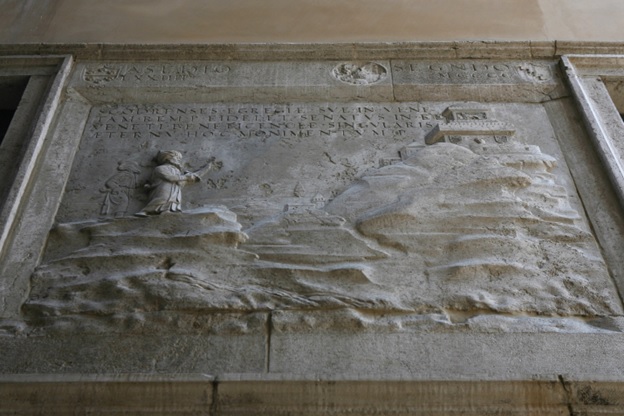
Mehmet II at the fortress of Scutari on the façade of the former Scuola degli Albenesi in the Campo S. Maurizio.
In Search of Islamic Venice
By Elaine Pasquini
Photos by Phil Pasquini

Venice: The influence of the magnificent world of Near Eastern Islamic art on the magical city of Venice motivated me and my photographer husband to seek out the art – in situ – inspired by the Islamic world in this canal-laden city.
Beginning in the ninth century, Venetian merchants became regular trading partners with their counterparts in the Near East. Their many trips back and forth – and occasional extended stays in Islamic countries – influenced Venetian culture, art, architecture, food and fashion. The Venetians’ excellent diplomatic relations with the Ottomans and the Mamluks enabled merchants to travel extensively, and, as a consequence, they absorbed not only Islamic arts, but also customs, philosophy, science and technology.
Wandering the ancient streets and medieval alleyways of La Serenissima, we discovered several examples of Islamic-inspired art in statuary and façade embellishment.
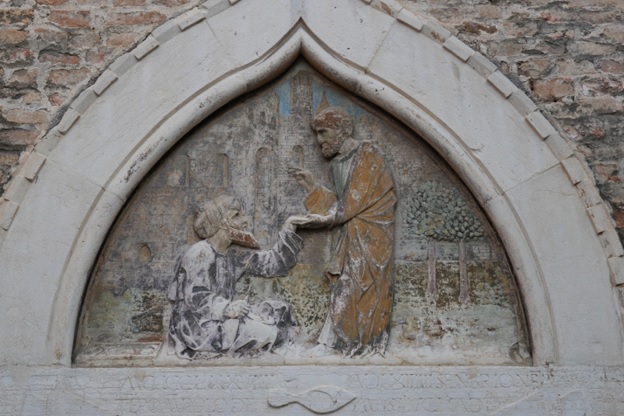
At the Scuola dei Calegheri in Campo San Toma, we viewed the brilliant 15th century marble bas-relief attributed to sculptor Pietro Lombardo, depicting Saint Mark healing the cobbler Anianus. According to one legend, the shoemaker converted from Islam to Christianity following this encounter.
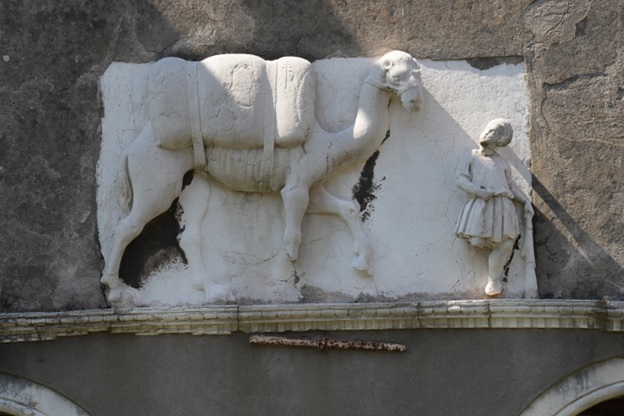
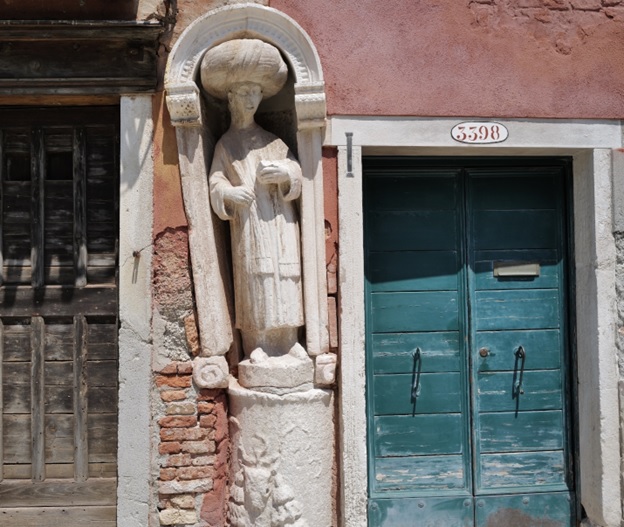
Continuing on to the Campo dei Mori, we found the delightful 14th century bas-relief of a merchant with his camel on the façade of Palazzo Mastelli, originally home to “the Mori brothers,” as they were known locally. Across the Rio della Madonna dell’Orto and adjacent to the home of Tintoretto are life-size sculptures of the three Mori brothers, silk merchants involved in trade with the Levant – along with their servant – wearing Ottoman-style turbans and robes.
A bas-relief on the façade of the former Scuola degli Albanesi in Campo San Maurizio depicts Ottoman Sultan Mehmet II in front of the fortress of Scutari, a Venetian territory ceded to the Ottomans in a 15th century peace treaty. In 1479, at the request of Mehmet, Venetian painter Gentile Bellini began a two-year residence in Constantinople, further enhancing the relationship between the Venetians and Ottomans.
Other exquisite Islamic-inspired treasures —hidden in plain sight—remain to be gazed upon by future intrepid travelers.
(Elaine Pasquini is a freelance journalist. Her reports appear in the Washington Report on Middle East Affairs and Nuze.Ink.)