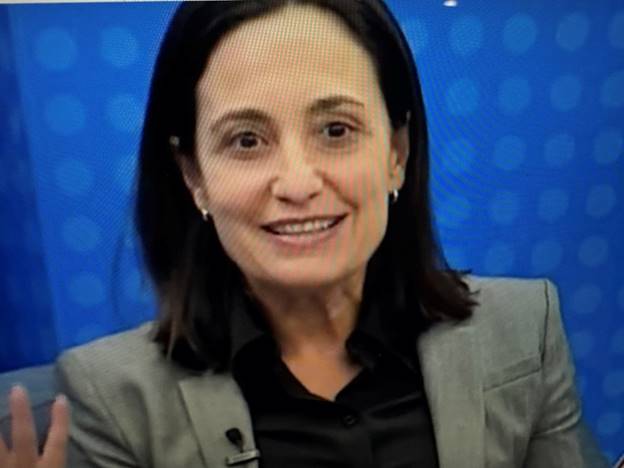
Dalia Dassa Kaye

Barbara Slavin
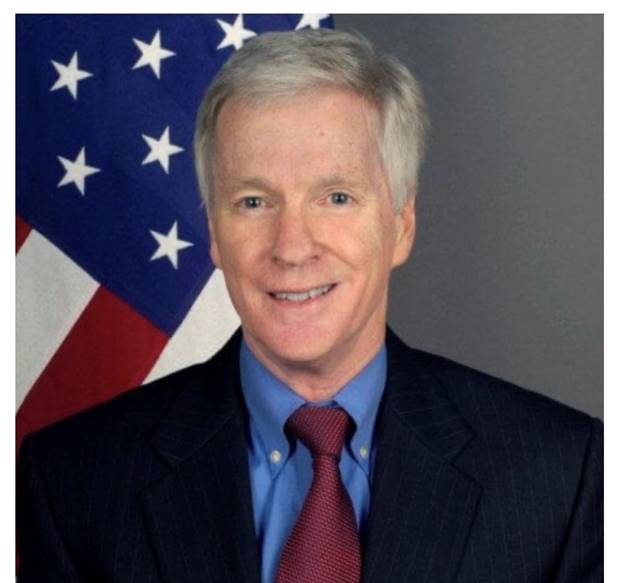
Ryan Crocker
Stimson Center Panel Assesses United States Relations with Iran
By Elaine Pasquini

Washington, DC: Since US airstrikes on Iran’s nuclear sites in June 2025, relations between the two countries have been at a standstill with the Russia-Ukraine conflict, along with Israel, Gaza, Lebanon and Venezuela, being foremost for the attention of Donald J Trump’s foreign policy team.
To discuss this topic, the Stimson Center hosted a program on December 4, 2025, featuring Dalia Dassa Kaye, author of Enduring Hostility: The Making of America’s Iran Policy, and Ryan Crocker, distinguished fellow at the Middle East Institute, former ambassador to Afghanistan, Pakistan, Iraq, Syria, Kuwait and Lebanon. Barbara Slavin, author of Mullahs, Money, and Militias: How Iran Exerts its Influence in the Middle East, and a distinguished fellow at the Stimson Center, served as moderator.
Kaye, presently a senior fellow at the UCLA Burkle Center for Internal Relations, explained that she began writing her book five years ago when the US and Iran were on the brink of more escalation with the potential of direct military conflict. And now, “we still have this extremely hostile relationship,” she said, with “more or less” the same kind of policies in place we had decades ago, such as “containment, economic pressure and diplomatic isolation.” The most notable exception to this pattern, however, was the Iran nuclear deal in 2015, but generally “we return to default positions.”
She went on to say that while there is in-fighting in Iran, the US has had its own internal conflicts. “What is interesting is that in almost every US administration there were robust internal debates,” she related. “One side wanted to test diplomacy, and then we had our own hardliners who couldn’t get over the hostilities,” with Iran.
Responding to Slavin’s question on Israel’s influence on US views on Iran, Kaye stated: “There’s no question when it comes to regional partners…in terms of the psyche, the debate, especially when it comes to the Hill…that Israeli interests are a major factor in the congressional debates. It is part of the reason that Iran is viewed as abnormal.”
With respect to Iran under the second Trump administration, she said that “at the moment there seems to be some interesting debate going on within Iran” and “obviously the resistant hardline kind of approach does not seem to have produced excellent results.” Domestically and regionally, Iran is in “dire shape,” she added. But there is a regional push from the Saudis and others, who are very pro-diplomacy and feel “war is bad for business,” that are actively trying to facilitate an agreement.
Slavin pointed out to Crocker that bad relations between Iran and the US have lasted longer than the Cold War. The ambassador responded that Iran is “arguably the most complex political culture in the region, if not globally, and it’s the one we know the least about.” Since Americans have not been on the ground there since 1979, Washington’s ability to “make decisions, make initiatives predicated on likely Iranian responses is singularly lacking,” he said. “We kind of shoot in the dark, whether literally or politically and see what happens. But we really have no context, no background, no embassy that provides analyses, and no sense of enduring relations with Iranian figures to base policy issues on.”
Domestic politics are key to all foreign policy decisions and acts of implementation in the United States, according to Crocker. The same applies to Iran, he added. “In fact, it may be the poster child for the impact of domestic politics on foreign policy choices.”
Slavin also noted that since the Trump administration withdrew from the nuclear deal with Iran in 2018, the Islamic Republic has become very reliant on China. “They sell most of their oil there and there is a narrative that the United States is now a declining power and China is the rising power, and that the Iranians can wait for us to change our mind. I don’t see the incentives on either side for the sort of concessions that might actually change the nature of the relationship.”
One problem with US-Iran relations, Kaye interjected, is that Washington does not like Tehran’s allies. However, she suggested, Iran’s new alliances with Russia, China and North Korea “may not help them and they might realize they do need allies in the West.”
Crocker agreed, adding: “It illustrates that not all of the mistakes have been on the American side. Iran has made plenty of them itself.” Its alignment with these adversaries of the US would be “an example of perhaps a strategy that isn’t going to pay off with great benefits for Iran. Similarly, their decision to back Hamas and the Houthis and even Hezbollah has not paid them great dividends.”
He went on to suggest that it may be time to let Iran consider its position domestically – the stability of the regime, its regional and international position – and just “wait and see what they do, rather than try to think through or launch any initiatives of our own into that black hole that represents Iranian strategic decision-making.”
Although Washington has no diplomatic ties with Tehran, Slavin noted that the Europeans previously engaged in diplomatic relations with Iran but turned away from the country since Iran began providing drones to Russia for use in Ukraine.
Responding to an audience member’s question on the possibility of Iran’s government collapsing, Crocker noted: “There is nothing eternal in the current state of enmity between Iran and the US or Iran and Israel or Iran and the Arab Gulf. All things can change and we have to look for that change and be open to the opportunities.”
(Elaine Pasquini is a freelance journalist. Her reports appear in the Washington Report on Middle East Affairs and Nuze.Ink.)