War, Victory & Diplomacy — Pakistan’s Ambassador to U.S. Speaks Out
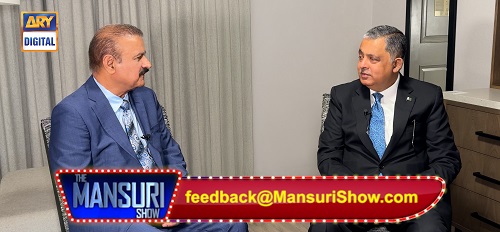
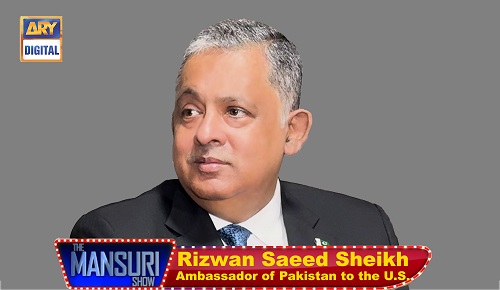
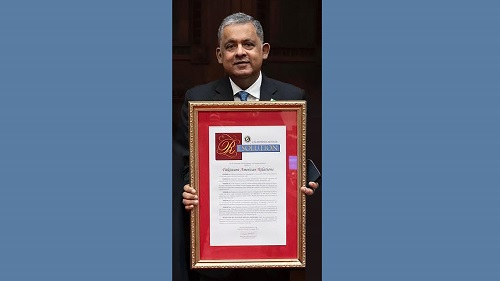
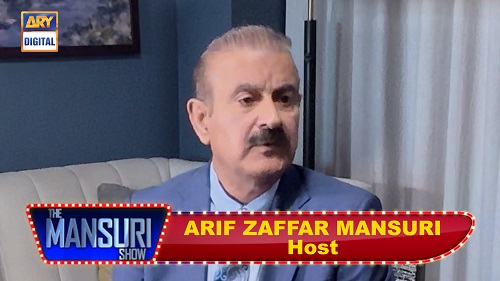
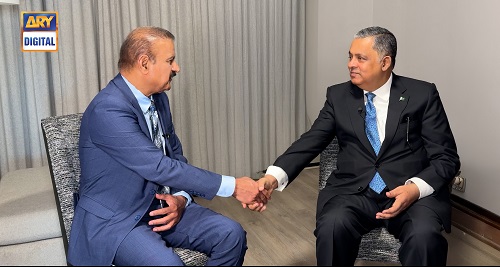
Sacramento, California – Against the stately backdrop of California’s Capitol, where the California State Senate reaffirmed August 14 as Pakistan Independence Day, The Mansuri Show on ARY Digital Television welcomed Pakistan’s Ambassador to the United States, His Excellency Rizwan Saeed Sheikh, for an exclusive and timely conversation.
The occasion was a moment of immense pride for the Pakistani American community, as the resolution not only recognized their contributions but also reaffirmed the enduring bond between California and Pakistan. Yet even as the community celebrated this symbolic recognition, concern for the homeland weighed heavily. In recent days, devastating monsoon floods have claimed more than 300 lives, underscoring the urgent challenges of climate change and disaster management.
At the same time, Pakistan continues to grapple with IMF-driven economic reforms, new phases of U.S. counterterrorism cooperation, and the aftershocks of a brief but intense conflict with India earlier this year. These simultaneous pressures form the difficult backdrop against which Pakistan must navigate its future.
In this wide-ranging discussion, Ambassador Sheikh joined host Arif Zaffar Mansuri to reflect on the significance of the day, the challenges confronting Pakistan at home and abroad, and the opportunities that lie ahead for the nation and the diaspora.
Following is the interview.
Mansuri:
Your Excellency, you are in Sacramento to attend an event at the State Capitol where the California State Senate is set to recognize the 14th of August as Pakistan Independence Day. This recognition is, of course, symbolic. I’d like to ask you: What is the significance of this resolution being adopted by the California State Legislature? Also, what concrete deliverables would you be working on with California in the fields of education, IT, culture, and other areas?
Ambassador Sheikh:
This is certainly an important occasion because being in Sacramento for the passage of this resolution by the California Senate—at a time when Pakistan–U.S. relations are witnessing an ascendant positive trajectory that has perhaps not been there in decades—carries an importance of its own. And we believe that at this time, with such positive momentum in the relationship, this resolution will send a salutary signal regarding enhanced cooperation with California, which is the fourth-largest economy anywhere in the world. It is an opportunity to come together and revive the good old days when Pakistan benefited from California’s technology and collaboration with Californian institutions in domains like agriculture.
The Green Revolution of Pakistan is certainly indebted, in part, to a lot of cooperation from California-based institutions like UC Davis. Even today, the kind of technological cooperation that we have already initiated with the State of California in high-yield seeds is significant, particularly with regard to timing.
It is unfortunate that too many lives have been lost in floods again this monsoon season in Pakistan. And it is becoming a pattern that whatever economic development we accomplish, part of it is washed away in floods due to climate change and its repercussions. So we are working with California on a technology called below surface water retention, whereby the excess water that we have—our problem being that we either have too much water that we cannot handle, or there is water scarcity in low rainfall periods—can be stored underground for later use. This technology already exists in California, and we are working with the people here, legislators, at least two senators, one a lady and the other a senior senator, to make some headway in this area.
So, there is much that can take place, and this resolution today is certainly a welcome development in that regard.
Mansuri:
You mentioned the devastation caused by the monsoon rainfall in Pakistan. Over 300 people have lost their lives recently, and it’s really wonderful to hear about your initiatives with the State of California and other efforts to address the recurring problem in Pakistan. Pakistan is deeply affected by climate change, but there is certainly a lot that can be done. So while you’re working with government agencies at the state and federal levels, I’d like to ask you: what can the Pakistani diaspora do to assist you in that regard?
Ambassador Sheikh:
The Pakistani diaspora is the biggest asset that this relationship has. It is one attribute of this partnership that is both significant and, perhaps, unique compared to Pakistan’s other bilateral ties with important countries. At a time when relations are on an upward, positive trajectory, and when there are multiple pronouncements at the leadership level from both sides about taking this relationship to a partnership entrenched in economic cooperation, the contribution of the diaspora is crucial on two counts.
First, they will have to be the initiators and collaborators, because they have footholds here and can start joint venture projects in Pakistan. Second, whatever progress takes place—economic, political, or otherwise—in any facet of the relationship between our two countries, the diaspora will be the major beneficiary.
So they are the actors, they are the beneficiaries, and through their endeavors, partnerships, collaboration, and initiatives, the bilateral ties will continue to strengthen and become firmly rooted in a long-term partnership.
Mansuri:
The recent conflict between India and Pakistan ended—by the grace of God—with Pakistan’s victory. This victory was not only on the ground but also in the court of public opinion, turning sentiment in Pakistan’s favor and positively influencing our relations with many countries, including the United States. I’d like to ask you: what measures are being taken to prevent such a conflict from recurring? And could you also share how this war unfolded during those four days?
Ambassador Sheikh:
Well, it was even less than four days. It lasted about 87 to 88 hours. It was unfortunate because Pakistan never wanted this kind of escalation to take place.
We had been warning against it, but our neighbor decided to go ahead—perhaps to suit their administrative inefficiencies, their electoral deficits, or their political inadequacies. They took that step, perhaps believing that our desire for peace was a sign of weakness. But by the grace of Allah, with the unity of the Pakistani nation, and with the valor and vigor of our armed forces—all three branches—we made our point very clear.
It then reached a stage when we were approached. I was approached as Pakistan’s Ambassador in Washington, seeking a ceasefire at India's request, because the losses on the night between the 9th and 10th of May were apparently colossal. We were ascendant at that time. But since we have always desired peace and we stand for peace—and because Pakistan does not, under any circumstances, want to engage in conflict or confrontation anywhere in the world—we agreed.
We are thankful to President Trump in particular, and his entire team, his cabinet members, who were part of this discussion and facilitation of the ceasefire. We believe there is a next step to this. During the process of the ceasefire, tweets can be observed—because they are on record—stating that there would be further facilitation of the two sides, Pakistan and India. These two archrivals exist in a neighborhood so sensitive in terms of the capabilities not only of these two countries, but of other countries in the region as well. Peace in this region, even if we restrict our analysis to just these two countries, impacts 1.7 billion people.
So it was decided that there would be facilitation from the U.S. side, with other countries joining in, if the two sides agreed, as mediators—discussing all disputes and mutual concerns. This is the next step, and we believe it should take place. But India so far has been in denial, even of the U.S. facilitatory role in helping the ceasefire come into force.
It is significant that each time their leadership has denied it, the U.S. leadership has reaffirmed and reiterated the positive contribution they made. Pakistan has certainly acknowledged it as a fact and has officially nominated President Trump for the Nobel Peace Prize.
So we are willing to go the whole distance. We agreed to the ceasefire in good faith, and we intend to pursue the path of peace in good faith. Pakistan has no aggressive intent against any country in the world, but we will guard our independence, our freedom, our territorial and ideological frontiers, our sovereignty. We want peace, but we want peace with dignity.
Mansuri:
You mentioned the call you received from the White House. I can only imagine what it must have been like at that moment when India asked the United States to broker a ceasefire with Pakistan. The U.S.–Pakistan relationship has improved tremendously in the recent past, and even the Army Chief Field Marshal General Asim Munir has visited the U.S. twice in the last couple of months, including being invited by President Trump for lunch at the White House. There is clearly a very positive improvement in the relationship between the two countries. Beyond security, what areas of cooperation between the U.S. and Pakistan do you believe will define the coming year?
Ambassador Sheikh:
As part of a broader international effort, Pakistan decided with the U.S. side—through a mutually agreed arrangement—that the trade imbalance would be addressed. We have a trade surplus with the United States, while they have a deficit, and that would certainly be taken care of.
But even with regard to the multiple trade arrangements that have been struck, Pakistan actually stands out as the only country where, in the official announcement tweet, the U.S. leadership—President Trump himself—mentioned that there will be investments in Pakistan, starting with the energy sector. There are other facets as well. Minerals, of course, represent a futuristically significant area. IT, given Pakistan’s youthful demographic configuration, is another prominent area of collaboration and interaction.
In fact, the strong bilateral relationship—economically, politically, and strategically—between Pakistan and the United States is vital because both are major countries today and will remain so in the future. We are currently the fifth most populous country, and they are fourth. In a few decades, Pakistan will likely be third and the United States fourth. So, between two such large nations, strong relations are not a matter of choice but an imperative.
That is what both countries have realized, and that is what we are seeking. So in the next year, we hope—since an agreement in principle at the leadership level has been achieved through frequent contacts—that we will now work to make good on it and concretize these arrangements across different facets of prospective collaboration.
Mansuri:
One of the areas you highlighted in your response regarding U.S.–Pakistan cooperation is IT. Last year, you visited Northern California—your first trip there after assuming charge as Ambassador in Washington, D.C.—to attend a very successful IT conference organized by the Consulate General of Pakistan in Los Angeles, where $20 million was pledged. I had the pleasure of attending and interviewing you at that event. That interview, which you so graciously granted us, went on to become one of the most popular episodes of our show, both on air and online, and has now garnered nearly one and a half million views on YouTube. It stands alongside several other very well-received episodes of our program, but we are especially proud of that one and truly grateful to you. Since then, we have had the privilege of interviewing you many times, but if I recall correctly, that was your very first interview with any journalist after taking on this role.
Since that conference, what is the current state of affairs in Pakistan’s IT sector?
Ambassador Sheikh:
Well, after that conference, we had other editions in three other cities—Dallas, New York, and Washington. The next part of the series is returning to San Francisco, in Silicon Valley, during the first week of November. The same group will also be going to Austin as well as Chicago. So, it is a series that continues.
You may remember we discussed at that time—and it was clearly stated—that this was not a one-off event, but part of an ongoing series. Along similar lines, we are now also initiating, fairly soon, a Pakistan Investment Series. This comes at an opportune time, now that there is agreement at the leadership level to enhance our economic interaction. The investment series will also travel to different states. Hopefully, we look forward to starting in Houston and then expanding further.
Mansuri:
You have mentioned in your speeches that Pakistan’s cost is 174% below that of China?
Ambassador Sheikh:
Yes, the cost of labor in Pakistan is 174% lower than in China. That is incredible, and the production prospects in Pakistan are certainly full of promise.
Mansuri:
The U.S.–Pakistan relationship is on a very positive trajectory, and the improvement has been tremendous. How can the Pakistani diaspora benefit from this positive development in U.S.–Pakistan relations?
Ambassador Sheikh:
Whatever they are engaged in within the economic domain—if they do it with Pakistan—they would be facilitators, builders, and beneficiaries all at once. It’s as simple as that. They already know Pakistan, but if they can now bring in their American partners for joint ventures, those can be established not just in the identified sectors of IT, minerals, and energy, but also in other fields such as infrastructure, agriculture, and—frankly—tourism.
Of course, Pakistan is the best hidden tourist secret in the world, and now we want to bring it out for the world to see. But it requires investment, and those investments, which are mutually rewarding and certainly profitable, need to be made in Tourist Destination Pakistan and Tech Destination Pakistan.
So Pakistan is a promising and profitable destination on multiple counts. The Pakistani diaspora should certainly be the front-runners—not just the cheerleaders, but active players—in the endeavor to strengthen bilateral ties between our two countries on a strong economic footing.
Mansuri:
The Pakistani diaspora in the United States is not very large in number—roughly a million people. What, in your view, can the community do to strengthen its presence and impact in fields such as government, politics, the media, and other sectors?
Ambassador Sheikh:
Yes, that’s a very important aspect. While Pakistanis in the United States are in a relatively high-income bracket—the national average is $64,000, while the Pakistani American average is around $76,000—they are not as active as they should or could be in the mainstream political and social arenas of this country. That is significant, because being active in the social, political, and economic spheres would certainly stand them in good stead in terms of acquiring community strength and developing a collective, effective voice. From a futuristic standpoint, that is going to be critical.
So, more active engagement and involvement in local systems, processes, and procedures is certainly an area where there is a gap. But it is not a gap that cannot be filled—what’s needed is swift, affirmative action. In my recent visits and contacts with the diaspora in different parts of this country, I have seen a growing realization on this front, and I hope that realization will translate into action.
Mansuri:
I’d like to ask you a question that is a little personal to me—about our organization, Friends of Pakistan (FOP), a nationwide nonprofit. I serve as Chairman, and my colleague, Jamal Khawaja, is the President. You have been very kind to our organization. Our slogan is Sirf Pakistan (Only Pakistan), which is closely aligned with the Embassy of Pakistan’s own message. You have extended your patronage and support to us, for which we are truly grateful.
On this 14th of August, you graciously sent us a video message for our Pakistan Independence Day celebration, which turned out to be a very large and wonderful gathering in California. Since you have taken charge, we have enjoyed an excellent relationship with the Embassy. We have also been involved in several initiatives, including Orange County’s passage of a resolution declaring August 14th as Pakistan Day—both this year and last year—where our Consul General, the Honorable Asim Ali Khan, participated in a meeting of the Orange County Board of Supervisors at which the resolution was passed.
What message would you like to share with our audience regarding Friends of Pakistan?
Ambassador Sheikh:
Well, it is a comparatively nascent organization, but it has already accomplished a lot, even in its early stages, and it certainly has bright prospects. For my part, at the Embassy and across our teams in the length and breadth of the United States—through our various consulates—we want to ensure that all these organizations that are coming up, particularly the newer ones, are able to flourish and entrench themselves in the overall political economy of the United States.
What I particularly admire about Friends of Pakistan is that your area of interaction and action is not political, but economic—you are focused on forging economic ties. That, in my view, is the strongest foundation for building a sustainable, durable, bilateral relationship between any two countries.
This is also something the U.S. leadership has acknowledged. Recently, Secretary Rubio, in his congratulatory message on Pakistan’s Independence Day celebrations, gave the assurance that they want our relationship to be firmly rooted in economic content. Your objectives are perfectly aligned with that broader vision shared by the leadership of both countries. And I believe this alignment will help propel your organization even further in the right direction.
Mansuri:
Thank you so much—that is very kind of you.
I’d like to touch on a more personal dimension, if I may. As you know, I am an industrialist and entrepreneur, but journalism has always been my passion. Through my show on ARY, The Mansuri Show, and as publisher of Pakistan Link and Urdu Link—two of the most prominent English and Urdu newspapers for the Pakistani American community—I have been closely engaged with journalism for decades.
Over the past more than twenty years, I have had the pleasure and honor of interviewing many of your predecessors. Now, as a journalist, an observer, and an outsider, I must say that my experience covering your first year as Ambassador has been remarkable. On the 20th of August, you will complete your first year in this role, having earlier served as Deputy Chief of Mission and Acting Head of Mission at the Embassy. What has stood out most to me is how visible and engaged you have been—traveling across the United States, meeting community members, Congressmen, Senators, and business leaders. As an observer, it has been incredible to witness your energy and commitment over the past year.
And I would add: I believe the U.S.–Pakistan relationship has not been this strong in decades. So, if I may ask on a personal note, how has this journey been for you as Pakistan’s Ambassador? You took charge at one of the most difficult moments in the relationship, and yet today Pakistan’s standing has been significantly strengthened. How do you feel, and what has your experience been like in this role?
Ambassador Sheikh:
Alhamdulillah, Allah has been extremely, extremely kind. Human effort has its limits, and the results ultimately belong to the Almighty. Whatever we attempted, we tried to do in the right frame of mind, through positivity, by making the U.S. side realize that a large country of 250 million should not be viewed through the lens of another—whether it be China, India, Afghanistan, Russia, or anyone else. We merit our own standalone, long-term relationship as a major country with the United States.
I believe this message has been understood, and we are now seeing some very good signs, as you yourself mentioned—a trajectory that is clearly ascendant. But still, there is no room for complacency. As a diplomat, my role is to create opportunities; the delivery lies back home. The opportunities that are being created, promised, and announced must be materialized and capitalized upon. The work has only begun. It looks promising, but we must now ensure that we make good on it.
Mansuri:
In the end, would you like to share a message with the diaspora through our platforms—The Mansuri Show on ARY Digital TV, and our newspapers Pakistan Link and Urdu Link?
Ambassador Sheikh:
Well, this is the best of times in Pakistan–U.S. relations. I urge the community to rise above political, religious, and social differences or divergences of opinion. Come together, work together, and act together to make good on this opportunity. Let us team up for Pakistan—and let us all share in the promise of Pakistan.
As this wide-ranging conversation with Ambassador Rizwan Saeed Sheikh makes clear, Pakistan–U.S. relations stand today at a moment of both promise and responsibility. The Ambassador’s call for unity, vision, and purposeful action offers inspiration not only for policymakers but especially for the diaspora that remains Pakistan’s greatest strength abroad.
The full interview may be watched at https://youtu.be/vM8kI8GRunc . For previous episodes of The Mansuri Show, please visit YouTube.com/@MansuriuShow , and for related articles and analysis, see www.PakistanLink.com .