
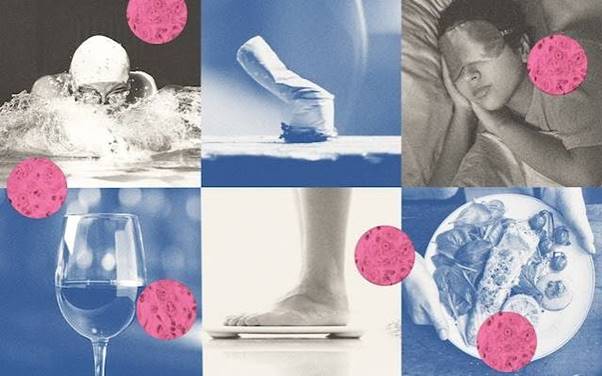
New research has linked accelerated biological ageing to the rise in cases in under-55s – but experts say there are ways to protect yourself - The Telegraph
We’re Getting Cancer Younger. Here’s How to Reduce Your Risk
By Sophie Goddard
Between 1990 and 2019, early-onset cancers – those diagnosed in adults under the age of 50 – increased by 24 per cent globally . Now groundbreaking new research, which analysed health data from more than 164,000 people, has been published in the journal Nature Medicine , revealing that those born between 1965 and 1974 have a 23 per cent higher level of accelerated biological ageing than those born in the early 1950s. This was associated with an increased risk of developing certain cancers – including bowel, lung and womb cancer – before the age of 55.
Thankfully it is possible to mitigate personal risk, notes clinical oncologist Dr Andrew Gaya, who specialises in gastrointestinal cancers. “News and statistics like these can feel worrying, but we can absolutely take responsibility for our future health and biological ageing,” he says. So why is this happening, and what can we do to slash our risk of premature ageing and early cancers?
Why we are ageing faster and getting more cancers
“People born more recently appear to have different cancer risks than previous generations at the same age,” says Dr Anisha Patel, a GP and lead patient advocate of the Prospect research team behind the findings. “This suggests that changing environmental and lifestyle exposures may be influencing our biology.
“It’s unlikely, however, that there’s just one cause. Instead, the interaction between things like genetics and inflammation, the gut microbiome, metabolic health, diet, obesity, physical activity and wider environmental factors are all likely to contribute. Understanding how these factors interact is where research is now heading.”
Dr Gaya adds: “Obviously, there are aspects of this we can’t control. Some of us have good genes – and others less so – which dictate our predisposition to cancer or other chronic disease. But there are practical steps we can take that can make a tangible difference to both ageing and cancer risk .”
Aim for ‘Zone 2’ cardio
“It’s all too easy to be extremely sedentary in today’s world,” warns Dr Gaya. In fact, 31 per cent of adults do not meet the recommended levels of physical activity set out by the World Health Organisation, despite those who are insufficiently active having up to a 30 per cent increased risk of death compared to those who keep moving.
“Zone 2 cardio, or moderate-intensity aerobic exercise, is what we should all be doing,” he says. “Think: a brisk but comfortable walk when you’re slightly out of breath but can feel your heart rate rising.” A relaxed cycle or steady breaststroke works, too.
The reason even gentle cardio can be so beneficial is down to inflammation, he explains. “This aerobic training zone prompts our body to release chemical mediators – bioactive molecules which are anti-inflammatory. That’s important because chronic inflammation drives diseases like heart disease, diabetes and cancer, as well as premature ageing. Making our bodies as anti-inflammatory as possible is the best way to combat disease. Aiming for this type of exercise for half an hour,
Dr Gaya likens inflammation to a type of soil, or fertiliser, that cancer thrives in. “We should be making our body as hostile an environment as possible for cancer – or chronic disease – to grow in, which, coincidentally, will mean we age slower too.” Regular exercise, for those able to do it, is non-negotiable. “You don’t have to be completing triathlons – walking is absolutely fine if that’s all you can manage, just make a habit out of it.”
Put sleep front and centre
“ We spend a third of our lives sleeping , which from an evolutionary standpoint is incredibly inefficient, so there has to be some purpose to it,” says Dr Gaya. “Sleep is when we regenerate and our bodies heal. It’s an anti-inflammatory process, so sleep deprivation is associated with increased inflammation, which can contribute to a higher risk of chronic health conditions.”
While at Manchester United, the footballer Cristiano Ronaldo was said to sleep five times a day for 90 minutes, following a routine called polyphasic sleep, which favours short segments of rest rather than sleeping in an eight-hour block at night , a method prescribed by a sports sleep coach. “Each 90-minute period allows the body to go through a full sleep cycle, encompassing light sleep, deep sleep and REM (Rapid Eye Movement). It’s the deep sleep that’s most physically restorative, repairing muscles, strengthening the immune system and reducing inflammation.”
Great news for those who can get it, though sadly not possible for most of us. “Getting enough sleep isn’t always easy,” Dr Gaya admits. “I often find myself lying awake at night worrying about the universe. If sleep at night isn’t optimal, try getting one 90-minute sleep cycle in the daytime, instead – it can set you right back on track.” Implementing good sleep hygiene is equally important. “Removing devices like phones and TVs and making the bedroom as inviting as possible can really help improve the quality of each sleep cycle,” he says.
Fill your fridge with single ingredient foods
In the UK today, ultra-processed foods (UPFs) make up more than half (about 57 per cent) of the average adult’s daily calorie intake. “It’s likely a safe assumption that many of the cancers we’re now seeing rise are linked to diet because our genetics simply haven’t changed,” says Dr Gaya. “Alongside exercise and sleep, nutrition is one of the biggest things we can do to support our health and protect ourselves against premature biological ageing and chronic disease.”
Research indicates that following a vegetarian or pescatarian diet could significantly reduce our risk of developing cancer, but even limiting red and processed meat to five meals a week or fewer could have a benefit. “Avoiding – or at least cutting down – on processed meat can help lower inflammatory markers ,” explains Dr Gaya, who favours a diet rich in fibre and whole foods (“single ingredient” foods) rather than UPFs such as crisps, processed meats or biscuits. “When in doubt, think of processed foods as food you can’t cook at home – if you can’t make it yourself, consider swapping it out.”
Don’t shy away from the scales
In 2024, 66 per cent of adults in the UK were either classed as overweight or obese. While the arrival of GLP-1 weight-loss injections is undoubtedly going some way to shifting the dial for many, weight is still an important marker of health worth monitoring, says Dr Gaya. “We’re hearing reports of the likes of Wegovy and Ozempic being the panacea for everything. That is, they’re linked to less incidents of cancers or heart attacks for example, but this is purely a bystander effect. If you’re obese, you’re more likely to develop these conditions, so it makes sense that your risk reduces when you lose weight.”
Order a glass, not a bottle – and skip cigarettes all together
“There’s no doubt there are some health benefits to alcohol in very small quantities. Red wine, for example, can have an anticoagulant (blood-thinning) effect,” Dr Gaya says. Similarly, it’s thought antioxidants found in red wine may help prevent coronary artery disease . “But obviously these effects are negated if you’re drinking more than the recommended 14 units a week , which translates to around six medium glasses of wine.”
“It’s worth noting that France and Scotland have two of the highest rates of oesophageal cancer in the world (the birthplace of wine and whisky),” he adds. But mitigating your risk doesn’t have to mean cutting out alcohol entirely. “Personally, I enjoy a glass of wine, though bear in mind there is no completely risk-free level of alcohol intake.”
“ Smoking is the worst thing you can possibly do in terms of premature ageing and cancer risk – you can see the effects when you look at a chronic smoker’s skin,” Dr Gaya says. “You’re inhaling pro-inflammatory chemicals as well as cancer-causing chemicals [cigarettes contain at least 69 carcinogens]. Nicotine also narrows blood vessels, dramatically reducing fresh blood and oxygen, which makes cells age at a much faster rate. Knowing all this, as we do, it’s incredible that anyone smokes at all, isn’t it?” – The Telegraph
