Book & Author
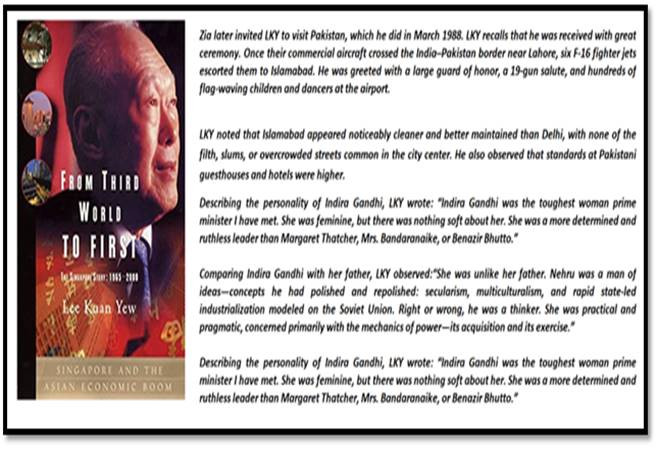
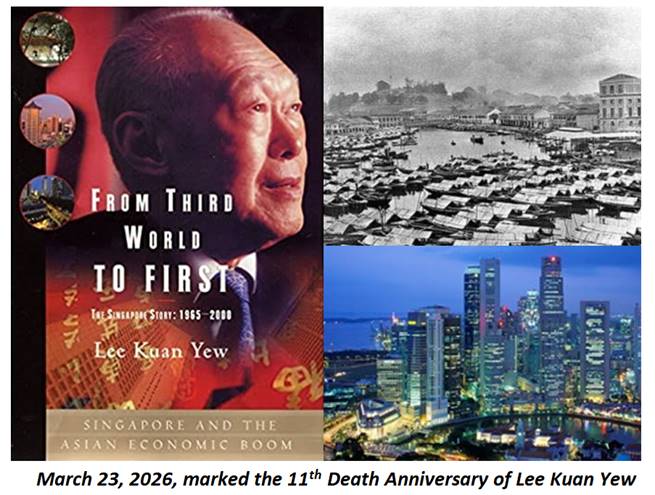
Lee Kuan Yew: From Third World to First — The Singapore Story 1965–2000
By Dr Ahmed S. Khan
“The task of the leaders must be to provide or create for them a strong framework within which they can learn, work hard, be productive and be rewarded accordingly. And this is not easy to achieve.” --- Lee Kuan Yew
In contrast to many developing countries—where corrupt, egoistic, and power-hungry generals frequently seize power and hinder national progress—Lee Kuan Yew’s honest, dynamic, and visionary leadership transformed Singapore from a muddy island into a 21st‑century economic powerhouse. His economic model continues to be studied and emulated around the world, and his legacy endures.
Lee Kuan Yew (LKY) was born in Singapore on September 16, 1923, and died on March 23, 2015. He studied law at Cambridge University in the United Kingdom. In 1954, he founded the People’s Action Party (PAP), which won Singapore’s general election five years later. In 1959, at the age of thirty-five, LKY became Singapore’s first prime minister.
After a failed two-year experiment of joining the Malaysian Federation, Singapore became an independent state in 1965, and LKY continued as its prime minister. Reflecting on those uncertain early days, he observes: “In the London Sunday Times (22 August 1965), Richard Hughes wrote, ‘Singapore’s economy would collapse if the British bases—costing more than 100 million pounds sterling—were closed.’ I shared these fears but did not express them; my duty was to give the people hope, not demoralize them.”
In 1990, Lee Kuan Yew stepped down as prime minister and assumed the role of senior minister in the Singapore cabinet. In this capacity, he mentored younger leaders and helped position Singapore to thrive in today’s highly interconnected global environment.
In the second volume of his autobiography, From Third World to First: The Singapore Story, 1965–2000, Lee Kuan Yew (LKY) condenses three decades of experiences and reflections into approximately 700 pages. In the preface, he explains his motivation for writing the book: “I wrote this book for a younger generation of Singaporeans who took stability, growth, and prosperity for granted. I wanted them to know how difficult it was for a small country of 640 square kilometers, with no natural resources, to survive among larger independent nations pursuing nationalistic policies.”
The book is organized into three parts. The first part examines Singapore’s social, economic, and political development. The second focuses on foreign relations, while the third offers a more personal account of LKY’s family life. In this section, he expresses deep admiration for his wife, Kwa Geok Choo (who passed away in October 2010), and their three children.
LKY was fortunate to have a highly intelligent and devoted wife who provided crucial advice and support in decision-making. In keeping with her modest character, she never sought public recognition for her contributions. Lee Kuan Yew and Kwa Geok Choo graduated from Raffles College in Singapore and later studied law at Cambridge University. They were married in 1950.
Their younger son, Lee Hsien Yang, served as Chief Executive Officer of Singapore Telecommunications from 1995 to 2007 and later as Chairman of the Civil Aviation Authority of Singapore from 2009 to 2018. Their daughter, Lee Wei Ling, a pediatric neurologist, served as Director of the National Neuroscience Institute. Their eldest son, Lee Hsien Loong, has served as Prime Minister of Singapore since 2004.
Lee Kuan Yew (LKY) devotes one chapter to South Asia, in which he reflects on the personal traits of regional leaders and analyzes the challenges faced by Pakistan and India. Recalling the establishment of diplomatic relations with Pakistan, LKY notes: “We established diplomatic relations with Pakistan in 1968, but for many years had little trade or other links. We did not share common positions in international affairs until the 1980s, when the Afghan and Cambodian conflicts—both funded by the Soviet Union—brought us together.”
Recounting his 1982 meeting with President Zia‑ul‑Haq, Lee Kuan Yew (LKY) writes:
“He told me that his sole purpose in visiting Singapore was to meet me as the person responsible for modern Singapore. I gave him my standard reply—that modern Singapore was the work of a team.”
Zia later invited LKY to visit Pakistan, which he did in March 1988. LKY recalls that he was received with great ceremony. Once their commercial aircraft crossed the India–Pakistan border near Lahore, six F‑16 fighter jets escorted them to Islamabad. He was greeted with a large guard of honor, a 19‑gun salute, and hundreds of flag‑waving children and dancers at the airport.
LKY noted that Islamabad appeared noticeably cleaner and better maintained than Delhi, with none of the filth, slums, or overcrowded streets common in the city center. He also observed that standards at Pakistani guesthouses and hotels were higher. Describing President Zia, LKY wrote that he was a heavyset man with straight black hair neatly combed back, a thick moustache, a strong voice, and a confident military bearing.
At a dinner hosted in his honor, Zia delivered an impromptu speech praising LKY—not only for Singapore’s achievements, but also for standing up to the Western press. At a press conference before his departure, LKY publicly commended President Zia for his courage in providing logistical support to the Afghan resistance, noting that had Zia been a timid leader who chose to look the other way, the world would have been worse off.
Tragically, a few months later—before bilateral relations could progress further—President Zia was killed in a suspicious plane crash.
After the Zia era, ties with Pakistan again stagnated until Nawaz Sharif became prime minister in November 1990. Discussing the economic challenges facing Pakistan, Lee Kuan Yew (LKY) observed: “They had a low tax base, with income tax yielding only 2 percent of their GDP. Many transactions in land sales were undocumented, and tax evasion was widespread. They subsidized agriculture, railways, and steel mills. Defense took 44 percent of the budget, debt servicing 35 percent, leaving only 21 percent to administer the country. Hence, their budget deficits were 8 to 10 percent of GDP, and inflation was reaching double-digit figures. The IMF had drawn their attention to these parlous figures. The solutions were obvious, but political will was difficult to exercise in a country without an educated electorate and with a legislature dominated by landowners who controlled the votes of their uneducated tenant farmers. This made land and tax reforms nearly impossible. Corruption was rampant, with massive theft of state property, including illegal tapping of electricity.”
LKY spent a week in Pakistan beginning on 28 February 1992, during which he met Prime Minister Nawaz Sharif and key members of his cabinet. He described the finance and economic affairs minister, Sartaj Aziz, as an “irrepressible optimist.” Following his visit, LKY sent Nawaz Sharif a detailed report outlining measures that should be taken to address Pakistan’s economic problems. Reflecting on Sharif’s leadership style, LKY notes: “…the problem was that often he had neither the time nor the patience to have a comprehensive study made before deciding on a solution.”
Nawaz Sharif visited Singapore in December 1992 and invited LKY to return to Pakistan to assess progress in implementing his recommendations. LKY later recalled: “…I discovered that many of my recommendations had not been implemented. I had feared this would happen.”
Before LKY could visit Islamabad again, a political confrontation between President Ghulam Ishaq Khan and Prime Minister Nawaz Sharif led to the resignation of both leaders and the calling of fresh elections. Benazir Bhutto subsequently became prime minister.
Recalling his meeting with Benazir Bhutto, LKY observes: “Shortly after the election, I met Benazir Bhutto in Davos in January 1994. She was elated and full of ideas. She wanted Singapore to participate in a road project from Pakistan to Central Asia through Afghanistan. I asked for a detailed proposal for us to study. She also wanted us to examine the viability of sick enterprises in Pakistan and take them over.”
LKY noted that Bhutto’s husband was even more exuberant, proposing the construction of an artificial island off Karachi to be developed as a free port and free‑trade zone with casinos. LKY dismissed the idea as wholly uneconomic, observing that Pakistan already had abundant unused land. He concluded that their approach was simplistic: Singapore was successful and wealthy, and therefore assumed capable of investing in Pakistan and replicating its success there.
In March 1995, Benazir Bhutto and Asif Ali Zardari visited Singapore. Reflecting on the visit, Lee Kuan Yew observed: “She said she had heeded my advice in Davos and ensured that all her proposals had been well thought through. She invited Singapore to transfer its labor‑intensive industries to Pakistan. I said she would first have to convince our business people.”
Despite these assurances, LKY noted that Pakistan’s deep economic and political problems persisted. Politics, he observed, continued to be poisoned by entrenched hostility between the leaders of the country’s two main parties. During this period, Asif Ali Zardari was charged with the murder of his wife’s brother, Murtaza Bhutto. Both Zardari and Bhutto were also charged with corruption involving vast sums of money, some of which were traced to Switzerland.
LKY also recalled an earlier meeting with Benazir Bhutto and Asif Zardari at a Commonwealth conference in Kuala Lumpur in October 1989. Describing an informal retreat on Langkawi Island, he notes: “I spent one long evening on Langkawi Island during the ‘retreat’—an informal gathering of conference members at a resort—chatting with Prime Minister Bhutto and her husband, Asif Zardari, learning about Pakistani politics and culture. She had youthful good looks, a fair complexion, and a finely chiseled, photogenic face. He was ebullient and an outgoing wheeler‑dealer, with no inhibitions about telling me that he was ready to consider any deal in anything—cutting a good deal was what life was about for him.”
Zardari, LKY noted, was involved in fruit exports, real estate, and a variety of other businesses. LKY promised to introduce him to fruit importers who might buy his mangoes, which he did when Zardari accompanied his wife to Singapore for a meeting in 1995.
LKY further observed that Pakistan’s difficulties were compounded in May 1998, when India conducted nuclear tests, prompting Pakistan to carry out its own. The resulting escalation left both countries economically strained. Reflecting on the Pakistani people, LKY states: “The Pakistanis are a hardy people with enough of the talented and well‑educated to build a modern nation. But unending strife with India has drained Pakistan’s resources and stunted its potential.”
Lee Kuan Yew’s reflections on Indian leaders begin with his encounters with Jawaharlal Nehru. As a young student, LKY deeply admired Nehru. He recalled: “I admired Nehru and his objective of a secular, multiracial society. Like most nationalists from British colonies, I had read his books written during his long years in British jails, especially his letters to his daughter. They were elegantly written, and his views and sentiments struck a resonant chord in me.”
LKY visited Delhi for the first time as prime minister in April 1962. Recalling his meeting with Nehru, he states: “Nehru was pleasantly surprised to find a Chinese so determined not to have Singapore under communist control and the influence of Beijing.”
LKY met Nehru again in 1964 while returning from a tour of Africa. He observed: “He was a shadow of his former self—wearied, weak in voice and posture, slumped on a sofa. His concentration was poor. The Chinese attack across the Himalayas had been a blow to his hopes of Afro‑Asian solidarity. I left the meeting filled with sadness.” Nehru died a few months later, in May 1964.
Describing the personality of Indira Gandhi, LKY wrote: “Indira Gandhi was the toughest woman prime minister I have met. She was feminine, but there was nothing soft about her. She was a more determined and ruthless leader than Margaret Thatcher, Mrs Bandaranaike, or Benazir Bhutto.”
He went on to describe her striking appearance and commanding presence, noting her aquiline nose, distinctive hairstyle with a prominent white streak, and her elegant saris. While she often displayed charm and warmth in social settings, LKY observed that once engaged in debate, she revealed a steely resolve comparable to that of any Kremlin leader.
Comparing Indira Gandhi with her father, LKY observed: “She was unlike her father. Nehru was a man of ideas—concepts he had polished and repolished: secularism, multiculturalism, and rapid state‑led industrialization modeled on the Soviet Union. Right or wrong, he was a thinker. She was practical and pragmatic, concerned primarily with the mechanics of power—its acquisition and its exercise.”
LKY regarded one of the saddest chapters of her tenure as her departure from secularism. In an effort to secure the Hindi‑Hindu vote in North India, she consciously or otherwise allowed Hindu chauvinism to surface and gain legitimacy in Indian politics. He believed this shift contributed to recurring Hindu‑Muslim riots, the destruction of the Babri Masjid at Ayodhya, and the rise of the Bharatiya Janata Party (BJP) as a major political force in Parliament in 1996 and again in 1998.
LKY noted that Indira Gandhi was at her toughest when India’s unity was threatened. He criticized her decision to send troops into the Sikh Golden Temple at Amritsar, describing it as a political disaster and a desecration of the holiest Sikh shrine. He concluded grimly that she ultimately paid for this decision with her life, assassinated by her Sikh bodyguards in 1984.
Remembering Morarji Desai, LKY painted a markedly different portrait: “He was a strict vegetarian who ate only raw nuts, fruits, and vegetables—nothing cooked. Even his milk had to come straight from a cow, not from a bottle.”
While Desai possessed a dry sense of humor and a remarkable memory, LKY also noted his unconventional beliefs. He recalled a conversation in December 1978 in which Desai claimed that ancient Indians had undertaken space travel thousands of years ago. When LKY appeared skeptical, Desai insisted: “Yes, it is true. It is by reincarnation. It is recorded in the Bhagavad Gita.”
Describing Rajiv Gandhi, Lee Kuan Yew observed: “Rajiv was a political innocent who had found himself in the middle of a minefield. I saw him as an airline pilot with a straightforward worldview. In our discussions, he often turned to Natwar Singh. I wondered who guided him through Indian politics.”
LKY regarded Rajiv Gandhi as a well‑intentioned leader, noting that only a prime minister acting in good faith would have sent Indian troops to Sri Lanka to suppress a rebellion by the Jaffna Tamils—descendants of Tamils who had left India more than a thousand years earlier and were distinct from India’s Tamil population. The intervention, however, proved costly. Indian soldiers shed blood in Sri Lanka, eventually withdrew, and the conflict continued. In 1991, tragedy struck when a young Jaffna Tamil woman approached Rajiv Gandhi at an election rally near Madras, ostensibly to garland him, and detonated a bomb that killed them both. Reflecting on this, LKY concluded that it was deeply unjust, as Rajiv Gandhi’s intentions had been honorable.
Turning to environmental degradation in Delhi, LKY observed a stark contrast between the city he had first known and what it later became: “The Delhi I visited in the 1960s was big and sprawling, with many open spaces, little pollution, and few squatters. The Delhi of the 1990s was an environmental mess.”
He noted that during a January visit, the air was foul with fumes from coal burned in power stations and homes, squatters were everywhere, traffic congestion was severe, and security concerns were so serious that an entire company of soldiers was stationed outside the Sheraton Hotel where he stayed. Delhi, he lamented, was no longer the spacious capital it once had been.
Commenting on the challenges of economic reform in India, LKY cited a statement made by Prime Minister Inder Kumar Gujral in 1997: “I sometimes feel ashamed, and I hang my head in shame when I am told that India is one of the ten most corrupt countries in the world.”
Summarizing India’s broader difficulties, LKY noted: “Perhaps the fault lies in the system. India has wasted decades in state planning and controls that have bogged it down in bureaucracy and corruption.”
He argued that a more decentralized system might have allowed multiple growth centers—such as Bangalore and Bombay—to prosper independently. He also identified the caste system as a major obstacle to meritocracy, noting that each caste demanded quotas in institutions ranging from the civil services to universities. Finally, he pointed to the recurring conflicts and wars with Pakistan, which had drained resources and left both countries poorer.
The transformation of Singapore from a Third World country into a First World nation in less than four decades stands as a powerful testament to Lee Kuan Yew’s dynamic leadership. Leaders in Pakistan and India, LKY suggested, would do well to reflect on his insights if they wish to free their people from poverty and promote lasting prosperity and peace in South Asia. From Third World to First: The Singapore Story, 1965–2000 is essential reading not only for students of political science, but also for general readers. Written with remarkable candor and breadth, the book reads like a concise course integrating history, civics, governance, politics, international relations, conflict resolution, and leadership.
(Dr Ahmed S. Khan – dr.a. s.Khan@ieee.org – is a Fulbright Specialist Scholar.)